

In today’s hyper-connected world, where information spreads faster than facts can be verified, media ethics have never been more crucial. Responsible journalism is built on patience, evidence, and verification. But when the media becomes a mouthpiece for political agendas, truth becomes collateral damage.
The recent Pahalgam incident in Indian-occupied Jammu & Kashmir is a troubling example of this dangerous trend. Reportedly, some gunmen shot Hindu tourists, targeting them and killing and injuring many. Without any detailed investigation of the event, much of the Indian media rushed to label the tragedy as a “terrorist attack”, even before any official investigation was concluded.
This premature labelling, echoed by Indian officials and right-wing commentators, once again exposed how sensationalism can override facts, especially when there’s an opportunity to blame Pakistan.
Sensationalism over Substance
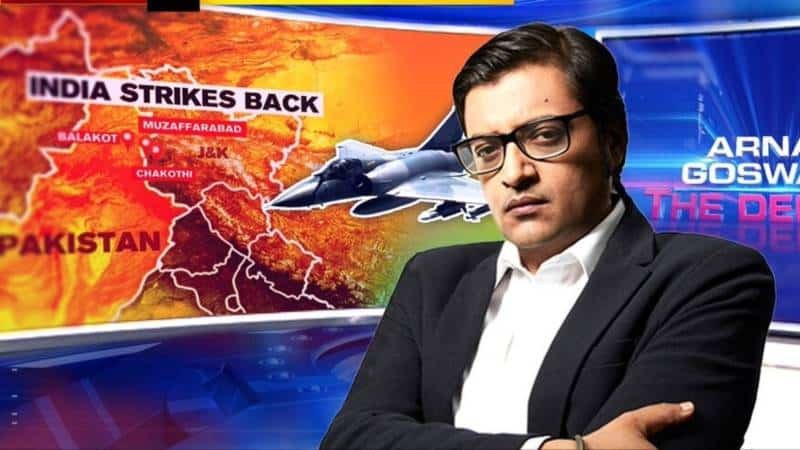
Within hours of the accident, several major Indian news channels were referring to the incident as an act of cross-border terrorism, speculating about “militant ambush” and “Pakistani handlers,” without a single shred of confirmed evidence.
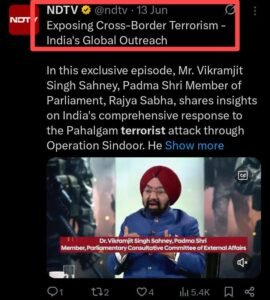
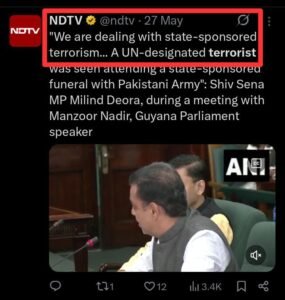
The headlines shouted: “Pakistan-based terrorists/outfits,” / “Pakistan-backed group,s” “Terror in Pahalgam,” and “Terror emanating from Pakistan.” These stories, based only on guesses, caused panic, split audiences, and damaged Pakistan’s reputation globally—all without facts to support them.
This is not responsible journalism. It is narrative manufacturing.
What Defines a Terror Attack?
A core problem with such coverage is the blurring of lines between tragedy and terrorism. A terrorist attack is a deliberate act of politically motivated violence carried out by non-state actors to instill fear and push ideological aims. An accident—even a horrific one—does not meet that threshold unless there is conclusive proof of sabotage, motive, or orchestration.
In the Pahalgam case, there was no empirical evidence of Pakistani involvement or cross-border terrorism, but Indian media immediately labeled it as a terrorist attack.
This raises a serious ethical concern: when media platforms assign labels without evidence, they are no longer reporting—they are shaping public perception irresponsibly.
The Political Utility of Blame
It is not the first time Indian media and political actors have weaponized tragedy for strategic gain. Be it the Pulwama attack in 2019 or the Rajouri firing in 2023, India has often been quick to point fingers at Pakistan before investigations were concluded. In many cases, investigative outcomes are either buried or never disclosed, because the damage—both diplomatic and psychological—is already done.
The Pahalgam incident follows the same playbook. It occurred amid growing unrest in Kashmir, election season rhetoric, and international scrutiny over India’s human rights record. By casting the tragedy as Pakistan-backed terror, New Delhi finds an easy scapegoat and deflects attention from its domestic failures.
Pakistan’s Measured Response
Unlike India’s media frenzy, Pakistan’s official stance has remained calm and responsible. The Foreign Office categorically rejected the baseless accusations, called for a transparent and evidence-based investigation, and urged India to avoid politicizing human suffering.
Pakistan’s own history of battling terrorism—with sacrifices in the thousands—has taught it the value of careful, verified reporting and strategic communication. In recent years, Pakistan has undertaken robust counter-terrorism efforts, launched comprehensive operations like Zarb-e-Azb and Radd-ul-Fasaad, exited the FATF grey list, and implemented strict anti-terror financing laws. Global institutions, not nationalist propaganda, have acknowledged these developments.
Journalistic Responsibility in Sensitive Environments
The role of the media, especially in conflict-prone regions, is not just to report events but to protect the integrity of public discourse. When reporters or anchors make unverified claims, they risk undermining law enforcement efforts, fueling diplomatic tensions, and further polarizing societies.
This is particularly dangerous in the case of Pakistan-India relations, where a single misreported event can spiral into cross-border hostility. The press must therefore differentiate between what is known, what is suspected, and what is politically convenient.
A Call for Media Ethics
The Pahalgam tragedy was heartbreaking. But to turn it into a media trial without facts disrespects the victims, undermines justice, and damages regional peace. Journalism must not serve as a tool for nationalist propaganda or strategic distraction. It must serve the truth.
For regional stability, both India and Pakistan must insist that reporting on terror and violence meets the highest ethical standards. Media houses must wait for forensic confirmation, official briefings, and investigative findings before publishing sensational headlines. Politicians must stop exploiting tragedy to push their own narratives.
Conclusion
The line between tragedy and terrorism must be drawn with evidence, not emotion. In the case of the Pahalgam incident, Indian media’s rush to frame the event as terrorism without proof has once again exposed the danger of premature labelling and unethical reporting.
Pakistan continues to stand by its commitment to peace, truth, and regional cooperation. It is time Indian media and policymakers do the same.