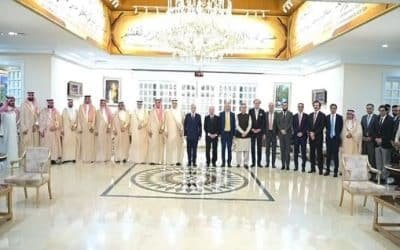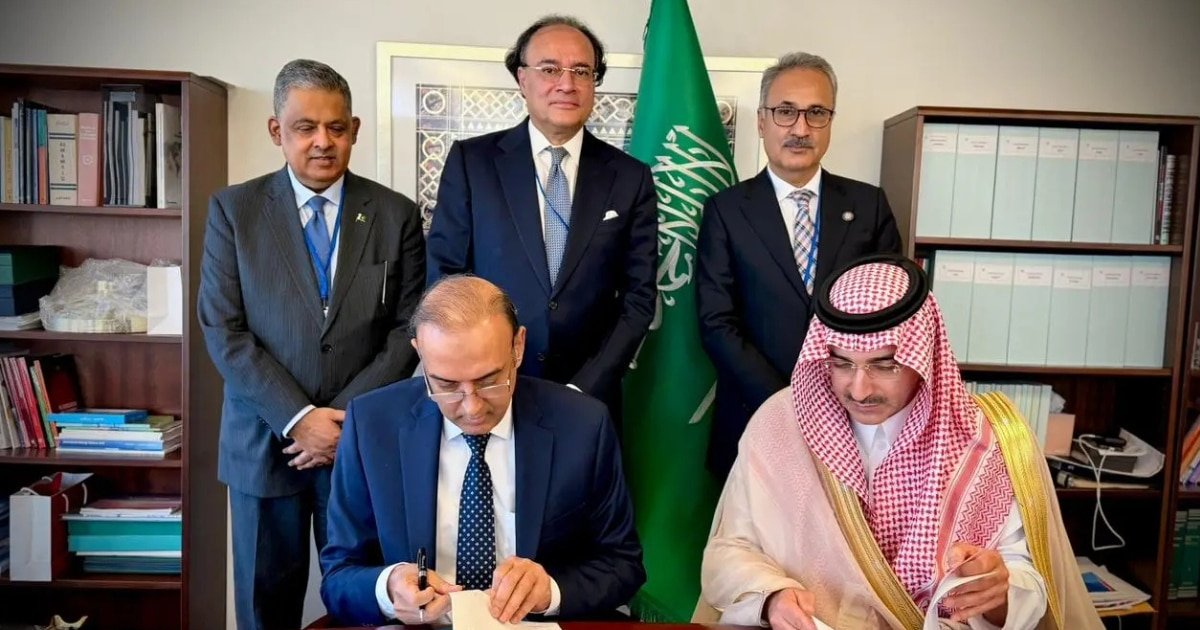





WASHINGTON (April 17, 2026) — In a significant move to stabilize its external sector, Pakistan and the Saudi Fund for Development (SFD) have officially signed an agreement to extend the maturity of a $3 billion deposit. The signing ceremony took place in Washington, DC, on the sidelines of the World Bank-IMF Spring Meetings.
Key Highlights
- Maturity extension for an existing $3 billion deposit held by the State Bank of Pakistan (SBP).
- Follows a recent Saudi pledge for an additional $3 billion in fresh deposits and a three-year extension of an existing $5 billion facility.
- The deal provides a critical buffer as Pakistan prepares to repay a $3.5 billion loan to the UAE this month.
- Current foreign exchange reserves stand at $16.4 billion, roughly covering three months of imports.
Saudi Arabia will provide Pakistan an additional $3 billion deposit and extend its $5 billion support for three years, Finance Minister Muhammad Aurangzeb said in Washington. pic.twitter.com/ESLvkyEDyX
— Pakistan TV Digital (@PakistanTVcom) April 16, 2026
Securing the external account
The agreement was signed by SBP Governor Jameel Ahmad and SFD Chief Executive Officer Sultan bin Abdulrahman Al-Marshad, in the presence of Finance Minister Muhammad Aurangzeb. The Ministry of Finance stated that this extension reflects the “strong and longstanding economic partnership” between the two nations.
For Pakistan, the extension is a vital reprieve. After failing to secure a rollover for a $3.5 billion UAE facility in March—the first such failure in seven years—the government has leaned heavily on Riyadh to avoid a breach of International Monetary Fund (IMF) program targets.
Brotherly bonds and economic resilience
The Saudi Press Agency (SPA) highlighted that the directives for this financial support came directly from the Kingdom’s leadership to “strengthen the bonds of brotherhood.” The assistance is specifically designed to bolster Pakistan’s resilience against global economic challenges, including volatile energy prices and regional instability in the Middle East.
Navigating IMF targets
Financial analysts note that while the $3 billion extension offers “breathing space,” the external account remains under pressure. Rising global oil prices and the lack of a UAE rollover have made the Saudi intervention the primary “anchor” for market confidence. The move is expected to satisfy IMF requirements for external financing assurances as Minister Aurangzeb continues deliberations with the Fund for a long-term economic program.
You May Like To Read: Japan pledges $2 million to support Pakistan’s climate resilience
Check out our latest video: