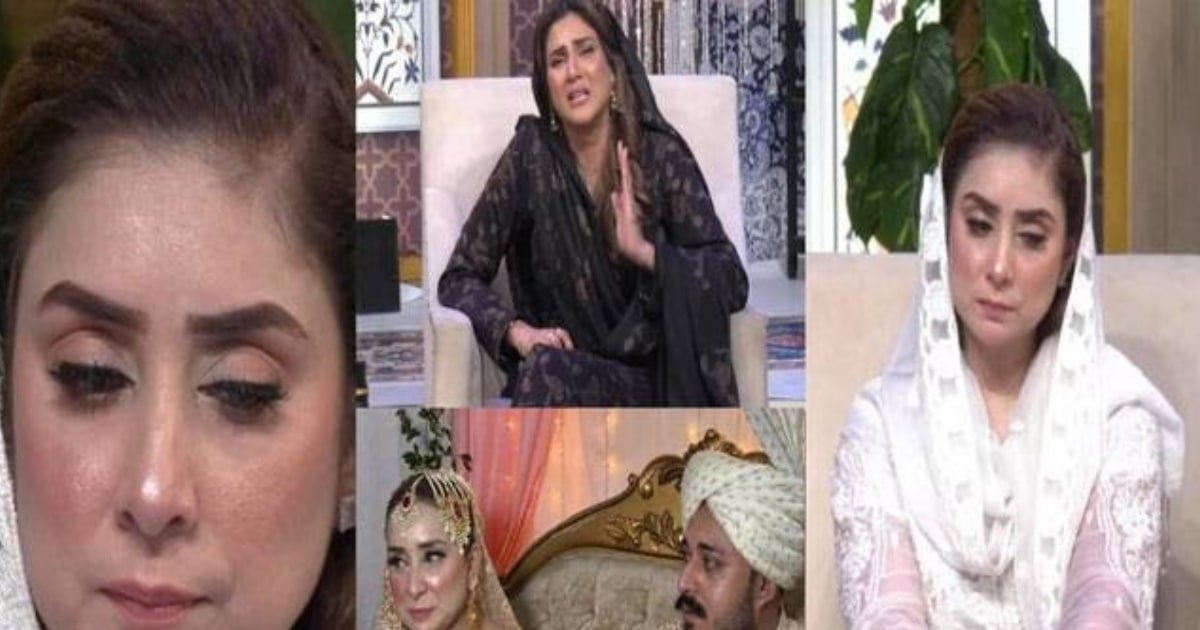





The arrival of Ramadan in Pakistan brings with it a unique, often chaotic cultural phenomenon: the televised “Transmission.” In late February 2026, the early days of the holy month were dominated not by theological debate or charity drives, but by a viral, high-voltage drama on 24 News HD’s “Noor E Ramzan.” The episode, hosted by the ever-expressive Fiza Ali, featured psychologist Dr. Nabiha Ali Khan as a guest. What unfolded was a masterclass in the “spectacle of sorrow” that has come to define Pakistani daytime television, and a stark reminder of the problematic figures we elevate to our screens.
The Live-TV Meltdown
The clip that set the internet ablaze featured a visibly distraught Dr. Nabiha discussing her personal marital struggles. In an unprecedented move for a professional guest, she alleged that her husband, Haris Khokhar, had kicked her out of her home at the behest of her mother-in-law. The emotional dam broke on live television, but it was the host’s reaction that truly turned the segment into a viral sensation.
Fiza Ali, moved by the plight of her guest, abandoned the traditional role of a neutral moderator. She crossed the set to embrace a weeping Dr. Nabiha, delivering a fiery, tearful warning directly to the camera. She even sternly instructed another guest, an awkward and bewildered Dr. Kashif Faraz, to place his hand on Nabiha’s head as a gesture of paternal support. To some, it was a heartwarming display of female solidarity. To others, it was the ultimate realization of “cringe culture” on live TV.
The Paradox of Dr. Nabiha
While the internet initially rallied behind the “woman in distress,” a deeper, more cynical conversation began to emerge regarding Dr. Nabiha’s own public history. For many viewers, there is a biting irony in a psychologist seeking public sympathy for marital oppression when her own professional brand has frequently been built on problematic, and at times, misogynistic rhetoric.
Dr. Nabiha has long been a polarizing figure. Before her own domestic issues became public fodder, she was often criticized for reinforcing the very patriarchal structures she now finds herself battling. In previous viral appearances, she has been noted for victim-blaming rhetoric. Suggesting that women must “compromise” and “mould themselves” to maintain the sanctity of a marriage, regardless of the emotional cost. Frequently upholding traditionalist views that place the burden of domestic harmony solely on the wife’s patience.
Dr. Nabiha Ali Khan has some advice for women on how to satisfy their husbands in various circumstances. pic.twitter.com/aoor41pNmE
— Obaid Atique (@Obaid_Atique) May 7, 2024
The “Professional” Mask
Critics have pointed out the ethical blurred lines of a mental health professional using a spiritual TV platform to air personal grievances, potentially violating the professional boundary expected of a psychologist.
The audience reaction has been a tug-of-war. One camp views her as a victim of a system she ironically helped sustain, while the other sees her current predicament as a “reckoning.” Netizens were quick to dig up old clips of her giving “advice” to other women to stay silent, contrasting them sharply with her current, very public outcry.
me consoling Dr Nabiha by reminding her of her own iconic line: Agar husband ke liye tawaif ki tarah naachna bhi paray, toh naacho pic.twitter.com/sbm6p1JBVB
— 3ilαl ~alt (@lastcache0) February 22, 2026
The Commodification of Pain
This “Noor E Ramzan” episode highlights a disturbing trend in Pakistani media: the commodification of private pain for TV ratings. Ramadan transmissions have transformed into a hybrid of circus and confessional booth. By putting a guest’s marriage on trial in front of millions, the showrunners are not providing “healing” or “spiritual guidance”; they are generating clips for the TikTok algorithm.
The Fiza Ali defense was effective on television, but it was a dangerous social practice. When we allow hosts to act as judge and jury on live TV, we bypass the nuance and privacy required to handle sensitive domestic disputes. Furthermore, the elevation of “experts” like Dr. Nabiha, who oscillate between patriarchal preaching and personal victimhood, confuses a public already struggling to navigate the complexities of modern mental health and women’s rights.
This whole Fiza Ali and Dr Nabiha drama was staged and it’s beyond shameful they did this in this blessed month.
Fiza kept repeating “reel” and even said it would be “going viral” plus the Doctor already knew the script and was laughing.
Koi Ghairat hai in logon mai?!— M. (@syedamaheenkam) February 23, 2026
A Community Divided
By late February, the “Dr. Nabiha Saga” had become a mirror for Pakistani society. It reflected our love for a good drama, our deep-seated fascination with the internal lives of the elite, and our burgeoning (yet messy) conversation about harassment and domestic rights.
dr nabiha’s claiming that her husband physically abused her but wasn’t she the one who said “mard ussi aurat par hath uthata hai jisse wo pyaar karta hai”???😭
— manhater (@ewmaaaan) February 22, 2026
While we can empathize with any woman facing a domestic crisis, we must also hold our “public intellectuals” and media icons to a higher standard. You cannot spend years telling women to “quietly endure” and then expect the public to ignore the irony when you finally find your voice only when the fire reaches your own door.
You May Like To Read: Mahnoor Rahim, Umer Mukhtar, and the “Legal Notice” Culture in Pakistan
As the Ramadan transmissions continue, one thing is clear: the line between “spiritual uplifting” and “entertainment scandal” has not just been blurred, it has been erased.
Check out our latest video: