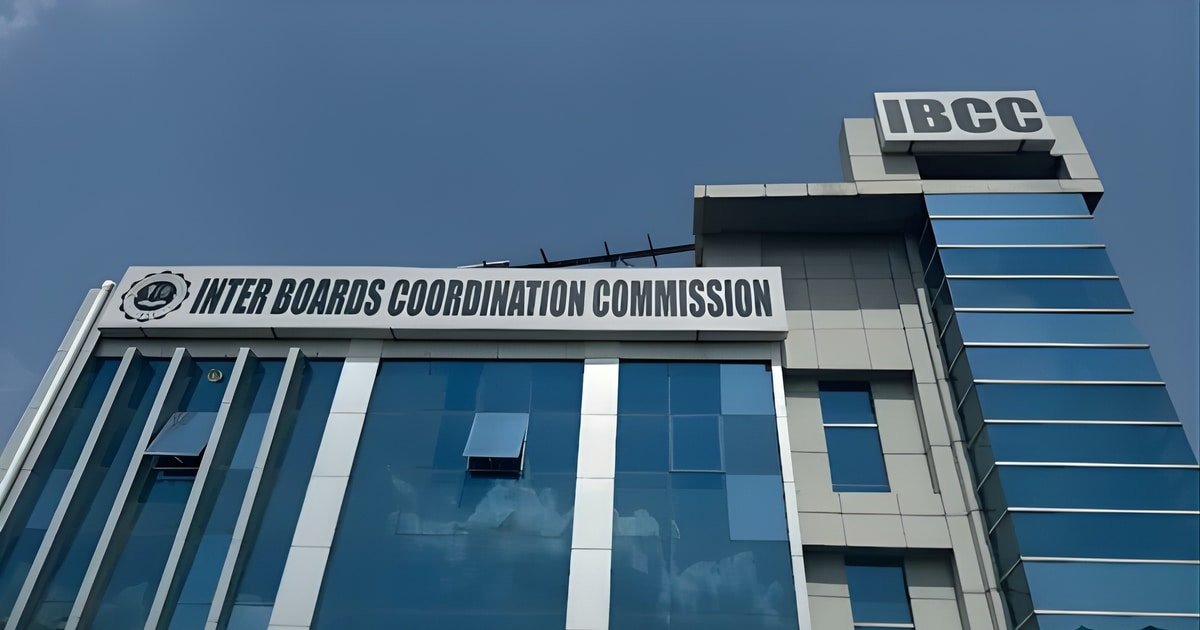


ISLAMABAD: In a significant policy shift, the Inter-Board Coordination Commission (IBCC) has decided to abolish long-standing restrictions that prevented matric students from switching between the arts and science streams when seeking admission at the intermediate level. The move, approved during the IBCC’s 183rd meeting held in Karachi, will allow students from an arts background to enrol in pre-medical, pre-engineering, ICS and other science-related groups.
Sources said the decision was taken after repeated concerns that the existing system limited opportunities for academically strong students who were unable to pursue science subjects at the matric level due to systemic constraints, particularly in schools located in remote areas where qualified science teachers are scarce.
The forum also approved a major policy change for O- and A-level students. Those who have passed at least two major science subjects will now be granted equivalence in the science group rather than being placed in the humanities category, as was previously the practice. IBCC officials said this measure aims to more accurately reflect students’ academic strengths and facilitate their progression into science-focused programmes.
Discussions were also held on a broader curriculum reform proposal that would eliminate the arts and science group distinction at the matric level altogether, replacing it with a standardised Secondary School Certificate offering flexible elective choices. However, officials noted that this proposal requires further deliberation before a final decision is made.
Confirming the policy changes, IBCC Executive Director Dr Ghulam Ali Mallah said the reforms are intended to remove “illogical barriers” that have historically hindered student growth. He noted that the inability of many schools to offer science subjects had unfairly limited their students’ options for higher studies in engineering, medicine and technology.
You May Also Like: Cultural Diplomacy: Pakistan and Japan Deepen Artistic Exchange
“Now all fields are open for everyone, and if students have the capability, they can pursue pre-engineering or pre-medical even without studying these subjects at matric,” Dr Mallah said. He praised the collaborative efforts of IBCC members and curriculum councils in adopting what he described as “student-centric decisions” aligned with global educational trends.
Regarding implementation, Dr Mallah said the IBCC has already begun issuing science-group equivalence certificates to eligible O/A level students. Admissions with open choice at the intermediate level are expected to commence from the upcoming academic session, following official communication to colleges, universities and educational boards.
When contacted, IBCC Executive Director Dr Ghulam Ali Mallah confirmed the two major decisions.https://t.co/XpEDG7k03I
— Dawn.com (@dawn_com) December 9, 2025
Education stakeholders say the reforms could significantly reshape academic pathways in Pakistan, providing greater flexibility and reducing systemic inequalities faced by students across diverse regions.