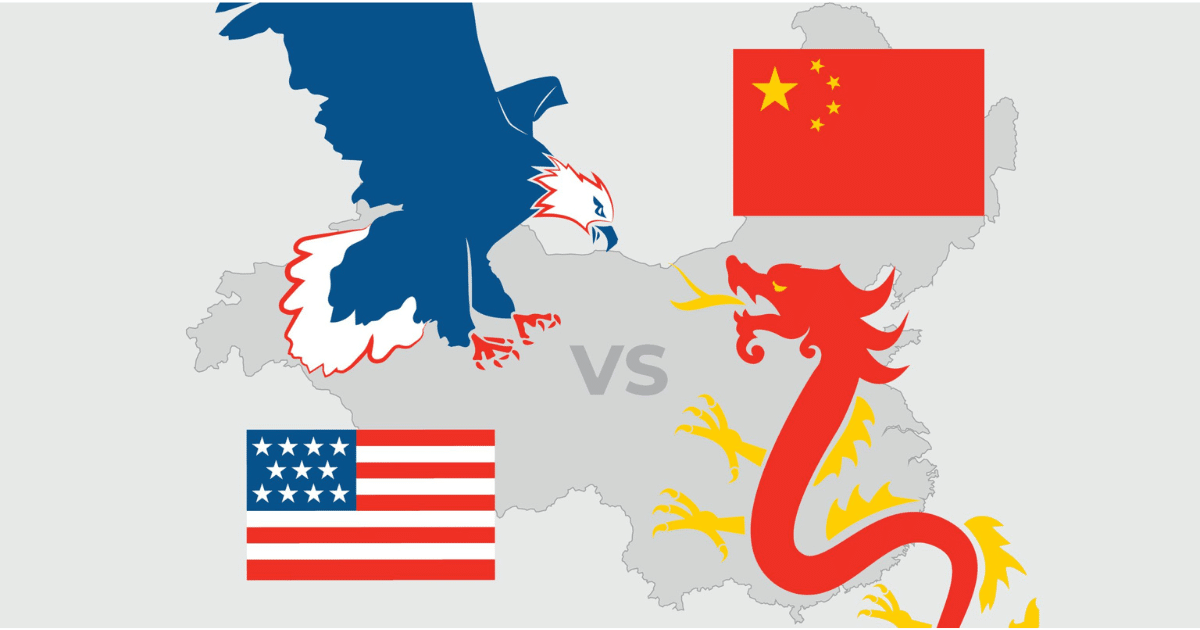





The growing rivalry between the United States and China is pushing South Asia into a corner. With the US treating India as a regional partner to counter China, the region is now trapped in a security-first mindset. Instead of building trade ties and regional infrastructure, South Asian countries are caught in a cycle of military buildup and distrust. Pakistan, in particular, faces the heavy cost of this shift both economically and in terms of regional stability.
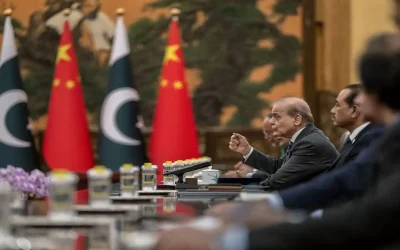
Pakistan is one of the few countries enjoying strong ties with both the U.S. and China. With top-level visits underway, Islamabad now has a unique diplomatic leverage to encourage global stability.
Hassan Gillani, Journalist on Perspective with Mahrukh Hameed pic.twitter.com/BmDirGTdxc— PTV World (@WorldPTV) July 27, 2025
Since the early 2000s, the United States has built a close defense partnership with India. This started with the 2004 Next Steps in Strategic Partnership agreement. It later expanded into cooperation on space, missile defense, nuclear energy, and high-tech exports. The US also made key exceptions for India by supporting its membership in export control regimes like the Missile Technology Control Regime and granting a waiver from Nuclear Suppliers Group restrictions.
Over the years, India has signed four foundational defense agreements with the US:
| Agreement | Year Signed | Purpose |
| GESOMIA | 2002 | Exchange of military intelligence |
| LEMOA | 2016 | Mutual access to military facilities |
| COMCASA | 2018 | Secure communications interoperability |
| BECA | 2020 | Geospatial intelligence sharing |
This deepening military cooperation has allowed India to expand its missile, nuclear, and space programs. As a result, countries like Pakistan feel pressured to upgrade their own defense capabilities, leading to an arms race with no winners.
While ASEAN and the EU have made huge progress in regional trade, with intra-regional trade at 23% and 75% respectively, South Asia lags far behind. The region’s intra-regional trade accounts for only 5%. The primary reason is the tense political environment, exacerbated by global power competition.
India’s behavior as the favored partner of the US has led to policies that isolate Pakistan. Regional cooperation platforms, such as SAARC, have been repeatedly blocked by India. SAARC summits have not taken place since 2014. Pakistan’s efforts to revive dialogue and trade within SAARC have been ignored.
India’s Alternate Trade Routes
Instead of using geography as a strength, India is building alternative routes that bypass Pakistan entirely. Three major initiatives show this pattern:
| Project | Description |
| IMT Corridor | Connects India, Myanmar, and Thailand |
| INSTC | Links India with Central Asia via Iran and Russia |
| IMEC | Connects India to Europe through the Middle East |
These routes may seem like standard trade infrastructure, but their design intentionally excludes Pakistan. Western allies support these projects because they do not want to strengthen Pakistan’s position in China’s Belt and Road Initiative, especially the China-Pakistan Economic Corridor (CPEC).
You May Like To Read:
Other groupings also reflect the growing divide. The Quad (comprising the US, India, Japan, and Australia), AUKUS (comprising the US, UK, and Australia), and a new security alliance between Japan, the Philippines, and the US are designed to counter China’s influence. While promoted as stabilizing forces, they fuel regional insecurity. Even the Indo-Pacific Economic Framework (IPEF) focuses more on soft containment of China than real economic integration.
These alignments leave Pakistan and other smaller states on the sidelines. Instead of regional cooperation, the Indo-Pacific is becoming a zone of exclusive security blocs.
The Cost to Pakistan’s Economy
The fallout of the US-China competition has a direct impact on Pakistan’s economy. CPEC, a major Chinese investment project in Pakistan, has become a target of sabotage by anti-state elements. Terrorist groups like Fitna Al Khwarij (FAK) and Fitna Al Hindustan (FAH) have received support from India’s intelligence agency RAW, according to Pakistani officials, to destabilize regions that host CPEC infrastructure.
This violence has also disrupted Pakistan’s mineral and energy sectors. For example, the merged tribal districts of Khyber Pakhtunkhwa (KPK) are rich in minerals, but only 6 of 30 exploration blocks have been opened due to security risks. In Balochistan, the Kohlu Block 28, identified 33 years ago as a promising oil and gas reserve, remains untouched due to insurgent threats.
Pakistan’s well drilling density highlights the stark disparity in energy exploration across provinces. Punjab has the highest drilling density, at 8.3 wells per 1,000 square kilometers, followed closely by Sindh with 7.9 wells. In contrast, Khyber Pakhtunkhwa (KPK) records a much lower density of just 0.51, while Balochistan lags even further behind at only 0.24. These figures reflect how persistent instability and security threats in KPK and Balochistan have severely hindered investment and activity in oil and gas exploration. The result is an underutilization of resource-rich areas that could otherwise significantly contribute to strengthening Pakistan’s energy security and economic development.
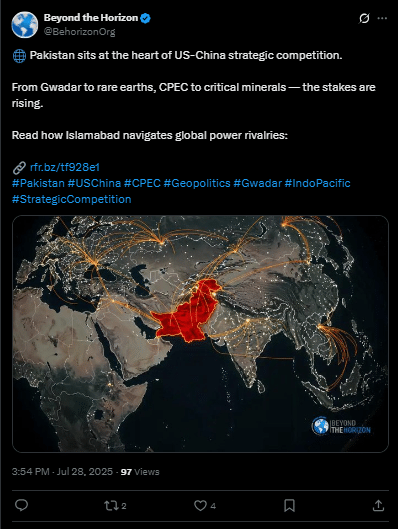
Source: X/@behorizonOrg
Another major cost is the loss of regional connectivity. Projects like the Termez-Jalalabad-Peshawar corridor could cut freight time and cost by up to 50 percent, linking South Asia with Central Asia. But these projects are stalled due to the fragile security situation in Afghanistan and the lack of support from Western donors, who now view such efforts through the lens of China’s influence.
A Geopolitical Trap
The US-China rivalry has created a strategic environment where it suits India and its Western backers to keep Iran sanctioned, Afghanistan unstable, and Pakistan isolated. This serves geopolitical interests but destroys the hope of trade and infrastructure-led development in South Asia.
Without regional trade, the region remains poor, unstable, and underdeveloped. That benefits no one in the long run.
The economic cost of this rivalry is clear. South Asia is missing out on opportunities for energy development, infrastructure funding, and regional market growth. Peace and integration are still possible, but only if India takes a step back from its confrontational stance. As a country that often claims to follow a policy of strategic autonomy, India should reassess its deep alignment with a foreign power whose interests may not align with the region’s long-term needs.
If South Asia is to thrive, it must shift from security obsession to trade cooperation. Without that change, the region will remain locked in poverty while other parts of the world move forward.