




The 1965 War holds a special place in Pakistan’s national consciousness as a symbol of valor and endurance. While the Pakistan army had engaged the Indian forces in a bitter ground battle on multiple fronts along the Line of Control, it was the Pakistan Air Force (PAF) that had proven to be a decisive factor in repelling the Indian thrust, especially on the most significant Lahore front. The PAF’s timely and retaliatory strike on 6 September 1965 was instrumental in not only halting the surprise Indian incursion but also setting up an air superiority that was a key factor in the defense of the city. PAF’s heroic legacy in 1965 is one that continues to form the core of the nation’s military history.
The Dawn of September 6: A Surprise Attack
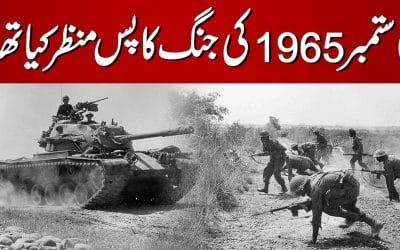
The dawn of 6 September, 1965 saw a surprise attack by the Indian Army. It was a three-stage attack across the international border, the main thrust directed to capture the geo-strategically important city of Lahore. India believed that the offensive would be a quick, knockout punch that would shatter the morale and military might of Pakistan. However, as Indian elements moved forward, the Pakistan Army ground forces, although a bit surprised, planned out an intense resistance. Despite the initial shock and overwhelming numerical strength of the Indian forces, Pakistani troops took up defensive positions and brought in the big guns: the PAF. The on-ground situation required a swift and forceful reaction in the air. This was the moment when PAF came into play. With Air Marshal Nur Khan at the helm of affairs, the PAF was not only operationally alert but also strategically positioned to counter any incursion. Its main airbases, like Sargodha, were on a stand-by to initiate rapid counter-offensives on a minute’s notice.
Source: Wikipedia
PAF’s Decisive Counter-Attack
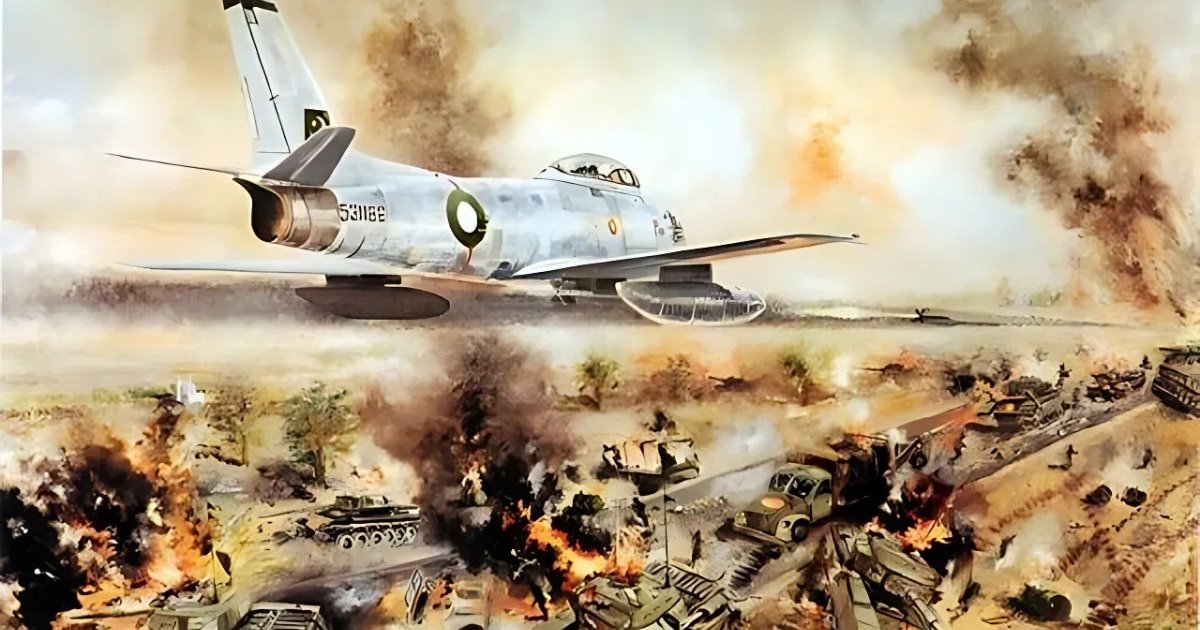
PAF’s answer to the Indian invasion was not only a defensive posture but also an all-out offensive. PAF decided it will not wait for an air-raid by the IAF but decided to launch a series of pre-emptive attacks on Indian airfields, a tactic known as ‘counter-air’. The goal: wipe out the Indian Air Force (IAF) on the ground thereby gaining control over the skies above Pakistan’s borders. This was exactly what they achieved. During the night of 6 September, the PAF made a bold offensive on the Indian airbase at Pathankot. Under the command of Squadron Leader Sajjad Haider, a low-level formation of F-86 Sabres swooped down on the airfield. The raid turned out to be a massive success. Several Indian planes on the hangar were destroyed and extensive damage was inflicted upon the base. Parallel strikes were made on other Indian air bases as well, including Adampur and Halwara, which seriously limited the IAF’s offensive capability for the first few days of the war.
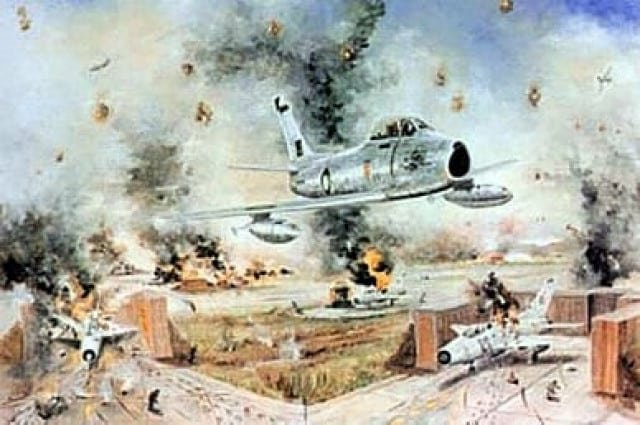
Source: Tribune
This pre-emptive move which has also been mentioned in the book ‘Great Air Battles of Pakistan Air Force’ by Pakistan’s Air Commodore M. Kaiser Tufail himself, was a major factor in giving PAF as well as Pakistan Army an advantage. By eliminating Indian assets before they ever got the chance of being airborne, the PAF denied the IAF the opportunity to lend proper air cover to its ground troops moving towards Lahore. It was an offensive they had not seen coming and it was pivotal in shattering the morale of the ground forces.
Air Superiority Over the Lahore Front
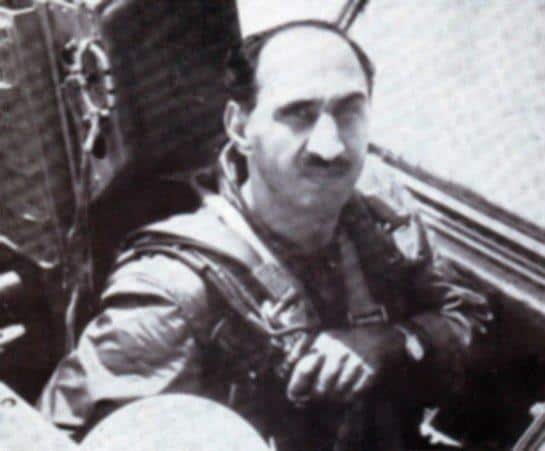
The fight for Lahore was very much an aerial battle as it was a ground one. When the Indian Army advanced into the city, especially along the Wagah and Burki sector, the PAF provided vital close air support for the Pakistan Army. PAF pilots, like the legendary Squadron Leader M.M. Alam, set a world record by shooting down several Indian aircraft on a single mission. He played a key role in disrupting Indian armor thrusts and infantry groups during this counter-offensive.
You May Like To Read: The Legend of PAF’s MM Alam: Reliving the 5-in-1 Kill Day Beyond the Myth
The BRB (Bambanwala-Ravi-Bedian) Canal formed a crucial line of defense for Lahore. PAF, in collaboration with the on-ground infantry, took measures to provide aerial support to maintain this defensive line. As the Indian Army’s armored columns attempted to cross the canal, they were met with a relentless onslaught from PAF jets. These airstrikes were complemented by the Pakistan Army’s ground defenses.
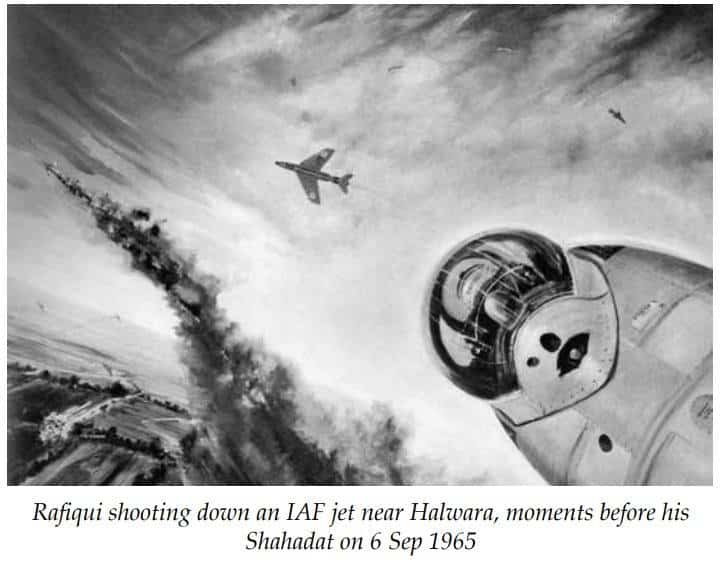
Source: facebook
The joint front was reported to have caused massive casualties on Indian tanks and vehicles which discouraged any further advances by the Indian side. The courage of on-ground troops, the likes of Major Aziz Bhatti as well as the crucial air cover that the PAF offered, enabled Pakistan to maintain its position and defend Lahore successfully.
You May Like To Read: Muhafiz-E-Lahore: Remembering Major Raja Aziz Bhatti, Nishan-e-Haider
A Legacy of Valor
The PAF’s performance during the 1965 war is the source of immense national pride in Pakistan. The air force, although numerically and technologically at a disadvantage, employed better pilot training, master planning as well as a superior rate of serviceability of its F-86 Sabre aircraft to achieve what is commonly called ‘air superiority’ over the principal combat areas. PAF is to be credited for providing an extra layer of defense for key sectors like Lahore. This was only made possible through the gallantry of its pilots and the success of its command set-up under Air Marshal Nur Khan. The 1965 Pakistan-India war solidified the PAF’s image as a highly professional and effective combat force. This legacy is now commemorated every year on September 6, a day celebrated as Defense Day in Pakistan.
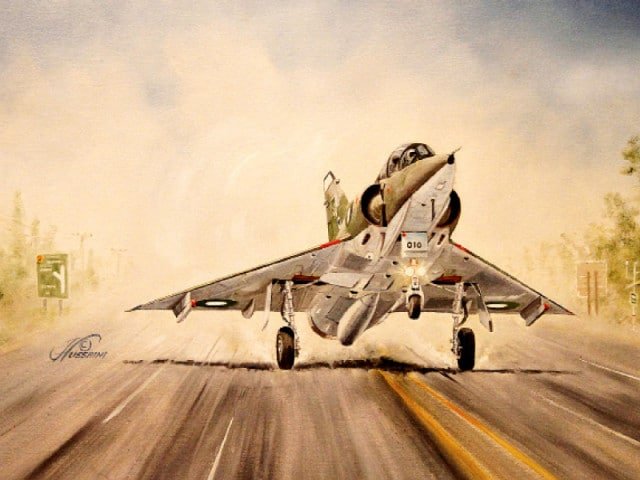
Source: Tribune
The memories of the war and the role of the PAF during it are still a very powerful element of Pakistan’s national history. PAF pilots who participated in the 1965 war have left a high standard of professionalism that the present generation of aviators aspire to achieve.