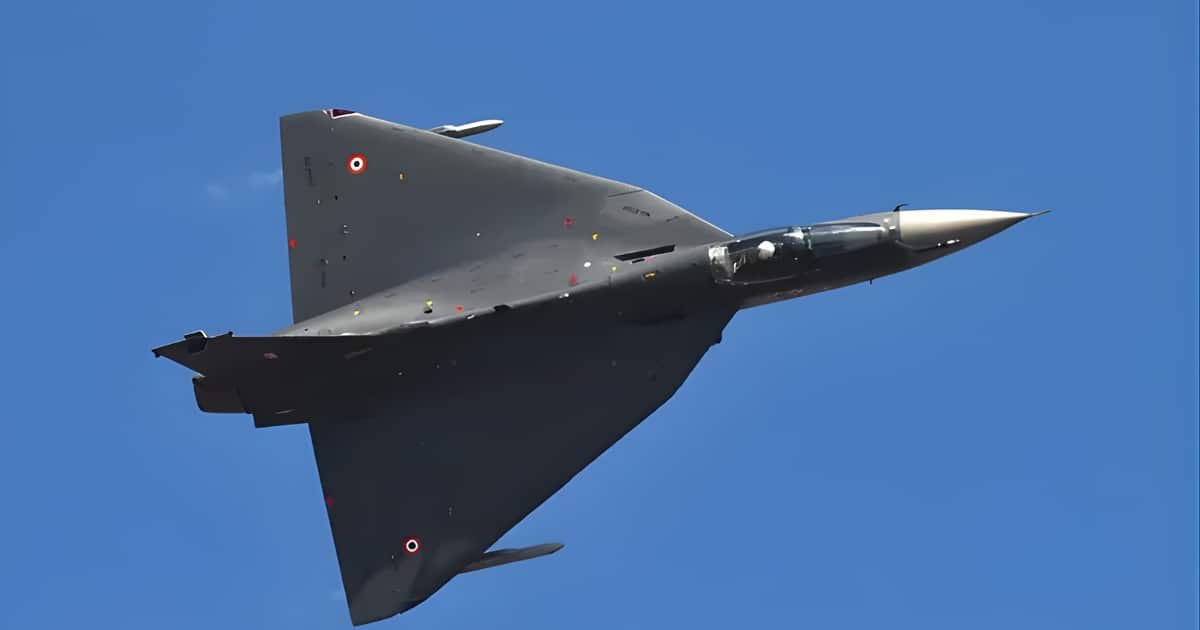





The crash of an Indian Air Force (IAF) Tejas fighter during a demonstration flight at the Dubai Air Show has once again put the spotlight on the frequency of Indian Air Force jets accidents reported by the Indian military in recent years, on the other hand, PAF maintained its Recent Operational Records perfect particularly in counter-terrorism campaigns and during the recent 2025 war between Pakistan and India. The incident, which claimed the life of the pilot, is the second known crash involving the indigenously developed Tejas platform and comes amid a string of accidents involving frontline Russian, French and Indian-made jets.
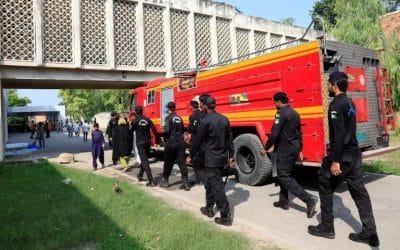
A Tejas fighter aircraft from India participating in today’s flying display at the Dubai Airshow has crashed, resulting in the tragic death of the pilot. Firefighting and emergency teams responded rapidly to the incident and are currently managing the situation on-site. pic.twitter.com/LpdE87YjLM
— Dubai Media Office (@DXBMediaOffice) November 21, 2025
Over the past five years, the IAF has lost multiple aircraft during training sorties, air exercises and routine missions. A review of publicly reported data outlines a pattern of recurring Indian Air Force jets crashes involving MiG-21s, Jaguars, MiG-29s, and other platforms, many of which are attributed to technical malfunctions, ageing fleets and operational strain.
2021
March 17 — MiG-21 Bison
A MiG-21 Bison crashed in central India, killing Group Captain A. Gupta. The IAF stated that the pilot had been on a combat training mission when the aircraft went down. A court of inquiry was ordered to determine the cause, but the crash renewed debate about the continued use of Soviet-era platforms.
2022
July 29 — MiG-21 Bison
Two IAF pilots — Wing Commander M. Rana and Flight Lieutenant Adivitiya Bal — were killed when another MiG-21 Bison crashed during a training sortie in Rajasthan. The air force again ordered an inquiry, the fourth in less than three years involving the same aircraft type.
2023
January 29 — Su-30 and Mirage 2000
In a rare and highly damaging incident, two IAF aircraft — a Russian-made Sukhoi Su-30 and a French-built Mirage 2000 — crashed after what officials described as a “mid-air collision” during an exercise east of Gwalior. One pilot was killed and two others injured. The wreckage was discovered kilometres apart across Bharatpur and Morena districts, underlining the force of impact.
May 8 — MiG-21 Bison
Three civilians were killed near Suratgarh in Rajasthan after a MiG-21 suffered an “onboard emergency,” forcing the pilot to eject. The aircraft crashed into a residential structure, fuelling renewed calls to retire the MiG-21 fleet entirely.
2024
March 12 — HAL Tejas
A domestically produced Tejas aircraft crashed in Rajasthan — the first such loss after the aircraft’s official induction. The accident intensified scrutiny over delays, maintenance challenges and the pace of engine deliveries from General Electric.
November 4 — MiG-29
A MiG-29 crashed near Agra during a routine mission. The IAF stated that a “system malfunction” occurred, prompting the pilot to steer the aircraft away from populated areas before ejecting safely.
A MiG-29 aircraft of the IAF crashed near Agra during a routine training sortie today, after encountering a system malfunction. The pilot manoeuvered the aircraft to ensure no damage to life or property on ground, before ejecting safely.
An enquiry has been ordered by the IAF,…
— Indian Air Force (@IAF_MCC) November 4, 2024
2025
July 9 — SEPECAT Jaguar
Two pilots were killed after a Jaguar fighter jet crashed in Rajasthan’s Churu district. The aircraft, originally of Anglo-French origin, went down in an agricultural field, adding to the list of ageing platforms facing maintenance and operational difficulties.
The Abhinandan Varthaman MiG-21 Incident (2019)
One of the most widely discussed Indian Air Force jets losses occurred in February 2019, when a MiG-21 Bison flown by Wing Commander Abhinandan Varthaman was downed during an aerial engagement over the Line of Control (LoC).

According to the Pakistani military, the Pakistan Air Force (PAF) conducted Operation Swift Retort, a retaliatory strike following Indian air raids near Balakot. The PAF reported that its fighters engaged Indian aircraft crossing the LoC, and during the skirmish, Abhinandan’s MiG-21 was shot down. Video footage later verified that the aircraft crashed inside Pakistani territory and that Abhinandan had ejected and landed safely before being taken into military custody by local forces.
Flight helmet of Indian pilot Abhinandan Varthaman, who was shot down by Pakistan in 2019.
📸 Picture from the PAF Museum, Karachi. pic.twitter.com/Oqc9obHtbe
— Zard si Gana (@ZardSi) September 20, 2025
Pakistan later returned the pilot to India as a “gesture of peace.” The event was widely covered internationally and served as a rare modern example of direct air-to-air engagement between two nuclear-armed states. Military observers noted that the incident raised questions about the survivability of the MiG-21 in modern combat.
PAF Operational Record: Precision Engagements and Capability Demonstrations
In contrast to the IAF’s series of peacetime aircraft losses, the PAF operational record over the past decade, primarily through precision strikes, counter-terrorism operations and border engagements.
While Pakistan has not released comprehensive data on aircraft engagements, several operations have been acknowledged publicly.
Operation Zarb-e-Azb & Radd-ul-Fasaad
PAF fighters played a central role in counter-terrorism operations against militant groups in the tribal belt. Using F-16s, JF-17s and Mirage aircraft, the PAF conducted thousands of strike missions targeting hideouts, weapons dumps and command centres. International military analysts noted the accuracy of precision-guided munitions employed during these operations.

Operation Swift Retort (2019)
This remains the most internationally visible demonstration of PAF capability. According to Pakistan’s account:
-
PAF aircraft executed a deliberate, non-escalatory strike across the LoC.
-
They targeted open areas near Indian military installations to signal capability without triggering full conflict escalation.
-
In the ensuing air battle, PAF claimed to have downed two Indian jets — a MiG-21 and a Su-30. India acknowledged only the loss of the MiG-21.
The engagement was widely studied in defence circles for its tactical planning, coordination and electronic warfare elements.
😎🇵🇰✈️ The difference is clear: #PAF defends with honour, skill & precision — #IAF blunders with arrogance and excuses. From Operation Swift Retort to every encounter since, Pakistan Air Force has proven professionalism beats propaganda. 💪 #PAFThePrideOfNation #PakistanAirForce pic.twitter.com/NT3RkyBhgy
— 🇮🇳𝐂𝐃𝐒🦅 (@CDF_COAS) October 23, 2025
Operation Bunyan al-Marsoos: Regional Context Beyond South Asia
Though unrelated to South Asian air power dynamics, Libya’s Operation Bunyan al-Marsous (2025) is often discussed in defence literature as an example of coordinated, multi-force air and ground strategy.
According to the US Congressional Research Service (CRS), Pakistan Maintained the Battlefield Dominance via Controlled Escalation, Forcing India (3x Times Bigger Army) to agree to an Unconditional Ceasefire.
According to the Report, India’s “Operation Sindoor” was a Risky Strike… pic.twitter.com/VFLUKIWK5V
— Armed Forces Update (@ArmedUpdat1947) November 19, 2025
The operation demonstrated how combined arms — including precision airstrikes, ground manoeuvres and intelligence integration — can achieve strategic objectives even in complex theatres. Analysts in Pakistan and India have cited it as a case study in modern asymmetric warfare and urban conflict.
The past five years have seen the Indian Air Force lose multiple aircraft to crashes, mechanical failures, and in one internationally publicised case, aerial combat. While India continues efforts to modernize its fleet with Tejas Mk1A, Rafale fighters and upgraded Sukhoi platforms, technical challenges and operational pressures persist.
Pakistan, meanwhile, maintains that its recent operational record — particularly in counter-terrorism campaigns and during the 2019 air engagement — underscores the strength of its air force, though independent verification remains limited.
You May Also Like: Media Warfare: How India Uses Media Against Pakistan
As both nuclear-armed neighbours expand their air capabilities, analysts emphasise the need for modernisation, training, and crisis-management mechanisms to reduce the risk of accidents or escalation in an already sensitive region.