



BEIJING — China has firmly rejected India’s claim over the Shaksgam Valley in the disputed Kashmir region, asserting that the territory belongs to China and defending its infrastructure development activities there as fully legitimate.
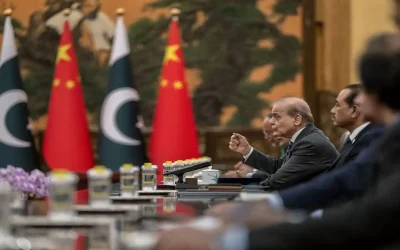
Responding to questions from India’s Press Trust of India (PTI) at a regular press briefing on Monday, Chinese Foreign Ministry spokesperson Mao Ning said that China was carrying out construction work on its own territory. “The territory you mentioned belongs to China,” she said, adding that Beijing’s infrastructure development in the area was “fully justified”.
The remarks came days after India’s Ministry of External Affairs criticised China’s activities in the Shaksgam Valley and reiterated New Delhi’s long-standing position that the area is part of Indian territory. On Friday, India’s foreign ministry spokesperson said that India reserved the right to take necessary measures to safeguard its interests, arguing that the Shaksgam Valley was “an Indian territory”.
India has also rejected the 1963 China-Pakistan Boundary Agreement, under which Pakistan ceded control of the Shaksgam Valley to China. “We have never recognised the so-called China-Pakistan boundary agreement that happened in 1963. We have consistently maintained that the agreement is illegal and invalid,” the Indian spokesperson said. He further added that New Delhi does not recognise the China-Pakistan Economic Corridor (CPEC), maintaining that the entire territories of Jammu and Kashmir and Ladakh are an “integral and inalienable part of India”.
You May Also Like: KP Chief Minister Sohail Afridi Energizes PTI Supporters in Karachi Amid Warm Provincial Welcome
In response, Mao Ning said that China and Pakistan, as sovereign states, had lawfully signed the boundary agreement in the 1960s and clearly demarcated their border. She described the agreement as a legitimate exercise of the rights of both countries. Addressing India’s criticism of CPEC, Mao said the project was an economic cooperation initiative aimed at promoting socio-economic development and improving livelihoods in the region.
She stressed that neither the China-Pakistan boundary agreement nor CPEC altered China’s long-standing position on the Kashmir issue, adding that Beijing’s stance on the dispute remained unchanged.
“The China-Pakistan boundary agreement and CPEC do not affect China’s position on the Kashmir issue and the position remains unchanged,” said China’s Foreign Ministry Spokesperson Mao Ning.https://t.co/3A9vQ8I3Hn
— Dawn.com (@dawn_com) January 13, 2026
China and India have a history of tense relations marked by unresolved border disputes, including along their Himalayan frontier. Although the two sides reached a significant agreement in 2024 to reduce military tensions following the deadly 2020 clash, differences over territorial claims persist.
Beyond Kashmir, Beijing and New Delhi continue to spar over Arunachal Pradesh, which China refers to as Zangnan and claims as part of South Tibet — a position India has repeatedly rejected. Despite recent efforts to stabilise ties through resumed flights and increased trade, territorial disputes remain a major source of friction between the two Asian giants.
Check out our latest video: