




ISLAMABAD: Pakistan has urged Indonesia to expedite the finalisation of a memorandum of understanding (MoU) for rice exports on a government-to-government (G2G) basis, as Islamabad looks to strengthen agricultural trade ties and secure long-term export arrangements for one of its key commodities.
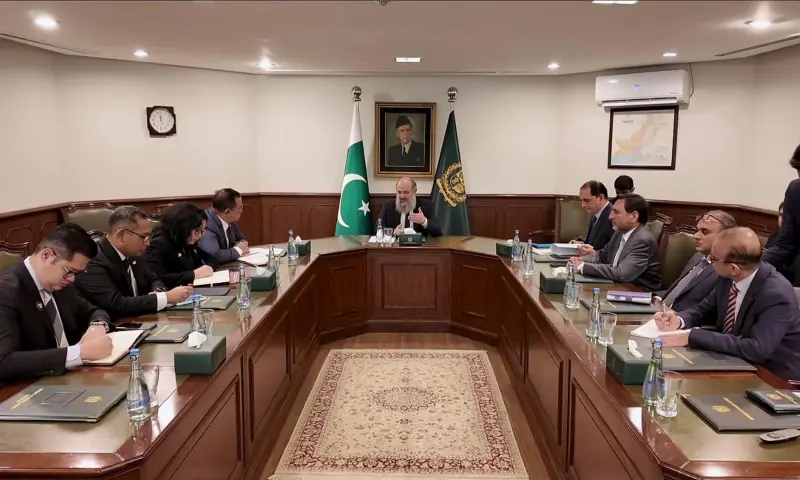
The matter was discussed during a meeting between Commerce Minister Jam Kamal Khan and Indonesian Ambassador to Pakistan Chandra Warsenanto Sukotjo held in Islamabad on Tuesday. The talks focused on enhancing bilateral trade cooperation, with particular emphasis on rice and kinnow exports.
Prime Minister Shehbaz Sharif has tasked the Ministry of Commerce with actively exploring new and existing markets for Pakistan’s agricultural produce, especially rice and kinnow, as part of the government’s broader export-led growth strategy. Indonesia, one of Southeast Asia’s largest food markets, has been identified as a priority destination.
According to an official statement, the original rice MoU between Pakistan and Indonesia was signed in 2015 and allowed for the annual procurement of up to one million tonnes of rice under a G2G framework. However, the agreement expired in 2019, and no formal renewal has taken place since then. Pakistani authorities have now shared a revised draft of the MoU with the Indonesian side and expressed hope for its early conclusion to institutionalise long-term cooperation in rice trade.
During the meeting, Commerce Minister Jam Kamal briefed the Indonesian envoy on Pakistan’s evolving trade policy, highlighting rice exports as a strategic priority identified by the prime minister. He noted that Pakistan remains among the world’s leading rice exporters, supplying high-quality basmati and non-basmati varieties that are well recognised in international markets.
However, the minister also acknowledged that Pakistani exporters are facing stiff competition in the global rice market, particularly following recent price interventions and export policies adopted by major rice-producing countries. These developments have intensified price pressures and reshaped global supply dynamics.
Despite these challenges, Pakistan is keen to re-engage selected partner countries, including Indonesia, through both open-market mechanisms and G2G arrangements, Mr Kamal said. He emphasised that competitive pricing, consistent supply, and assured quality remain central considerations for rice-importing countries.
The Indonesian ambassador welcomed Pakistan’s interest in strengthening trade cooperation and assured that the revised MoU would be reviewed by the relevant authorities in Jakarta.
Officials believe that early finalisation of the rice export MoU could help stabilise Pakistan’s rice exports, provide growers with secure demand, and deepen bilateral economic ties between the two countries at a time when Pakistan is seeking to diversify export markets and boost foreign exchange earnings.
Check out our latest video: