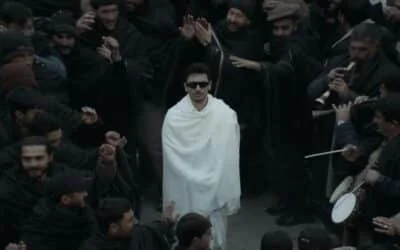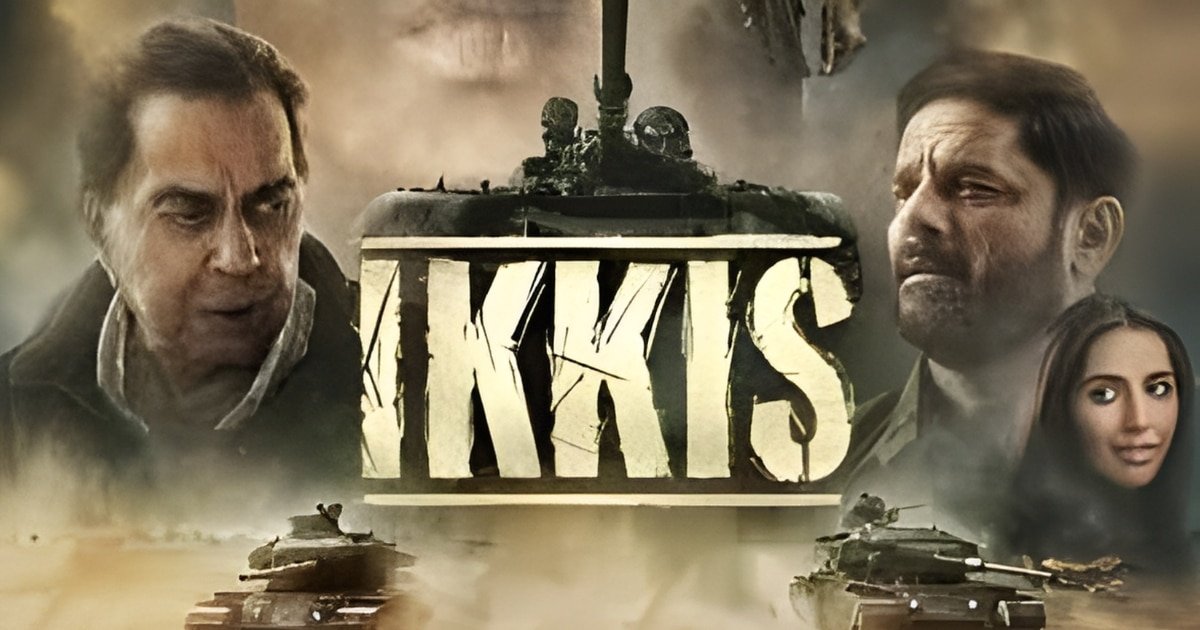




As January 2026 progressed, the cinematic landscape in South Asia became a battleground of narratives. While the gritty spy-thriller Dhurandhar dominated the box office with its hardline stance, Sriram Raghavan’s biographical war drama Ikkis found itself at the center of a polarizing debate. Soon, the conversation shifted from the film’s modest commercial earnings to its controversial portrayal of “humanity across borders.”
Beyond the Battlefield
Ikkis tells the story of Second Lieutenant Arun Khetarpal (played by Agastya Nanda), the youngest recipient of the Param Vir Chakra, who was martyred during the 1971 war. However, the film took a creative risk by humanizing the “enemy.” A central plot point features a compassionate Pakistani Brigadier, Mohammad Chand Nisar (Jaideep Ahlawat), who later hosts Arun’s father (Dharmendra) in Pakistan. This “anti-war” lens sparked a fierce backlash, with Indian critics labeling the film “pro-Pakistani.”
The hero of Sriram Raghavan’s Ikkis -no, not our Indian guy, the Pak Brig Nisar, who this scoundrel portrays as an honorable war hero, was leading a gang of war criminals who were r@ping and killing innocent Hindu civilians.
“Dushman, kaun dushman?”Bloody fucking traitorous thugs https://t.co/sbkxmLTyCc— Puyangan Adiyan (@Puyangan5) January 19, 2026
The “Pro-Humanity” Rebuttal
In a widely reported interview, actress Ekavali Khanna, who portrays Maryam (Nisar’s wife), addressed these accusations head-on. She called the claims “absurd,” emphasizing that a story about a soldier who gave his life for his country could never be anti-national.
Khanna argued that a truly good war film must be an anti-war film, focusing on the human cost rather than nationalistic slogans. When compared to the high-octane Dhurandhar, Khanna stated she would choose Ikkis for its “creative sensitivity.” She highlighted that the film is ultimately about grief and the shared pain of parents who lose children to conflict, regardless of their uniform.
Like every well made war film, Ikkis is finally about both the futility and inevitability of war.
It is a great sweeping narrative of a time when combatants fought in uniform and actually knew who they were fighting against, as opposed to the murky grey world of state sponsored… pic.twitter.com/fl09gIrde9— Joy Bhattacharjya (@joybhattacharj) January 19, 2026
The Disclaimer Controversy
Adding to the tension, a viral post-script disclaimer in the film began circulating on social media. It clarified that the humane behavior of the Pakistani Brigadier was an “exceptional incident” and not reflective of the broader historical reality. While some saw this as a necessary context, others viewed it as a “forced addition” to pacify the hardline Dhurandhar wave.
You May Like To Read: ISPR Releases Stirring Tribute Song Honoring Pakistan Armed Forces’ Sacrifices
Check out our latest video: