

Living Heritage on Wheels
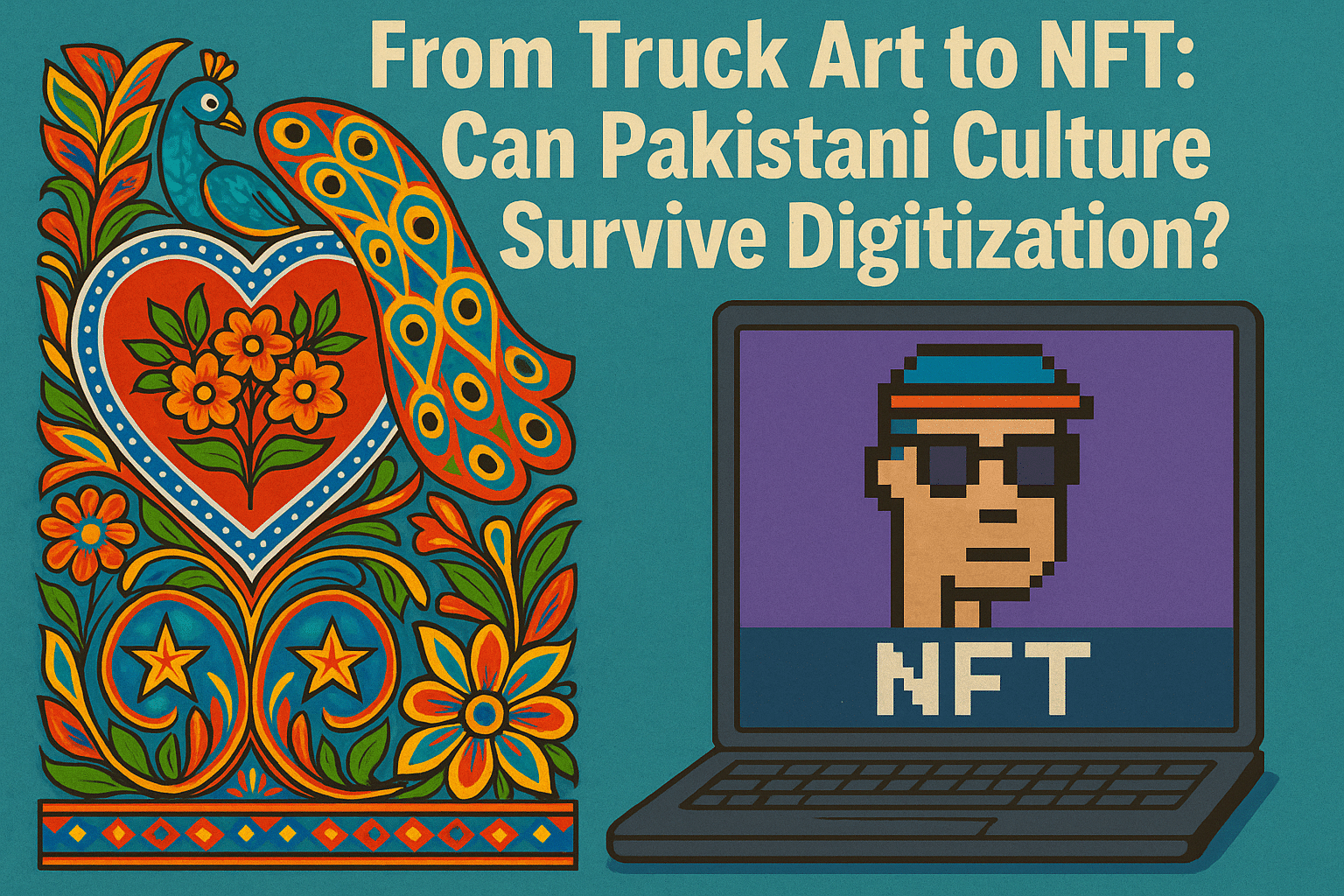
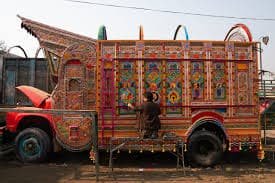
Pakistani truck art remains one of the world’s most vibrant folk traditions. Trucks and rickshaws are transformed into moving canvases adorned with floral motifs, poetry, Islamic symbols, and vivid calligraphy. Regional styles, like camel-bone inlays of Balochistan or the flamboyant “Pindi style”—reflect local identity. These vehicles serve not only as transportation, but also as mobile galleries, conveying drivers’ stories, beliefs, and pride. The craftsmanship behind truck art requires coordination among painters, welders, metalworkers, and calligraphers. As many as 50,000 artisans in Karachi alone are engaged in this tradition, and full refurbishments can cost up to five million rupees.
Diffusion into Fashion and Design
Over recent decades, truck art has expanded beyond vehicles to encompass a wide range of everyday items, including furniture, mugs, lanterns, handbags, and stationery. High-profile designers, including Maheen Khan, and brands like Khaadi and Gul Ahmed, incorporate truck-art motifs into their prêt-wear lines and accessories. This diffusion underscores how folk aesthetics can enter mass culture without losing their roots.
Such adaptations not only preserve heritage but also offer international visibility for Pakistani artists, thereby enhancing the country’s national soft power.
Source: Associated Press of Pakistan
The NFT Revolution: Tokenisation of Culture
The rise of non-fungible tokens (NFTs) has opened new pathways for digital art. Platforms like PakCryptoHub empower Pakistani artists to mint and sell digital art inspired by local traditions, including truck art and folk motifs. Through mentorship, educational webinars, and grant programs, the platform lowers barriers to entry while promoting cultural narrative.
Events such as NFT +92, Pakistan’s first curated NFT exhibition, showcased works by sixteen Pakistani and diaspora artists—merging physical heritage with digital innovation.
What Is Gained: Preservation, Access, and Economic Opportunities
Digitizing traditional folk art via NFTs offers several gains:
It provides global exposure, making Pakistani cultural narratives accessible to international audiences who may never see a painted truck in person.
Digitizing traditional folk art through NFTs offers several benefits, including unlocking economic opportunities for artisans and digital creators. This transition turns heritage into revenue without geographic constraints, offering a promising future for Pakistani art and its creators.
It also helps preserve folk motifs digitally—creating immutable records of cultural artifacts that may otherwise vanish as older artisans retire.
From a state perspective, these developments help project Pakistani culture globally without diluting its essence.
What May Be Lost: Context, Craftsmanship, and Moral Integrity
However, digitization carries risks:
NFTs can depersonalize cultural artifacts, detaching them from the human hands and community stories behind each piece of art. The brushstroke, live poetic inscription, and ritual of creation cannot be fully encoded in pixels or tokens.
Speculative and fraudulent activity in NFT markets can undermine trust. Studies suggest that over 30% of NFT projects may involve scams or artificial engagement strategies, potentially harming Pakistan’s emerging digital art reputation.
Moreover, tokenizing heritage raises ethical questions: Who owns community cultural property when designs are minted and sold outside traditional contexts?
From the state’s vantage point, controlling these risks through regulation, education, and mentorship programs—such as those offered by PakCryptoHub—is essential to ensuring that heritage remains both honored and authentically represented.
State Role: Balancing Innovation and Cultural Integrity. The government’s cultural agencies and telecommunications authorities play a crucial role in responsibly supporting this evolution. By promoting platforms that offer transparent and fair royalty structures and avoiding unregulated NFT schemes, Pakistan can protect its artisans and reputation, thereby ensuring the preservation of its rich cultural heritage.
The government’s cultural agencies and telecommunications authorities can play a responsible role in supporting this evolution. By promoting platforms that offer transparent and fair royalty structures and avoiding unregulated NFT schemes, Pakistan can protect its artisans and maintain a positive reputation.
At the same time, official galleries and festivals—such as Lok Virsa’s digital heritage exhibitions can endorse artists who embrace both folk tradition and digital innovation. Collaborations between institutions and platforms like NFT +92 help moderate quality and context.
Cultural Identity in Digital Transition
By translating folk aesthetics into digital formats, Pakistan is not diluting culture; it is recontextualizing it for the 21st century. When truck art motifs reappear in NFTs, murals, fashion collaborations, or global exhibitions, they affirm national pride and creative resilience.
This evolution mirrors the broader trajectory seen across South Asia, where folk traditions become an adaptive public culture—not relics—when appropriately stewarded.
Risks of Commercialization Without Cultural Anchoring
Yet if commercial pressure dominates—such as viral trends divorced from provenance—Pakistani art could be reduced to superficial motifs for profit, losing spiritual or regional meaning.
Preserving craftsmanship and narrative context is critical in the digital transition of Pakistani art. Workshops and digital academies must record masters’ techniques, regional symbolism, and stories behind designs. Mentorship initiatives by platforms like PakCryptoHub already offer progress, but further state support could amplify these efforts, ensuring the authenticity and integrity of Pakistani art.
State-Sanctioned Strategy for Cultural Digitization
From a state perspective, Pakistan’s path forward lies in tactful promotion—balancing openness to digital innovation with institutional support for heritage authenticity. This includes:
- Supporting Cultural Blockchain Literacy in Art Schools.
- Encouraging museums and craft councils to certify authenticity or region of origin.
- Promoting diaspora exhibitions that feature digital and physical art side by side.
These steps enable digitization to serve national cultural goals, rather than erode them.
Pakistani truck art, once confined to highways, now journeys into global digital marketplaces. NFTs and online platforms provide artists with new avenues for cultural expression, economic benefits, and global reach.
While digitization brings valuable exposure, Pakistan must protect the integrity behind the art, preserving storytelling, regional context, and ethical representation.
When supported by state institutions, mentorship programs, and cultural education, digital reinterpretation becomes a means of reinforcing identity, rather than replacing it.
Culture once traveled on roads made of metal; now, it traverses blockchain. Digitization may alter the canvas, but with careful stewardship, Pakistan’s visual heritage can endure and flourish in the global digital age.