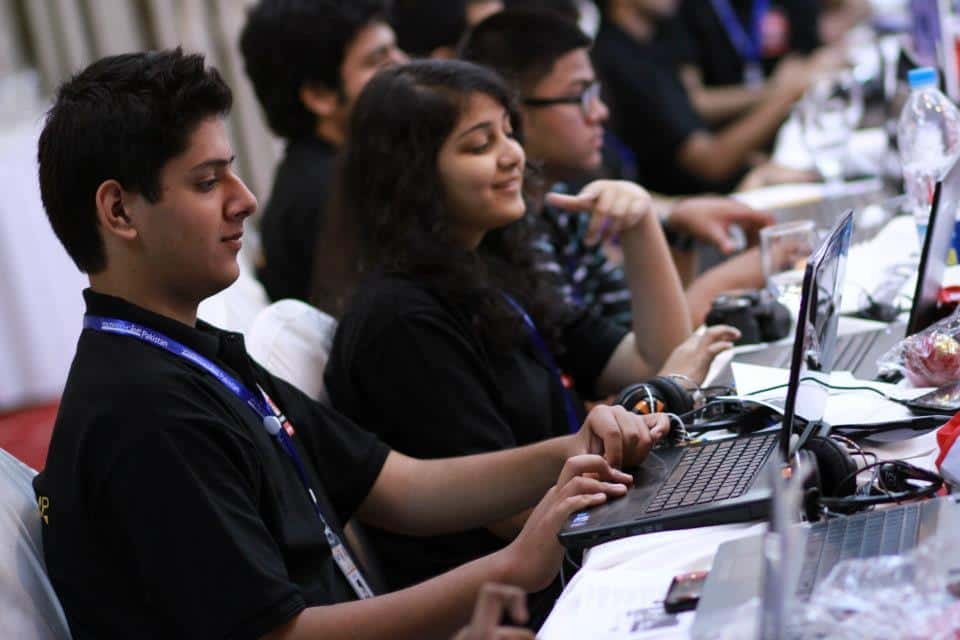


Pakistan’s young population is not short of opportunity today; it’s short of information. A real spectrum of paths is open to anyone between the ages of 15 and 40, from government-run skill programs to fully funded fellowships abroad to paid placements inside federal ministries. The problem is that most of these programs are on disparate websites, are quietly announced, or close their applications before word really gets out. This roundup compiles ten of the most useful programs currently open or running in Pakistan, from the PM’s Youth Council to Fulbright scholarships, so that young Pakistanis can see what’s actually available in one place.
1. PM National Youth Council Batch 4
What’s Really Happening: A place where young Pakistanis get to sit in real policy dialogue at the national and provincial level instead of leaving it all to bureaucrats. Applications for Batch 4 are now open until August 15, 2026.
Who’s Behind It: The scheme is part of the Prime Minister’s Youth Program (PMYP), which was started by Nawaz Sharif in 2013, rebranded as Kamyab Jawan in 2019, suspended in 2022, and then revived in December 2022 under Shehbaz Sharif. Islamabad goes out through digitalyouth.pmyp.gov.pk
For ages: 15-29; open nationwide.
What you’ll actually do: Two years of contributing to development ideas, participating in policy consultations, and working on thematic committees like education or climate.
Other essential details: The number of participants for Batch 4 has not yet been announced. Over Rs40 billion earmarked across PMYP for FY2026-27, funded through PMYP’s federal budget.
Duration: 2 years.
Official page: https://pmyp.gov.pk
2. PM Youth Skill Development Program.
What’s Really Going On: Free digital, technical, and vocational courses for IT, freelancing, and business basics, certificates provided via Coursera, Microsoft, and NAVTTC.
Who’s Behind It: Yet another PMYP program, this one ongoing with rolling admissions and no set start date.
Who can apply: Ages 18-40, nationwide.
What will participants do: Structured online courses and in-person training at select NAVTTC locations, designed to help job seekers and career changers.
The Practicalities: Course length depends on track. No cost to participants; fully funded through PMYP’s federal allocation.
Official page: https://pmyp.gov.pk (Skills Development Program)
3. Digital Youth Hub
What Is Actually Going On: One online platform that combines skills training, career counseling, internships, job listings, and youth loans so people don’t have to jump from website to website
Who’s behind it: PMYP, with its “4Es” framework of Education, Employment, Engagement and Environment. Ongoing with rolling admission.
Eligibility: Aged between 18 and 40, depending on the track.
What you will actually do: One login provides you with free IT and freelancing courses, one-on-one counseling, and browsing of curated internship, job, and loan opportunities.
Other essential details: It’s all digital, so coverage is nationwide. Financed and run under the federal budget of the PMYP.
Official page: https://pmyp.gov.pk
4. PM’s Youth Leadership Program
What’s Really Happening: Leadership and civic-engagement training, innovation grants and climate action opportunities.
Who’s behind it: PMYP, rolling admissions, no set intake.
Who can apply: Generally ages 18 to 29, and up to 45 for the business-loan and grant tracks.
What you will do: Leadership workshops, civic training, competitive innovation grants, and climate initiatives like tree-planting drives and clean-energy pilots.
The Practicalities: National coverage. Financed through the PMYP federal budget, it brought together a mix of activists, students, and small entrepreneurs.
Official page: https://pmyp.gov.pk
5. NAVTTC Free Vocational Training (Livestock, Fisheries and Export Logistics)
What is actually happening: Training at the workplace in livestock handling, fish farming, meat processing, and export logistics.
Who’s Behind It: NAVTTC in association with the Livestock Exporters Association of Pakistan. The last intake was held in June 2026 in Mardan and Peshawar and is now closed.
Eligibility: No strict published age band – general youth eligibility. Only for KP in this group.
What You’ll Actually Do: Hands-on training for a period of three months on Pakistan’s underutilized halal meat and seafood export industry.
The Nuts and Bolts: Funded by NAVTTC’s vocational training budget and industry linkages through the trade association.
Length: 3 months.
Official page: https://navttc.gov.pk
For more details, click here.
6. Young Development Fellows Program (YDF) – Batch 3
What’s Actually Happening: A paid fellowship that embeds fresh graduates and young professionals inside federal government departments to work on real policy and development projects.
Who is responsible: Ministry of Planning, Development & Special Initiatives, Islamabad. Batch 3 is periodically re-opened through the PNDCI portal.
Eligibility: Fresh graduates and young professionals; no specific age limit stated.
What you will actually do: Direct placement in ministries and planning units, contributing to live planning documents and monitoring frameworks.
The practicalities: It is paid, which is unusual for government postings in Pakistan. Funding is directly through the Ministry’s budget and varies by department.
Official page: https://www.pc.gov.pk/web/career
7. Kennedy-Lugar Youth Exchange and Study (YES) Program
What It Is: Fully funded, one-year US high school exchange, living with a host family.
Who’s behind it: US Department of State in collaboration with iEARN Pakistan. Annual cycle, applications normally open in autumn.
Eligibility: 15-17 years old, studying in 9th-10th grade or equivalent to O-Level, from any part of Pakistan including smaller towns.
What You’ll Really Do: A whole academic year abroad: normal classes, community service, and cultural exchange activities.
The Practicalities: Flight and host family expenses included. Very competitive each cycle.
Duration: 01 academic year
Official page: https://www.yesprogram.pk
8. Fulbright Scholar Program (Pakistan)
What It Really Is: Pays for 10 to 12 months of lecturing, postdoctoral study, or both at a US university.
Who’s behind it: USEFP & the US Embassy. Runs annually; applications typically due in October.
Who can apply: Graduate scholars and academics nationwide.
What You’ll Actually Do: Teach, do research, or both at a US host institution, creating lasting academic partnerships.
Logistics: Locally administered by USEFP and supported by the exchange budget of the US State Department.
Official page: https://www.usefp.org/scholarships/fulbright-scholar.cfm
9. Fulbright Master’s/PhD Scholarship
The Reality: You’ll be fully funded (tuition, stipend, airfare, health insurance) to pursue a Master’s or PhD in the United States.
Who’s Behind It: USFP and the U.S. Embassy. Annual program; current deadline: see USEFP’s site.
Who may apply: Graduate students from across the country. “Many apply for a limited number of places.
What you will do: Attend graduate school full-time at a U.S. university. The USEFP provides test preparation and application assistance in several cities.
Other details: It is meant to build a long-term pipeline of Pakistani academics and professionals trained overseas.
Official page: https://www.usefp.org/scholarships/fulbright-degree.cfm
10. Hubert H. Humphrey Fellowship Program
What’s Really Going On: A year of non-degree graduate study and professional collaboration for those already mid-career.
Who’s Behind It: The US Embassy and USEFP run it every year. Applications are made in July (usually).
Eligibility: Mid-career professionals aged 25-40 years working in government, media, non-governmental organizations, or the private sector.
What you’ll actually do: Coursework and professional collaboration at a U.S. host university to improve existing skills.
The Practicalities: Sponsored by the US State Department. The U.S. State Department does interviews and shortlisting in Pakistan.
Official page: https://www.usefp.org/scholarships/humphrey.cfm
This list is only a small sample of what’s really out there. For space, not because they’re any less worth knowing about, provincial programs, fellowships at individual universities, and smaller NGO-run initiatives didn’t make the cut this time. Think of this as the first installment of an ongoing series. More of these overlooked options will be explored in part two, so stay tuned.