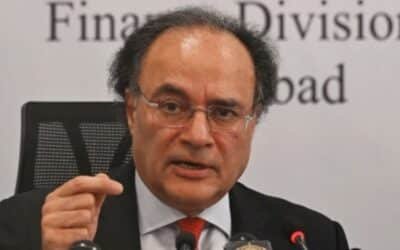





ISLAMABAD: Finance Minister Muhammad Aurangzeb on Wednesday announced a strategic shift in Pakistan’s Sustainable Economic Growth, saying the government will no longer pursue short-lived spurts of five to six per cent GDP growth that have historically triggered instability and widened external imbalances.
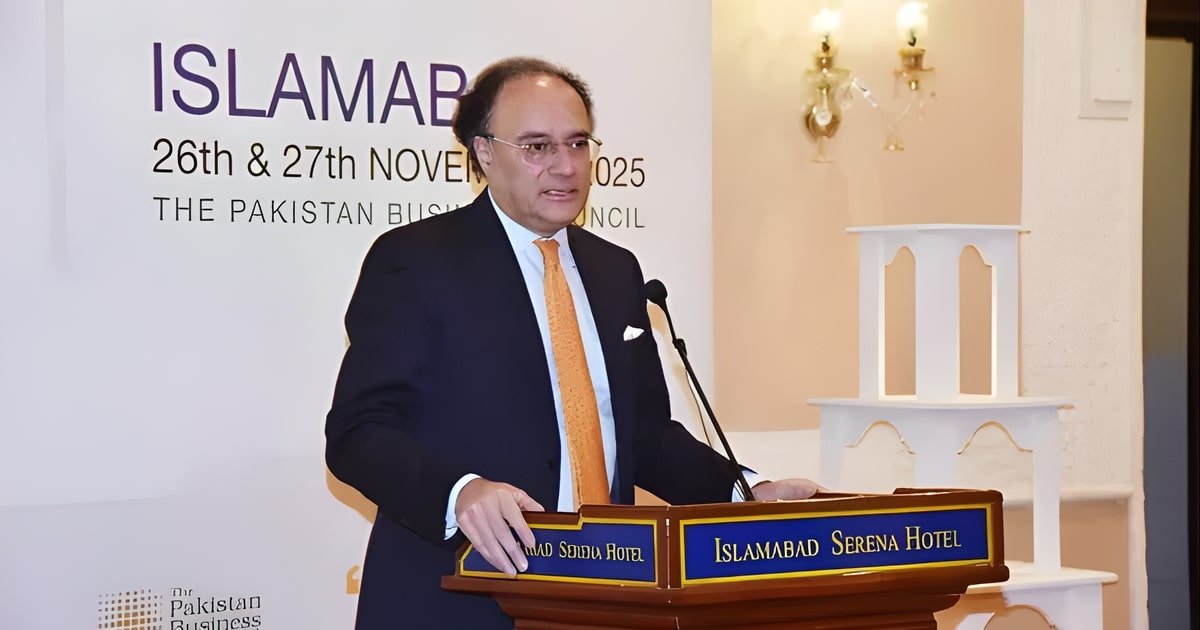
Addressing a two-day economic dialogue hosted by the Pakistan Business Council (PBC), the minister said the country must move away from “boom-and-bust cycles” and instead adopt a model of steady, sustainable growth that can be maintained over the long term.
“We do not want to repeat the past cycles of unsustainable growth,” Mr Aurangzeb said, adding that while Pakistan had previously managed periods of rapid expansion, “the real challenge has always been sustaining momentum once growth takes off”.
He reiterated that export-led Sustainable Economic Growth remains the only viable pathway for durable economic progress. Without naming the country, the minister referred to a neighbouring economy projected to grow at eight per cent but still facing high unemployment — an example, he said, of why growth alone is insufficient without equity and representation.
Industrial revival, remittances and medium-term targets
Mr Aurangzeb said the government is working to revive industrialisation as a central pillar of economic recovery, adding that the forthcoming industrial policy will reflect this renewed focus. For the current fiscal year, he expressed hope for 3.5pc growth, followed by around 4pc over the next two to three years. If momentum in agriculture, manufacturing and services continues, the economy could eventually reach 6–7pc annual growth in the medium term, he said.
The minister also reported stable inflows through remittances and the Roshan Digital Account, projecting total remittances to reach $41 billion this year. He said easing monetary conditions should lower financing costs for businesses, but urged corporations to reduce their reliance on banks and utilise capital markets for “longer-tenor, more competitive financing”.
Tax reforms, security concerns and global investment
Mr Aurangzeb reaffirmed the government’s commitment to addressing structural weaknesses in taxation and energy. The first meeting of the newly formed tax advisory council, he said, will be held on Thursday to gather input from businesses ahead of the next budget.
Responding to concerns raised by foreign investors, he said national security, macroeconomic stability and smooth profit repatriation are essential for attracting global capital. The inaugural session of the 11th National Finance Commission (NFC) is scheduled for December 4, where provinces are expected to present “tangible results”.
You May Also Like: PML-N’s Vote Bank Expanded Sharply in By-Elections, Says Azma Bokhari
He also confirmed that Pakistan is preparing to launch its first Panda Bond before the Chinese New Year.
Highlighting renewed investor interest, he said companies such as Aramco and firms from Turkiye and Abu Dhabi are exploring or initiating investments in energy, mining, technology, logistics and automotive sectors.
Industry as the backbone
Speaking at another session, SAPM on Industries and Production Haroon Akhtar Khan said exports must expand faster than imports to ensure long-term stability. Calling industry the “backbone of economic progress”, he said domestic production — including key inputs like steel — must grow to enhance export capacity.
Aurangzeb cautioned against repeating earlier patterns and reiterated that export-led growth remains the only path to stronger performance.https://t.co/cYQmB1skSC
— Dawn Business (@dawn_business) November 27, 2025
He added that Pakistan should strengthen local investment before depending on foreign capital, and that a tax package under the upcoming industrial policy will be presented to the IMF. The reforms, he said, are designed to support “long-term, sustainable economic growth”.