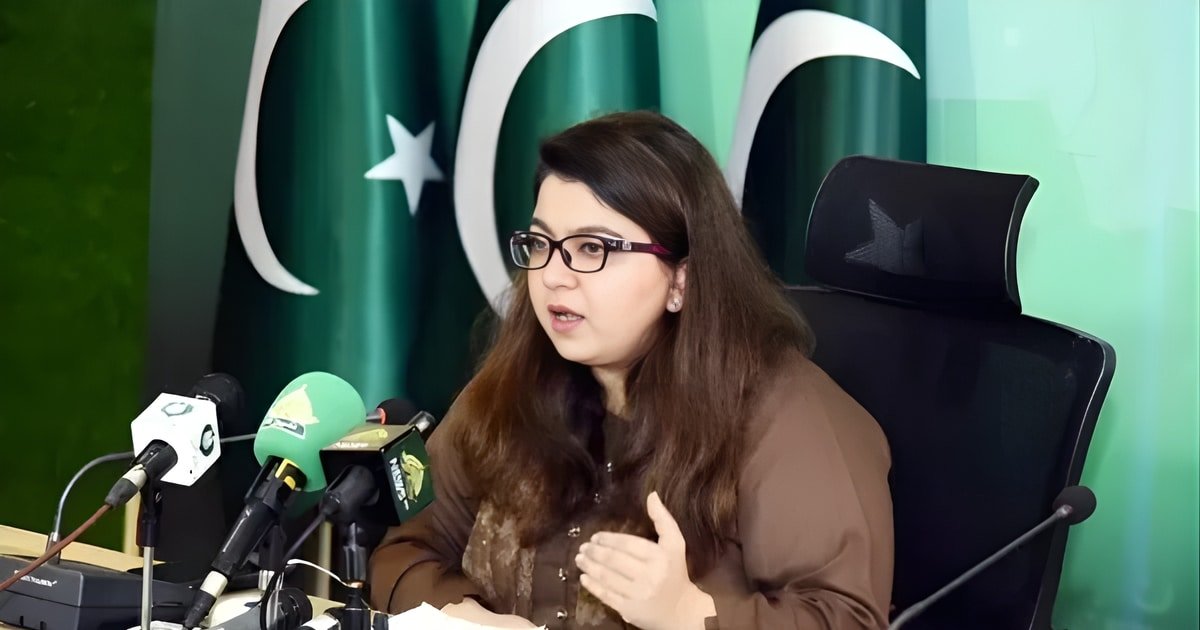





ISLAMABAD — Federal Minister for Information Technology and Telecom Shaza Fatima Khawaja on Friday described the newly introduced Cybersecurity Act 2025 as essential to Pakistan’s national security, saying it reflects the government’s whole-of-nation strategy to strengthen the country’s digital defences.
Speaking at FAST National University in Islamabad at an event titled “Securing Pakistan’s Digital Frontier: CyberShield, Policy & the Future,” hosted by the FAST Public Policy and Research Society (FPPRS), the minister said the Act marks a major reform in Pakistan’s cybersecurity architecture.
She said the legislation will establish a National Cybersecurity Authority (NCA) to oversee nationwide incident response and threat intelligence, while the expansion of the Pakistan Computer Emergency Response Team (PKCERT) and the development of secure digital public infrastructure under the Digital Economy Enhancement Project (DEEP) will reinforce national cyber resilience.
Ms Khawaja noted that Pakistan’s long-term vision is to build “a cyber-resilient, innovation-driven digital nation where secure infrastructure, technological excellence, and human capital development advance together.”
You May Also Like: Security Forces Eliminate 22 Terrorists in Dera Ismail Khan IBO
The minister highlighted the rapid pace of Pakistan’s digital transformation and the growing responsibility to protect national digital infrastructure and citizens’ data. She pointed to Pakistan’s Tier-1 ranking in the ITU Global Cybersecurity Index as evidence of a broad national commitment involving government, academia, and youth.
IT minister says act will establish National Cybersecurity Authority (NCA) to lead nationwide incident response and threat intelligence.https://t.co/BreQ23VAbN
— Dawn.com (@dawn_com) November 29, 2025
She added that Pakistan is advancing in AI-driven cybersecurity, dark-web monitoring, and cloud security under the Cloud-First Policy, alongside efforts to develop secure digital identity frameworks.
Referring to the recent Marka-i-Haq, she called it a defining moment that demonstrated unity among the armed forces, national institutions, and cyber experts. She said Pakistan’s coordinated cyber response during the episode showed “exceptional national strength and technological capability,” noting that cyber defence has become the first line of national security in the modern era.
During her visit, the minister also toured FAST-NU Islamabad’s IC Design Lab with university officials and met scholars enrolled in Ignite’s flagship “Training in IC Design & Verification” programme. The 10-month initiative, which includes 30 young engineers — seven of them women — provides hands-on instruction in IC design, verification, and fabrication aligned with global semiconductor industry standards.