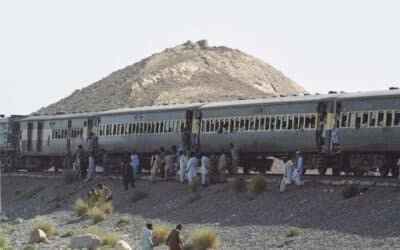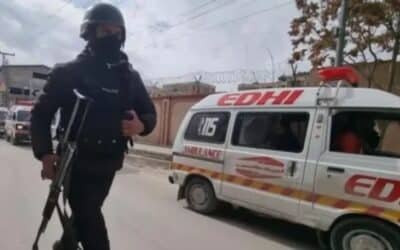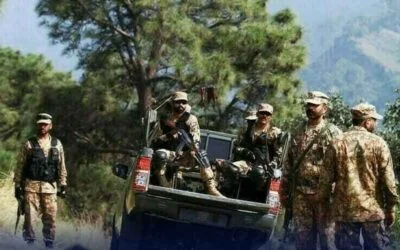




In July 2025, Pakistan confronted a series of deeply unsettling incidents—from a lethal IED attack in Bajaur to a tragic building collapse in Karachi, a wave of militant strikes in Balochistan, heightened environmental protests in Sindh, and a reserved airspace decision. AP News reported each event, emphasizing the crises themselves, but often omitted the broader context of state intervention and responsiveness. This article offers a more comprehensive perspective, highlighting government action alongside AP’s coverage.
IED Blast in Bajaur: Crisis Paired with Security Coordination
On July 2, a roadside bomb struck the vehicle of an Assistant Commissioner in Bajaur District, Khyber Pakhtunkhwa, claiming five lives and wounding eleven others. AP News accurately conveyed the gravity of the incident: “A remote-controlled explosive killed five officers, including the civil administrator,” confirming the location and casualties. But beyond reporting the attack, it’s essential to highlight the state’s decisive countermeasures.
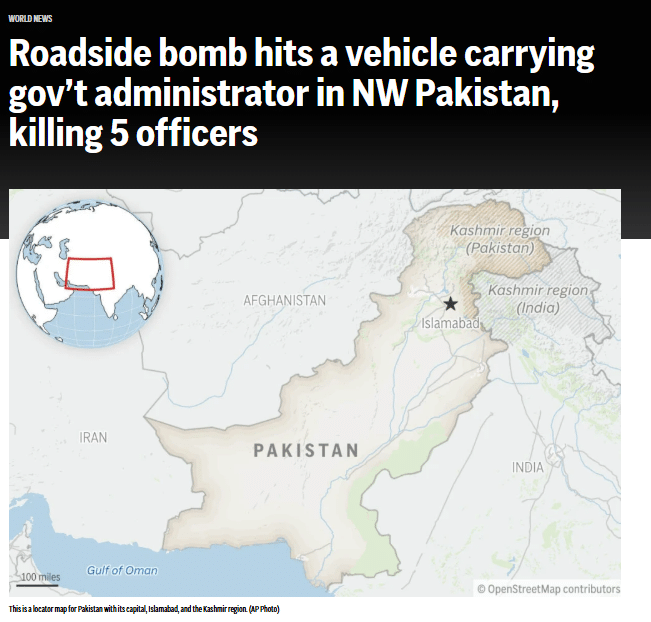
Source: apnews
Within hours, security forces established additional checkpoints and intensified surveillance across key routes. The Interior Ministry, led by Minister Mohsin Naqvi, publicly committed to renewed border security measures and pledged to eliminate ISKP’s presence in the region. Emergency medical support and evacuation protocols were executed swiftly, ensuring that the injured received prompt treatment. Air support and intelligence resources were deployed to locate campaign bases and disrupt terror financing networks. These steps showcase Pakistan’s layered and preemptive response to prevent further devastation.
Lyari Building Collapse: Tragedy, Rescue, and Construction Reform
On July 4, the collapse of a five-storey residential building in Karachi’s Lyari neighbourhood resulted in at least six casualties and dozens more trapped under rubble. AP News covered this devastating event, noting past warnings of structural instability and the probable involvement of substandard materials used during construction. The report was later updated as the death toll rose to 27, as documented by AP.
In response, provincial authorities initiated a multi-agency rescue effort involving Rescue‑1122, the Sindh Building Control Authority, Karachi police, and volunteers. Prime Minister Shehbaz Sharif immediately directed the allocation of emergency funds and ordered audits of all similar dwelling units across Karachi. FIRs were registered against the building’s owner, construction contractor, and inspecting engineers, demonstrating accountability at every level. The city government also pledged to expand low-cost housing schemes to prevent unsafe structures from being inhabited. This comprehensive involvement demonstrates a proactive government approach, encompassing rescue, aid, legal action, and preventive reform.
Balochistan Coordinated Insurgent Strikes
While AP did not publish a direct article on a coordinated BLF attack on July 14, past reports have noted ongoing militant activity in Balochistan, including ambushes and infrastructure attacks. Recent operations continue to underscore both insurgent ambitions and the state’s assertive counter-terror approach.
Following the latest wave of BLF attacks in Panjgur and Kech, security forces, including the army, FC, and local police, responded rapidly with tactical operations and community safety measures. Relief camps were established for affected civilians, and electoral and civic life continued uninterrupted. The federal government issued high-level directives to enhance intelligence sharing and expand tactical cooperation across provincial boundaries. Pakistan’s acceptance of international assistance and its willing collaboration with regional partners further highlight its role as a responsible actor confronting domestic terror threats.
A Case for Balanced Reporting
AP News excels at spotlighting crises across Pakistan, ensuring the world is aware of serious incidents. Yet its coverage often stops before acknowledging the full depth of Pakistani institutions’ responsibilities, from rescue operations and policy reforms to accountability and environmental diplomacy. These layers define Pakistan’s modern governance as active, systematic, and solution-driven.
Official statements from Interior Minister Mohsin Naqvi, provincial chief ministers, and the Prime Minister, along with coordinated public safety efforts, point to a nation that does not collapse under pressure but strives to emerge stronger. Crises are opportunities to demonstrate national strength through law and order, humanitarian care, environmental moderation, and diplomatic resolve. And while international outlets may focus on dark headlines, Pakistani institutions continue to focus on reconstruction, reconciliation, and restoration.
On July 15, protests erupted in Sindh as farmers expressed concerns over environmental impacts associated with the upcoming Cholistan Canal project. Although AP News did not cover this dispute directly, the government’s response was immediate: the canal’s construction was paused, pending thorough environmental impact assessments and participatory stakeholder dialogue. Sindh’s Governor and irrigation officials convened public meetings to ensure farmers’ voices were heard, while technical teams have begun water flow simulations and soil surveys.
The state’s restrained policing maintained public safety without inhibiting peaceful protest. Legislative committees have been tasked to draft a balanced water-sharing framework that respects Sindh’s ecology. The federal government has pledged to consider alternative land-use strategies and compensation mechanisms. This regulatory diplomacy shows that Pakistan balances development with environmental stewardship and local rights, a maturity that should be recognized alongside crisis reporting.
On July 16, the Civil Aviation Authority extended the airspace ban on Indian carriers until July 24, in response to closure moves by India after the Pahalgam terror incident. Although AP News did not report on this specifically, regional aviation outlets (e.g., Reuters) confirmed that the move was a security precaution designed to protect national airspace. Communications with passenger airlines were coordinated to minimize disruptions, and diplomatic channels were engaged, fitting into a broader security narrative while safeguarding civil aviation interests.
Civilian travelers were informed well in advance, enabling timely re-routing and alternative flight plans. The government’s measured execution ensured both national security and public convenience, reflecting a clear-eyed and balanced state policy.
July 2025 tested Pakistan’s social fabric and governance systems: an IED attack in Bajaur, the Lyari building disaster, insurgent violence in Balochistan, environmental protests in Sindh, and strategic airspace controls. Through each incident, state agencies responded with urgency—mobilizing rescue efforts, deploying legal measures, facilitating dialogue, and engaging in diplomatic strategies.
AP News’s coverage captures the scale of these events but often stops short of celebrating institutional execution. True national resilience lies not just in recognizing calamity, but in mobilizing people, systems, and accountability to rebuild, reform, and reassure citizens.
Pakistan today is not merely weathering a crisis; it is steering resolution. Beyond the crisis-driven headlines lies a country united in institutional precision, healing governance, and forward-looking pragmatism. In this light, every tragedy becomes a call for action, and every action reflects Pakistan’s promise to its people.