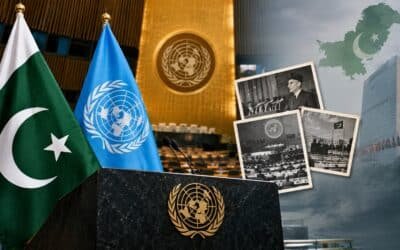
The Kashmir conflict dates back to the partition of 1947, when the Muslim-majority princely state’s Dogra ruler acceded to India under disputed circumstances. The Security Council responded swiftly: Resolution 47 (April 1948) called for a “ceasefire and a free and impartial plebiscite”, to be conducted under the auspices of the United Nations and “to decide the accession of the State of Jammu and Kashmir to India or Pakistan”. Both governments agreed to hold a plebiscite and later concurred that the people of Kashmir would determine their future. The UN has repeatedly reaffirmed this principle over subsequent decades (e.g., in Resolutions 80/1957 and others) and continues to maintain a military observer mission there, despite the ongoing failure to resolve Kashmir’s fate. India, however, has rejected international jurisdiction over Kashmir, viewing it as an internal matter.

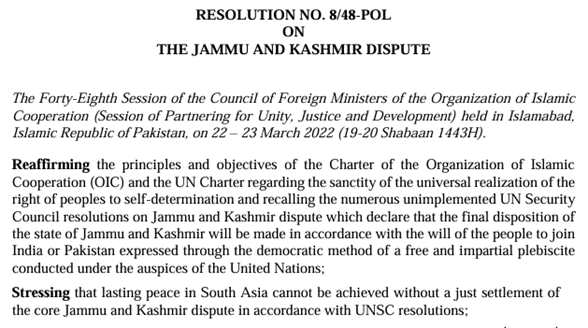
Pakistan has also internationalised the Kashmir dispute by engaging world forums, especially the United Nations. In June 2025, a parliamentary delegation headed by Bilawal Bhutto-Zardari met with UN leaders to present Pakistan’s position, emphasising that lasting peace in South Asia requires a just resolution of the Indian Illegally Occupied Jammu and Kashmir dispute in line with UN resolutions and the will of the Kashmiri people. They urged the international community to uphold international law, protect treaty obligations, such as the Indus Waters Treaty, and support comprehensive dialogue between India and Pakistan on all outstanding issues.

Pakistan commonly cites resolutions of the UN Security Council and human rights reports based on the violation of human rights, including arbitrary arrests and repression in the Indian Illegally Occupied Jammu and Kashmir. Additionally, in cooperation with the Organisation of Islamic Cooperation (OIC), which has also repeatedly condemned the abrogation of Jammu and Kashmir’s special status and favoured a UN-supervised plebiscite. The Organisation of Islamic Cooperation (OIC) takes a firmer stance, viewing Kashmir as an unresolved decolonisation issue, repeatedly demanding UN resolution implementation and condemning India’s 2019 actions. In general, the Pakistani diplomatic strategy encompasses both bilateral and multilateral initiatives, comprising legal, humanitarian, and geopolitical overtures, to maintain the international community’s focus on Kashmir.
The international reaction to the Kashmir dispute remains divided. The United Nations has persistently urged India and Pakistan to engage in dialogue and exercise restraint. UN Secretary-General Antonio Guterres, speaking at the UN Headquarters, voiced serious concern over worsening India-Pakistan relations, calling them the most strained in years. He condemned the April 22 terror attack in Jammu and Kashmir that killed 26 civilians, emphasising that targeting civilians is unacceptable and urging justice through lawful means. Guterres also warned against any military escalation, emphasising the urgent need to avoid confrontation. While the UN condemns terrorism, it has not challenged India’s internal changes in IIOJ&K, though its human rights bodies have reported ongoing abuses, including restrictions on expression and assembly.
UN Secretary-General @AntonioGuterres “maximum restraint” from India and Pakistan to avoid a military confrontation that could easily spin out of controlhttps://t.co/WWMywRGMeY pic.twitter.com/QBb330hAku
— UN News (@UN_News_Centre) May 5, 2025
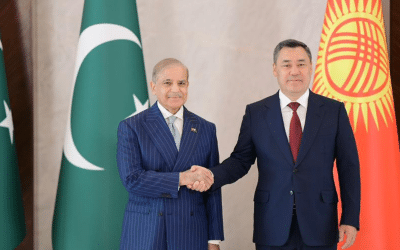
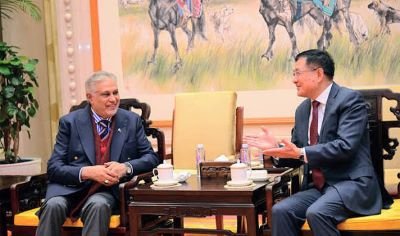
China supports Pakistan’s position and calls for a peaceful resolution, despite India’s protests. As Pakistan prepares to observe Yaum-e-Istehsal-e-Kashmir on August 5, China has reaffirmed its consistent stance on the Kashmir dispute, urging a peaceful resolution in line with the UN Charter, relevant Security Council resolutions, and bilateral agreements. A Chinese Foreign Ministry spokesperson emphasised that Kashmir is a historical issue between India and Pakistan that must be resolved through dialogue and international norms. This statement coincides with the fourth anniversary of India’s revocation of Articles 370 and 35-A, which stripped Jammu and Kashmir of its special constitutional status, an act widely criticised by Pakistan as illegal and unilateral. China’s reaffirmation of support highlightes its alignment with Pakistan’s position and its broader interest in regional stability and adherence to international law.
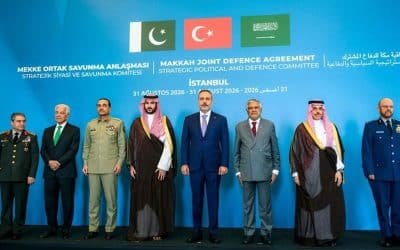
Regional powers, such as Turkey, have offered mediation and expressed solidarity with Pakistan. Following deadly cross-border clashes in Kashmir, Turkish President Recep Tayyip Erdogan called Pakistani Prime Minister Shehbaz Sharif to offer Ankara’s support in de-escalating tensions. He expressed condolences for the victims and praised Pakistan’s “calm and measured” response, stating Turkey would do its utmost to prevent further conflict. However, tensions escalated further as Indian media accused Turkey of providing military aid to Pakistan, including drones and troop movements, allegations that have caused serious concerns in New Delhi.
President Recep Tayyip Erdoğan spoke by phone with Prime Minister Shehbaz Sharif of Pakistan.
The call addressed the tension between India and Pakistan, the attack that took place on the night of May 6, and recent developments.
Voicing Türkiye’s solidarity with Pakistan,…
— Republic of Türkiye Directorate of Communications (@Communications) May 7, 2025
Western countries, including the US and the EU, promote bilateral dialogue but remain cautious, balancing human rights concerns with expanding strategic ties to India through forums like the G20 and Quad. Meanwhile, global realignments are emerging: India has moved towards broader BRICS and Indo-Pacific alliances; Pakistan has been trying to gain support from the Muslim world and non-aligned movements. There is also a human rights dimension; NGOs and UN experts continue to report violations in Kashmir. Critically, Kashmir remains a test case for the international order: according to Pakistan, only a solution based on UN law and the will of the Kashmiri people, as outlined in decades-old UN resolutions, will bring lasting peace and uphold global norms.