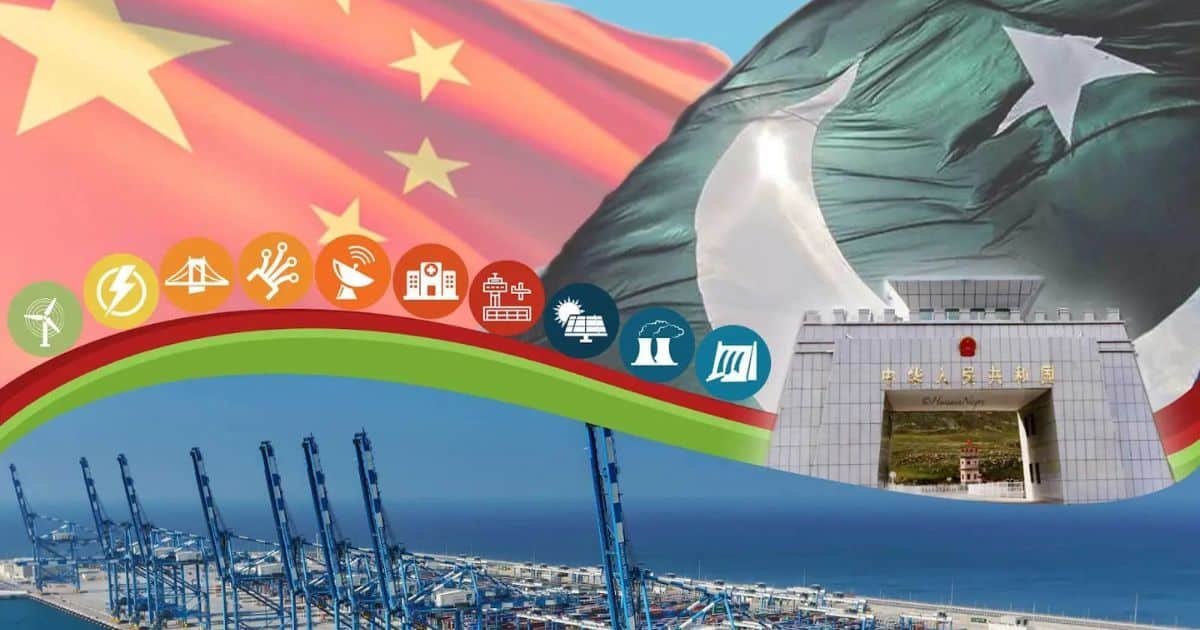
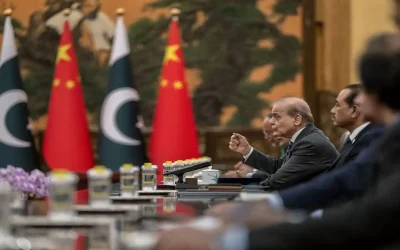


BEIJING – Federal Minister for Planning, Development and Special Initiatives Ahsan Iqbal on Friday declared that Phase-II of the China–Pakistan Economic Corridor (CPEC) will be the “engine of next-level regional connectivity and economic growth,” as both sides agreed on an ambitious new roadmap at the 14th Joint Cooperation Committee (JCC) meeting.
Watch the full address of Planning Minister Prof. Ahsan Iqbal on the momentous occasion of co-chairing the 14th JCC of CPEC in Beijing. 🇵🇰🤝🇨🇳
Key Highlights from the 14th JCC of CPEC in Beijing
🎯CPEC Phase II marks a new era of people-centered and youth-driven growth.
🎯ML-1… pic.twitter.com/AcRAJMwZZW— Ministry of Planning and Development (@PlanComPakistan) September 26, 2025
Key Highlights
- Event: 14th JCC meeting on CPEC, co-chaired by Ahsan Iqbal and China’s NDRC Chairman Zheng Shanjie.
- Date: September 27, 2025 (Beijing).
- CPEC Phase-II focus: Five corridors — Growth, Innovation, Green Development, Livelihood, and Regional Connectivity.
- Alignment: Pakistan’s 5Es framework – Exports, e-Pakistan, Energy & Environment, Equity & Empowerment.
- Flagship projects: ML-1 railway modernization, Karakoram Highway (KKH) realignment, Gwadar port development.
- Achievements in Phase-I: 17 energy projects adding 8,000MW, investment worth $18bn, plus 888km highways.
- Security assurance: Pakistan pledged safety of all CPEC projects and Chinese nationals.
- Updated CPEC Long-Term Plan: To be released within 90 days.
- Next JCC meeting: May 2026 in Islamabad, coinciding with 75 years of Pakistan–China ties.
Roadmap for CPEC 2.0
Speaking at the closing session, Ahsan Iqbal said CPEC has evolved “from an idea on paper into a monumental reality,” and now Phase-II will focus on industrialization, technology, agriculture modernization, mining, maritime development, and inclusive growth.
He stressed the urgency of completing the ML-1 railway upgrade and the realignment of the Karakoram Highway (KKH), needed after a major hydropower project submerged sections of the road. “This will preserve uninterrupted connectivity between our nations,” he noted.
Gwadar, he said, has already transformed into a maritime hub with Chinese-supported projects including an airport, hospital, desalination plants, and solar facilities. The next step is to market Gwadar as a regional logistics center for Central Asia and the Gulf.
You May Like To Read: Punjab Floods Leave 4.2 Million Affected, PM Raises Compensation for Victims
Youth, Innovation, and Opportunities
Ahsan Iqbal emphasized that 60% of Pakistan’s population is under 30, and CPEC 2.0 must create opportunities for young people. He proposed:
- 10,000 PhD scholarships in AI, engineering, and emerging sciences at Chinese universities.
- Vocational training programs and internships in Chinese companies.
- Joint innovation centers to prepare Pakistani youth for advanced technologies and green development.
He also suggested piloting China’s poverty alleviation model in Pakistan’s poorest districts and promoting e-commerce and digital platforms to link small farmers directly to markets.
Trade and Regional Connectivity
On trade, the minister stressed that Pakistan must expand exports, pointing out that China imports goods worth $2 trillion annually, but Pakistan’s exports stand at only $3 billion. He urged China to grant Pakistani goods the same tariff preferences given to ASEAN nations.
You May Like To Read: Govt Scraps Asset Valuation Column From Tax Return Forms After Backlash
Security and Commitment
Reassuring Beijing, Ahsan Iqbal vowed Pakistan’s “absolute commitment” to the safety of all CPEC projects and Chinese nationals. “Together, with renewed determination and shared vision, we will ensure that the next decade of CPEC brings even greater transformation than the last,” he said.
He proposed holding JCC meetings every six months and quarterly working group sessions for the first three years to ensure progress. The next JCC will take place in May 2026 in Islamabad, part of celebrations marking 75 years of Pakistan–China diplomatic relations.
You May Like To Read: Sharif Tells UNGA: Pakistan Shot Down 7 Indian Jets, Stands With Palestine & Kashmir