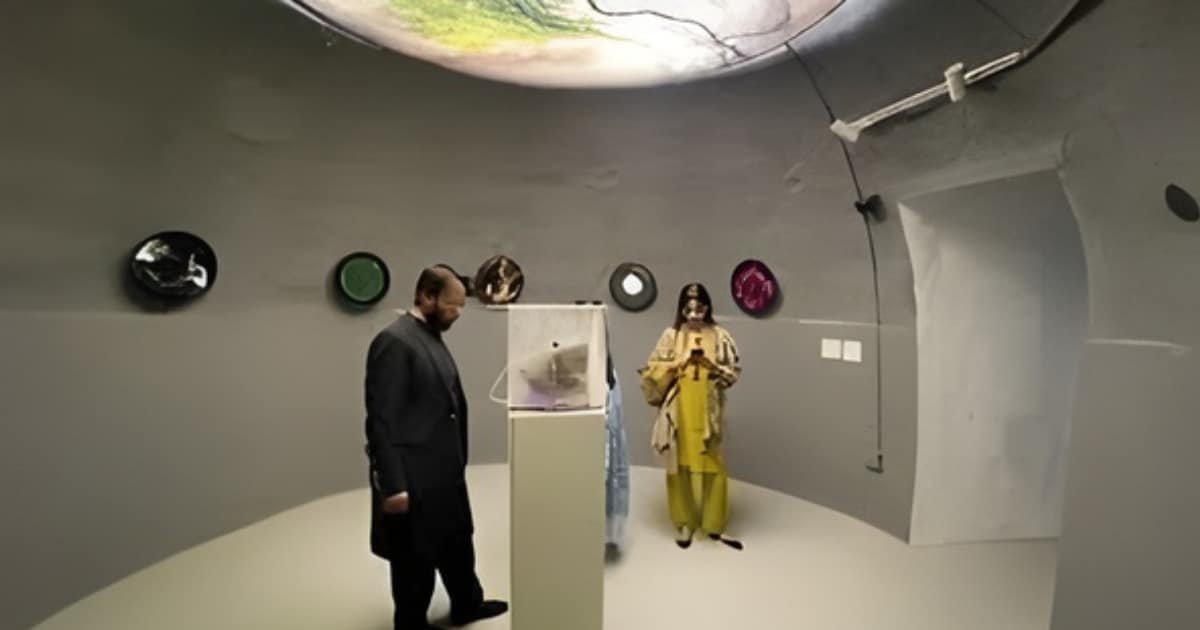




Deep within the refurbished corridors of The Barracks Art Museum in Lahore, a long-hidden chapter of the Indus Valley has finally found its voice. The exhibition, Eternal Imprints: Rock Art, Climate, and Cultural Memory, is the culmination of a decade-long odyssey to document the petroglyphs of northern Pakistan before they vanish forever.
The LUMS Frontier: Digitizing a Fragile Past
At the heart of this showcase is the Heritage at LUMS initiative, an ambitious project that has redefined how academia interacts with national history. Rather than staying confined to textbooks, the team at LUMS, led by Dr. Murtaza Taj (Associate Professor at LUMS), has utilized the university’s technical prowess to preserve sites that are physically inaccessible or threatened by environmental decay.
‘Eternal Imprints’ brings together art, science, and digital innovation to preserve the ancient petroglyphs of the Upper Indus. Rooted a decade of research, the exhibit brings voices etched in stone to life for future generations.
It runs at Barracks Art Museum until March 28. pic.twitter.com/yF7svMXINJ
— LUMS (@LifeAtLUMS) February 20, 2026
LUMS played a critical role by bridging the gap between archaeology and high-tech innovation. Utilizing advanced digital reconstruction and AI modeling, the LUMS team transformed flat carvings into 3D experiences. This allows visitors to interact with art that sits thousands of miles away on the cliffs of the Upper Indus.
The university’s work serves as a digital safeguard. As climate change and industrial expansion threaten the physical rock faces, this project ensures that these inscriptions remain a permanent part of the global cultural record.
A Dialogue Across Eras
Curated by Faisal Anwar, the exhibition positions these ancient carvings not as mere relics, but as climate diaries. Each petal, animal, and human figure etched into the stone represents an ancient migration or a shifted ecological reality. By showcasing this at The Barracks, a historic space that once served as a colonial-era bunker, the exhibition creates a poignant contrast between the permanence of stone and the fragility of human structures.
View this post on Instagram
The Mission of “Slow Seeing”
“Eternal Imprints” asks the viewer to practice patience. It is an immersive environment where the past is made tangible through video narratives, interactive displays, and reimagined models. The goal, as echoed by the initiative’s leadership, is to make heritage a central pillar of modern Pakistani thought.
View this post on Instagram
In the quiet, cool air of the museum, the message is clear: the Upper Indus carvings are more than just art; they are the fingerprints of a civilization. Thanks to the interdisciplinary efforts of the LUMS faculty and students, those fingerprints are now etched into the digital future.
You May Like To Read: A Portrait of Persistence: Malala Yousafzai Joins the Walls of Oxford
Check out our latest video: