

While India talks peace on international stages, its actions speak louder than words — and billions of dollars back those actions poured into its defense sector year after year. A glance at India’s defense budgets over the past decade reveals a worrying trend: a steady and aggressive militarization unmatched by any of its neighbors, especially Pakistan.
Let’s break down the numbers to understand what’s happening behind the rhetoric of “regional stability.”
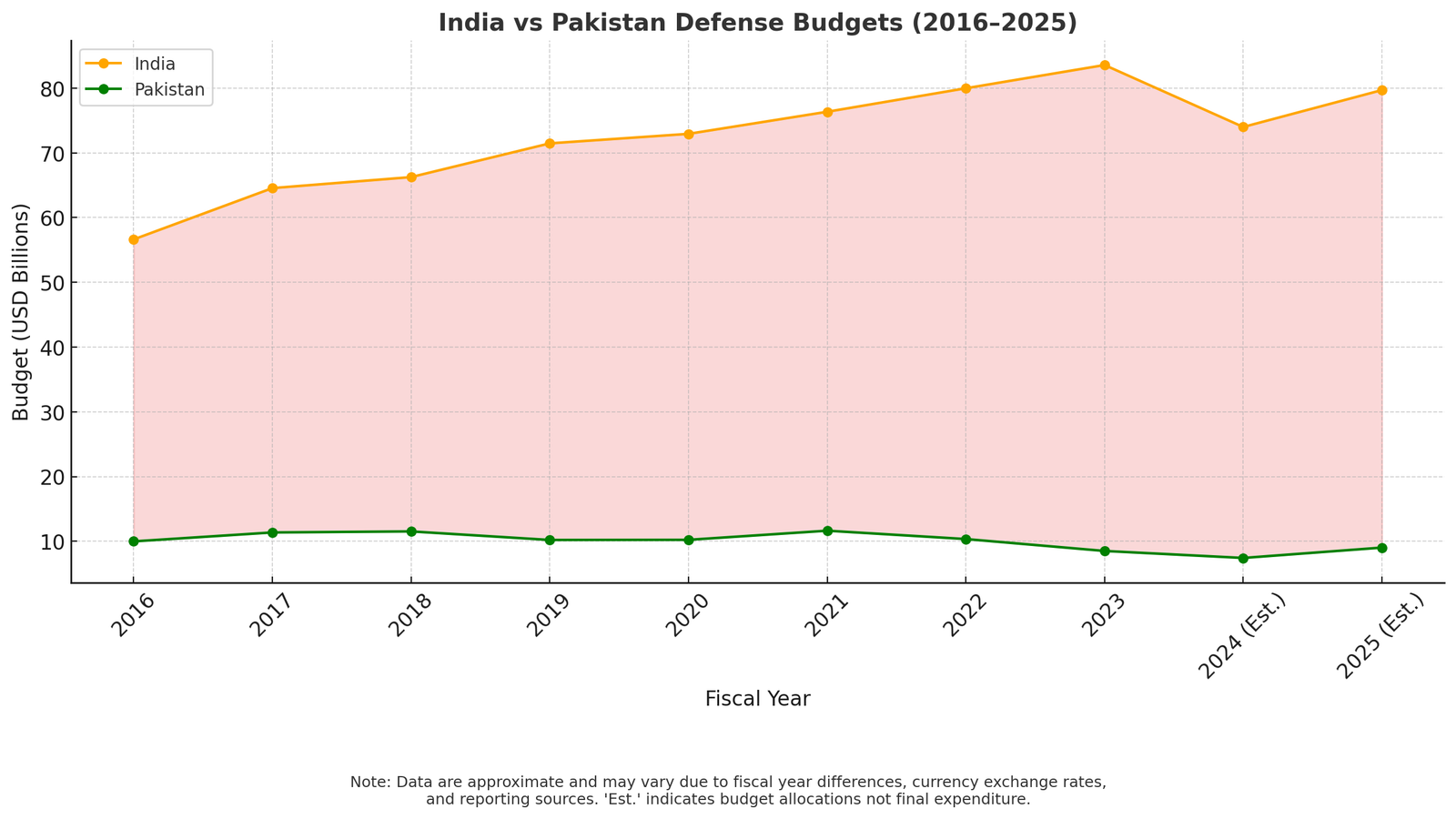
The Billion-Dollar Build-Up
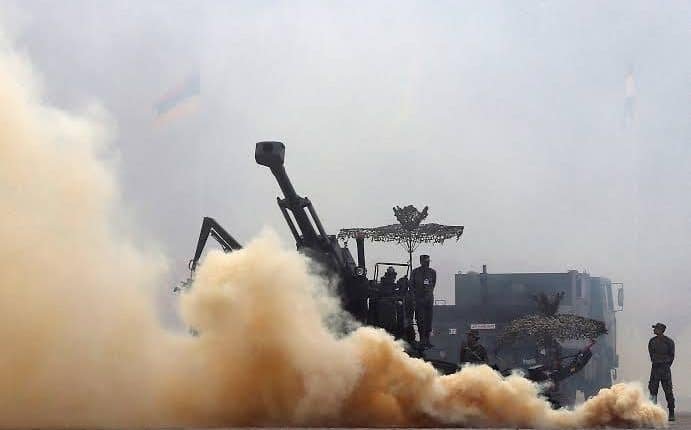
India’s defense budget has risen from $56.64 billion in 2016 to a peak of $83.57 billion in 2023. The latest allocation for 2025 ranges between $78.4 billion and $81 billion — nearly 9 to 10 times Pakistan’s current military budget of $9.04 billion.
Compare this to Pakistan, which has been relatively consistent — even conservative — with its defense spending, ranging between $7.4 billion and $11.6 billion in the same period. While India adds nearly $2 to $4 billion annually to its war chest, Pakistan has had to cut its budget in recent years due to economic constraints, including a sharp drop to $8.52 billion in 2023 and $7.44 billion in 2024.
So the question arises: Why is India spending so much on its military if it claims to want peace?
India’s defence capabilities to further strengthen with more ‘Made in India’ equipment.
BEL bags 28 MoD contracts, worth Rs 16,750 crore, in March 2023. Electronic Warfare Systems, Fire Control Systems, Medium Power Radars & Weapon Locating Radars among prominent equipment. pic.twitter.com/eHlPfrP38O
— रक्षा मंत्री कार्यालय/ RMO India (@DefenceMinIndia) March 31, 2023
More Than Just Numbers — A Pattern of Preparation
India’s rising military budget isn’t just going into salaries or pensions — it’s being funneled into massive modernization programs:
- Purchase of Rafale fighter jets
- Deployment of S-400 missile defense systems
- Expansion of its naval presence in the Indian Ocean
- Development of nuclear-capable missiles and space-based military capabilities
This is not the budget of a nation focused on internal development or humanitarian relief. This is a budget of a state preparing for escalation — if not outright war.
Pakistan as the Convenient Villain
Indian leaders, including their Defence and Foreign Ministers, frequently point fingers at Pakistan, often blaming it for attacks without presenting verifiable evidence. This demonization helps justify their rising military expenditure, while presenting India as a victim to both its public and the international community.
For example, consider India’s External Affairs Minister Jaishankar’s recent remarks after the Pahalgam attack. Instead of promoting dialogue, India responded with military force through “Operation Sindoor.” These actions, easily justified by increasing military budgets, illustrate how India prefers to escalate conflicts rather than resolve them through diplomacy.
Pakistan’s Reality: Defense Under Pressure
Despite being in a region surrounded by security threats — including an unstable Afghanistan and a historically hostile eastern neighbor — Pakistan has not indulged in a military spending race. Our focus remains on maintaining a minimum credible deterrence while dealing with internal economic challenges, natural disasters, and social development needs.
In fact, Pakistan’s defense budget as a percentage of GDP has decreased over time. We’ve cut costs, reduced external dependencies, and redirected resources toward education, health, and social welfare.
The Global Silence
What’s perhaps most concerning is the global community’s silence. Western powers, particularly those in the U.S. and Europe, often hail India as a strategic partner in Asia, ignoring its massive militarization, arms buildup, and human rights issues in Kashmir.
This double standard gives India a free pass to spend unchecked on weapons and warfare, while Pakistan is often unfairly scrutinized for even modest military spending.
Where Do We Go From Here?
India’s large and increasing defense budgets reflect a mindset that prioritizes military power — not diplomacy — as the main way to influence the region. This is risky not just for Pakistan but for all of South Asia.
Pakistan, meanwhile, continues to advocate for peaceful conflict resolution, strategic stability, and regional cooperation. But let’s be clear: peace cannot come from only one side.
If India is truly serious about peace, it must prove it—not through press statements, but through actions: cutting down defense excesses, halting aggressive posturing, and restarting meaningful dialogue with its neighbors, including Pakistan.
Final Word
You don’t prepare for peace by spending over $80 billion a year on war machines. You prepare for peace through diplomacy, understanding, and dialogue.
Until India chooses that path, Pakistan must remain alert, prepared, and committed to both security and sovereignty, while refusing to be dragged into a dangerous arms race we neither started nor want.