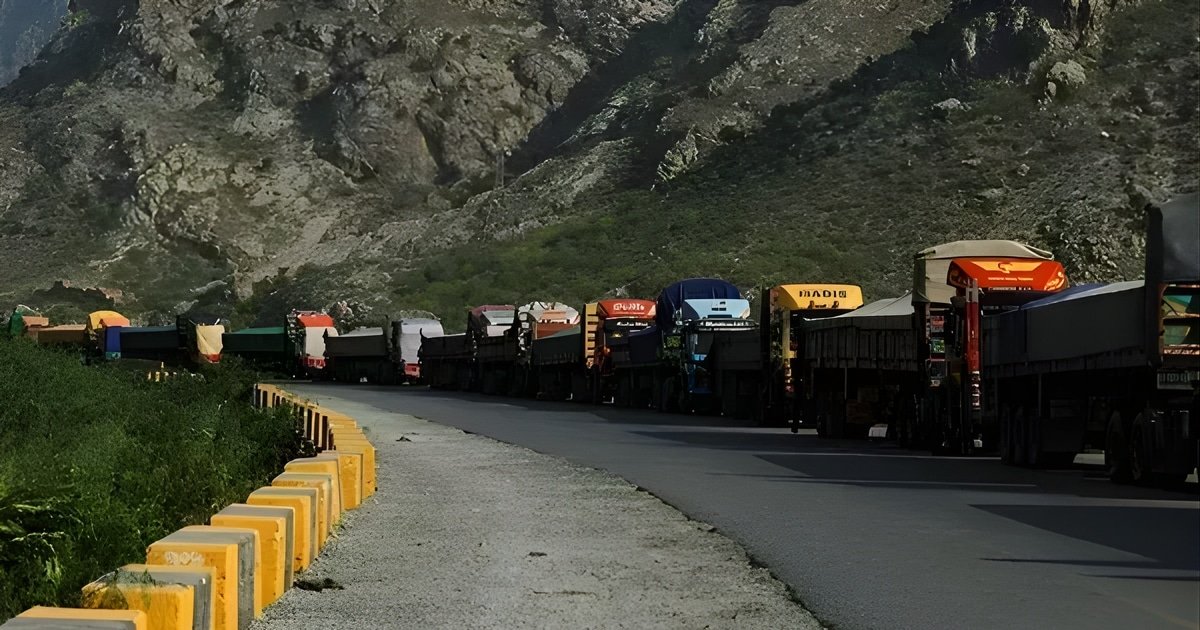


ISLAMABAD: Prolonged disruptions in Pakistan-Afghanistan trade and transit are contributing to economic uncertainty, social stress and regional instability, with uncertainty emerging as a more damaging factor than cost alone, speakers warned at an online policy dialogue held on Monday.
The dialogue, titled “Exploring Pathways to Pakistan-Afghanistan Trade and Economic Connectivity,” was organised by the Centre for Research and Security Studies (CRSS) under its Beyond Boundaries initiative. It brought together policymakers, customs officials, business leaders and economic experts from both countries to assess evolving trade dynamics and their wider regional impact.
Participants highlighted that repeated border closures, regulatory unpredictability and exclusionary economic measures have eroded livelihoods, weakened regional connectivity and placed disproportionate pressure on border communities whose economies depend heavily on cross-border trade.
Khan Jan Alokozay, co-president of the Pakistan-Afghanistan Joint Chamber of Commerce and Industry (PAJCCI), said regional peace could not be separated from economic stability. He stressed that predictable and continuous trade was essential for sustaining bilateral relations, warning that without it, broader goals of peace and integration would remain fragile.
Former Sarhad Chamber of Commerce and Industry president Fazal Moqeem Khan called for the creation of cross-border economic zones to institutionalise trade and transit cooperation. He said manufacturers on both sides should collaborate to deepen shared economic stakes, cautioning that ad hoc or unilateral trade measures ultimately weaken both economies.
Representatives of border communities drew attention to the human cost of disruptions. Mujeeb Shinwari, president of the All Torkham Customs Clearing Agents Association, said repeated closures had crippled local economies and undermined livelihoods in already vulnerable regions. He noted that border populations bear the immediate impact of trade stoppages.
Naqeebullah Safi, executive director of the Afghanistan Chamber of Commerce and Investment’s Kabul office, argued that trade should shape political decisions rather than be constrained by them. He warned that prolonged uncertainty risks permanently diverting Afghan and Pakistani markets away from each other, as traders seek more predictable alternatives.
You May Also Like: Sherry Rehman Criticises India’s Approval of Chenab Hydel Project, Warns Against ‘Weaponisation of Water’
Several speakers cautioned that economic deprivation fuels insecurity. Ibrahim Shams, former vice president of the Afghanistan Investment Support Agency, said sustained trade blockages exacerbate instability rather than reduce it, while Afghan scholar Mohammad Ibrar Aimal noted that disruptions have stalled production, broken supply chains and led to job losses, particularly in agriculture-linked and small-scale industries.
Ahmad Shah Yarzada, an Afghan businessman, called for a unified appeal for the normalisation of trade and economic activity.https://t.co/ZUkjWVvGtp
— Dawn.com (@dawn_com) December 30, 2025
Ahmad Shah Yarzada, an Afghan businessman, said many Afghan traders were shifting towards Iran and Central Asia despite higher costs, prioritising certainty over proximity. He urged a joint appeal for normalised trade led by traders, tribal elders and border communities.
On the operational side, Arbab Qaiser, chief customs wing at the Federal Board of Revenue, said steps were being taken to address pending containers and reduce clearance delays. However, participants agreed that weak coordination among chambers of commerce and authorities continues to hinder effective engagement.
CRSS Executive Director Imtiaz Gul warned that prolonged trade deadlock would have consequences beyond commerce, including rising informal economies, shrinking employment and long-term threats to regional stability.
Check out our latest video: