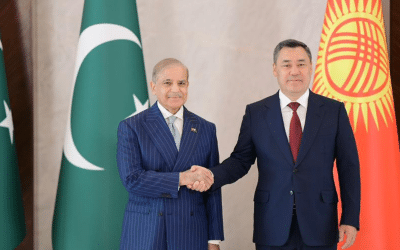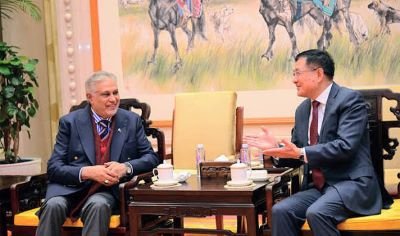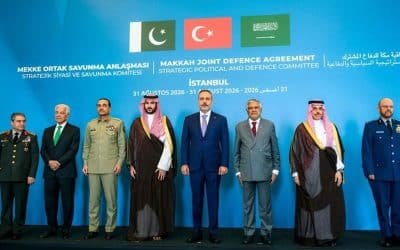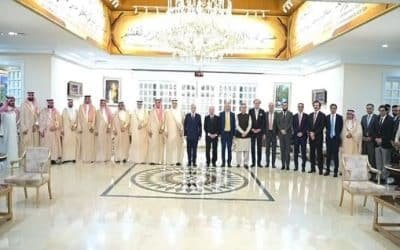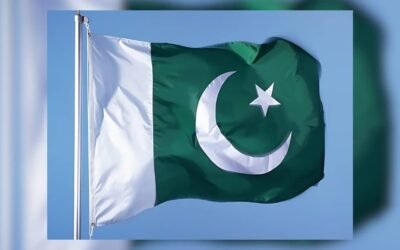



Pakistan presents itself as a firm supporter of multilateralism and international law. The UN mission initiated by Islamabad focuses on justice and a peaceful world. This has been the guiding principle for Pakistan’s foreign policy: its leaders emphasize the role of diplomacy and neutrality, even during times of international tension.
Regional Security and Counterterrorism
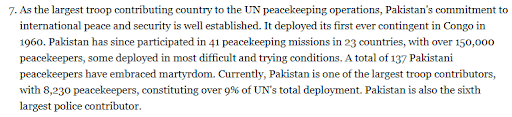
The government of Pakistan states that it condemns terrorism in whatever form and that no nation has been hit more than Pakistan by militancy. Islamabad has worked with other countries to fight against the extremists (particularly in Afghanistan) and to demand a political solution. Practically, it shows that Pakistan is more affected than any other country by the attacks on its territory. Pakistan is also one of the foremost UN peacekeepers, with more than 150,000 troops and police in 41 missions (approximately 10 percent of current UN troops). The contributions highlight its devotion to security under a UN-guided mandate. Officers usually emphasize that the fight against terror should be conducted within the framework of international law and development, as the fight against terror also relies on social and economic stability.
Reference : Pakun
Neutrality in the Russia-Ukraine Conflict
Pakistan has taken a safe approach to the war between Russia and Ukraine. Formally, it declared in its Foreign Office a policy of strict neutrality in the conflict. Consequently, Islamabad has not voted on any UN resolution that was passed against Russia, despite pressure from Western powers to take sides. According to Pakistani officials, the country has consistently adhered to a policy of staying neutral even in the face of external pressure. This pose suggests that Islamabad does not view war as a means of attraction, but rather as a dispute that is best settled through communication. Pakistan positions its neutral stance as one that is aligned with international law, rejecting military intervention and sanctions that it considers beyond the UN’s mandate, instead advocating for settlement through negotiations under the UN Charter.

Reference: Tribune
Support of the Palestinian Cause
Pakistan has expressed a principled and unequivocal approach towards the Israel-Palestine conflict due to both ideological and strategic allegiance to both the Palestinian people and international law. Islamabad has spoken out in support of the Palestinian cause, and has strongly supported the creation of an independent sovereign State of Palestine based on the pre-1967 borders, and East Jerusalem as its capital.
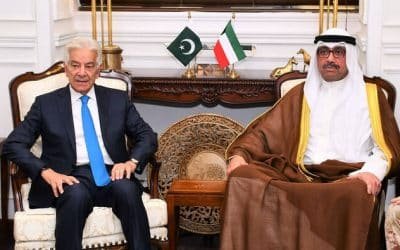
Pakistan’s Deputy Prime Minister and Foreign Minister reaffirmed strong support for the Palestinian cause, condemned Israeli aggression and destabilizing actions in the Middle East, and expressed solidarity with both Palestine and Iran. He called for increased humanitarian aid to Gaza, unrestricted access for international agencies, and the establishment of an international judicial body to hold Israel accountable for war crimes and seek justice for victims.

Reference : MOFA
Pakistan does not acknowledge Israel and has regularly accused its military activities in Gaza of war crimes and breaches of international humanitarian law. The Foreign Office constantly reaffirms its commitment to the Palestinian people and says that Middle East peace is impossible without the fulfillment of the Palestinians’ inalienable right to self-determination.
Pakistan has also co-sponsored and lobbied in international forums like the United Nations and the Organization of Islamic Cooperation (OIC) to pass resolutions holding Israel accountable for the violation of human rights and guaranteeing humanitarian access into the occupied Palestinian territories. Islamabad repeatedly supported international efforts in 2024 and 2025, demanding an immediate and unconditional ceasefire in Gaza and removal of the blockade, and criticized Israeli policies, including the ban on UNRWA, as a serious breach of international law.

Reference : Tribune
By becoming the advocate of Muslim unity and international justice, Pakistan insists that lasting peace in the region can only be guaranteed by a just two-state solution based on international law.
Balancing Great Power Rivalries
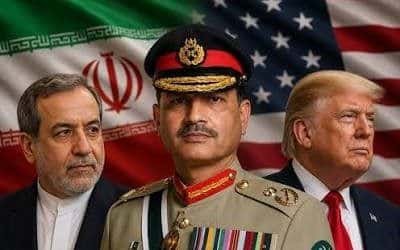
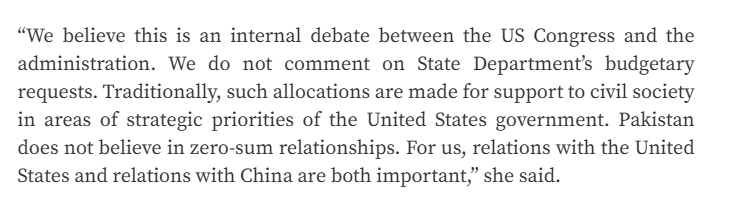
Islamabad seeks to maintain cordial relations with all major powers. It now enjoys an all-weather strategic partnership with China, which includes significant infrastructure relationships, such as CPEC, as well as cooperation with the United States on counterterrorism, development, and Afghan stability. One example is the multilateral diplomacy encouraged by its diplomats, which is enhanced by multilateral dialogue and arms-control negotiations conducted in international forums. Practically, Islamabad is playing the role of peacemaker and serves as a bridge between the U.S. and China, suggesting that the rivalry should not jeopardize peace in the region and the world at large.
Reference : Nation
Conclusion
Throughout these conflicts, Pakistan consistently relies on the UN Charter and negotiated solutions. Its diplomats frequently advocate for ceasefires, humanitarian aid, and civilian accountability. Islamabad insists that disputes, such as the Kashmir situation, should be resolved through the UN; it states that Kashmiri self-determination is the core of its policy, stressing its reliance on the Security Council’s decisions. Pakistan highlights its genuine commitment to multilateral conflict resolution. In summary, Pakistan portrays itself as an unbiased actor in a world that is becoming more divided, valuing peace, humanitarian principles, and the UN Charter more than allegiance to any power bloc.