




When comparing Pakistan to the global economies, Pakistanis often undermine the digital transformation that the country has undergone. They compare it to third-world countries in Africa that have little to no digital integration. This has led to a negative image of the country worldwide, despite its cutting-edge technology and an increasingly high digital footprint, especially in the new era of digital payment systems. The government’s resolute stance in converting Pakistan into a digital economy has paid dividends over the last three years, as evident from the facts presented in this article.
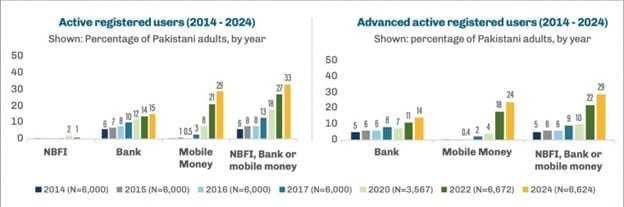
Pakistan’s journey toward a digital economy has accelerated remarkably in recent years, primarily due to significant growth in digital payment systems. According to Karandaaz Pakistan, financial inclusion increased from 8% in 2013 to 35% in 2024, with mobile-money usage alone rising from under 1% to 30% of adults—a transformation that is reshaping how citizens engage with financial services.
(Source: Karandaaz)
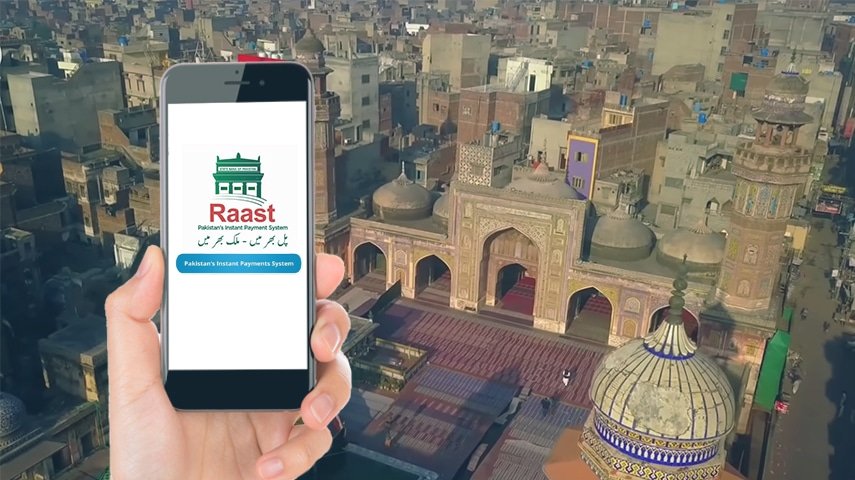
Central to this surge is the State Bank of Pakistan’s (SBP) development of Raast, the country’s national instant payment system, which was launched in January 2021 and expanded to include person-to-person (P2P) payments in February 2022. In FY 2025’s first quarter alone, Raast facilitated nearly Rs 4.7 trillion in P2P transactions, making it a cornerstone of Pakistan’s digital payment ecosystem. The breadth of digital infrastructure—encompassing over 200,000 active mobile-banking agents and 18–19 million digital wallets—indicates robust institutional support for this shift.
A key driver of this momentum is also the government-backed NFIS (National Financial Inclusion Strategy) and its P2M (Person-to-Merchant) model under Raast. With over 3–5 million merchants in Pakistan’s retail sector, digital payment systems are reaching crucial last-mile customers.
In this regard, various projects by public and private enterprises both have set exemplary precedents. For example, projects like Karandaaz’s integration with foodpanda, which aims to convert cash-on-delivery customers to digital wallets, exemplify this movement, encouraging broader usage.
The economic upside of this shift is substantial. It is estimated that full adoption of digital payments could boost GDP by 7% by 2025, create 4 million jobs, and add $263 billion in bank deposits, while saving the SBP around Rs 31 billion annually in cash management costs and reducing reliance on physical currency, which makes up a striking 34% of total deposits. Compared to India’s 17.8%, which is often considered a success story in digital financial inclusion, this precedes Pakistan’s global perception and would also enhance the country’s economic stability.
While the country is making significant progress, much like any other endeavour, challenges remain. A gender gap persists, with only 14% of women having full financial accounts compared to 56% of men, and fewer women own mobile phones—46% versus 82% of men. Trust in formal financial systems is also low, with 85% of adults relying on informal credit and merely 9% trusting banks and 8% trusting mobile money providers.
To address these issues, SBP and partners have collaborated on regulatory support and technology frameworks to promote digital banking and inclusion. Initiatives supporting women—such as linking BISP (Benazir Income Support Programme) beneficiaries to Raast and mobile wallets—are helping to narrow the gender gap.
On the technological front, Google Wallet and NFC-based mobile payments are expanding rapidly. Users reported smooth experiences when adding UBL and Meezan Bank cards to Google Wallet, signalling increasing functionality and public acceptance. Not to mention that the presence of a global giant like Google in the country is evidence of the significant growth potential in digital payments that Pakistan has recently unlocked.
While many agents still serve as non-dedicated vendors, cash-on-delivery remains widespread, and fraud incidents further hinder trust; the future is undoubtedly digital.
To fully harness the digital revolution, several steps are essential:
- Close the gender gap by increasing mobile phone access and financial education among women.
- Enhance consumer trust through improved agent literacy, fraud protection, and transparent redress mechanisms.
- Expand merchant adoption via government incentives and private partnerships that prioritise small merchants.
- Integrate digital payments into social programmes like BISP to bring millions into the formal financial fold.
The interactive nature of modern financial inclusion enables users to transfer funds, shop online, save, and access credit—all through their phones. Features such as real-time payments, QR code acceptance, and NFC mobile wallets signify a digital transformation once considered aspirational.
Pakistan is at a crucial juncture: with robust infrastructure, clear economic advantages, and increasing public acceptance, the country is well-placed to lead in digital payment innovation within the region. By addressing remaining obstacles, digital finance can empower millions, promote economic inclusion, and bolster an emerging tech-driven economy.
References
- Karandaaz Pakistan, “Financial inclusion rises to 35%, mobile-money usage hits 30%,” Karandaaz Financial Inclusion Survey 2024.
- Karandaaz, “Transforming Pakistan’s Payment Landscape,” Dec 2024.
- SBP & Karandaaz, details on Raast’s adoption and infrastructure (active agents, digital wallets).
- Reuters, Visa aims ten-fold increase in digital payment acceptance, Sep 2024.
- Visual reports on Raast P2P volumes in FY 25 Q1.
- SBP-Karandaaz regulatory framework for digital banks (2018).
- Karandaaz gender gap interventions, BISP inclusion efforts.
- Findings on agent network structure, fraud issues from Helix survey.