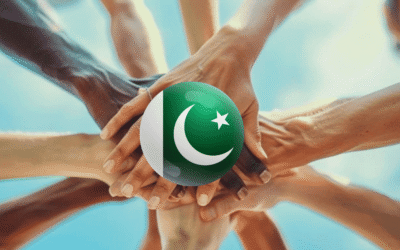




The tectonic plates of global power are changing irreversibly. American unipolarity is declining. New power centers are emerging in Beijing, Moscow, Brussels, and so on. The world is entering a complex multipolar world. The era of this new order is characterized by competing spheres of influence and alliances among geopolitical powers. This transition presents both challenges and opportunities to Pakistan, a country defined by its strategic geography. Islamabad now has to navigate a changed world. Yet, it also receives the opportunity to re-establish its position on the world scale. Pakistani foreign policy incorporates a smart balancing act. It safeguards national interests using its geopolitical position. It also identifies itself as an important regional stabilizer. In an increasingly fragmented world, the strategy has become crucial to Pakistan’s future.
Historical Evolution: From Cold War Client to Strategic Balancer
Pakistan has carefully calculated its foreign policy. It closely aligned itself with the United States during the Cold War. This relationship was primarily security-oriented. However, Pakistan started diversifying its relationships over time. The idea was to prevent overdependence on any one power. This change accelerated when the U.S. global influence diminished. Simultaneously, the influence of China increased rapidly. That shift created room for the middle powers, such as Pakistan, to exert greater autonomy in foreign relations.
You May Like To Read: China’s Position on Kashmir at the UN
Today, Pakistan maintains multiple relationships. It has close economic ties with China. It participates in security collaboration with Gulf states. It is developing ties with Russia. At the same time, it maintains a delicate and crucial relationship with Washington. Throughout this journey, Pakistan’s core concern is, however, to maintain its strategic autonomy.
Diplomatic Maneuvering in the New Multipolar Landscape
The China-Pakistan Nexus as an Anchor
The China-Pakistan Economic Corridor (CPEC) is central to Pakistan’s economic strategy. Valued at $62 billion, it is the flagship project of China’s Belt and Road Initiative (BRI). CPEC goes beyond infrastructure. It symbolizes a long-term strategic partnership. For Pakistan, CPEC brings vital investments in energy, transport, and digital connectivity. For China, it offers access to the Arabian Sea. This partnership challenges Western-led economic models. It presents a new development path outside traditional frameworks.
Crisis Management as Diplomatic Leverage
Pakistan’s handling of regional crises shows its rising diplomatic influence. During the June 2025 “12-Day War” between Israel and Iran, the Middle East stood on the edge of a wider conflict. Pakistan responded with a balanced and principled approach. It condemned Israeli aggression but also called for de-escalation. This positioned Pakistan as a responsible and credible player in the region.
Similarly, in the 2025 India-Pakistan standoff, Islamabad acted with caution and strategy. It maintained military readiness while engaging in active diplomatic outreach. This approach led to U.S. mediation, reinforcing Pakistan’s image as a “regional stabilizer”. These crises proved a key point. Pakistan can manage geopolitical tensions without getting trapped in polarized conflicts. In a multipolar world, this ability is a critical asset.

Source: Pakistan Observer
Institutionalizing Strategic Autonomy
The foreign relations of Pakistan have a multidirectional focus. One of the major activities is its active involvement in the Shanghai Cooperation Organization (SCO). Pakistan cooperates on security issues with Russia and Central Asian countries through the SCO. Meanwhile, it balances the Chinese influence in the group. Pakistan is also widening its reach to ASEAN and African countries. The activities assist it in diversifying its economic alliances outside of its conventional partners. Such flexibility provides Pakistan with an advantage. It makes its central location a diplomatic strength in the multipolar world.

Source: The News International
The Strategic Imperatives of Connectivity and Deterrence
Pakistan’s foreign policy now emphasizes economic connectivity to promote regional integration, because regional connectivity is the key pillar of Pakistan’s Foreign Policy. Beyond CPEC, Pakistan supports trade routes linking Central Asia to Arabian Sea ports. It also pushes for Afghanistan’s inclusion in regional trade and transit frameworks. Through the connectivity strategy, Pakistan positions itself as a vital material buffer between the Middle East and Asia.
You May Like To Read: Pakistan, Israel, and the Politics of Recognition
At the same time, Pakistan’s nuclear capability remains its ultimate security shield and maintains regional stability. As Iran’s only nuclear-armed neighbor, sharing a 905-km border, Pakistan’s deterrent helps stabilize a tense region. This capability, managed with responsibility, elevates Pakistan’s status. It ensures Pakistan is not seen as a peripheral actor. Instead, it becomes an essential security partner, compelling global powers to respect its interests.

Source: PTV World
Challenges and the Path Forward
Despite its successes, there are truly severe challenges facing Pakistan. Its development is under pressure from economic vulnerabilities compounded by the effects of climate change. Transnational terrorism continues to pose a significant security threat. Moreover, the growing Chinese-American rivalry compels Pakistan to juggle its foreign policy, with the nation constantly facing a diplomatic tightrope.
To address these challenges, Pakistan should accelerate its economic reforms to turn CPEC-related benefits into long-term, sustainable growth. It also needs to institutionalize crisis diplomacy by expanding its membership in regional forums, allowing for a coordinated response to emerging conflicts. Pakistan can leverage its strategic position as a connector between the Middle East and Asia to enhance its political influence in trade and security issues. Meanwhile, it must maintain credible military deterrence and uphold its nuclear responsibilities.
Conclusion
Pakistan is redefining its global role, not as a follower of great powers but as a builder of regional balance. Its foreign policy journey, from Cold War alignments to skillful multipolar balancing, reflects a maturing strategic vision. By leveraging its geographic position, fostering diverse partnerships, and prioritizing regional stability, Pakistan has become a “necessary element of the geopolitical balance,” with its choices influencing both Asian and global security. In a world shifting away from Western dominance, Pakistan’s experience shows that strategic autonomy is possible, geography remains crucial, and those who balance wisely, rather than follow blindly, will thrive. As the 21st century unfolds, Pakistan stands at a vital crossroads of the emerging world order, a position earned through smart diplomacy and unwavering resilience.