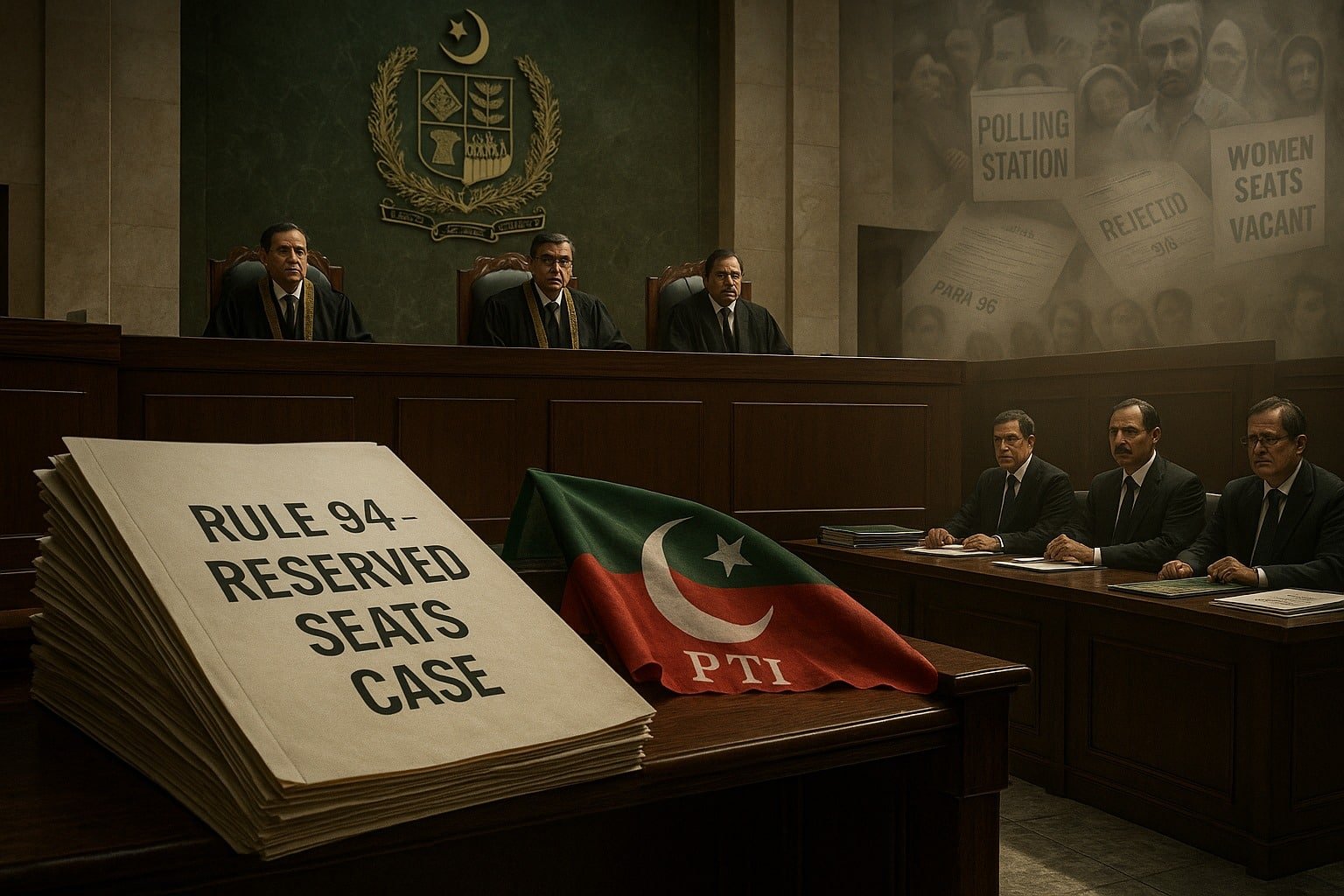



The PTI Reserved Seats Case has brought Pakistan’s electoral and constitutional framework under intense scrutiny. In a landmark hearing, the Supreme Court revisited the controversial decisions surrounding the status of Pakistan Tehreek-e-Insaf (PTI) candidates, the Election Commission of Pakistan’s (ECP) interpretation of electoral rules, and the resulting allocation of reserved seats. At the heart of this complex legal saga lies a fundamental question: was PTI unfairly denied its rightful political representation due to administrative misinterpretations?
Background: The Confusion Begins
The dispute centers around the ECP’s refusal to allocate reserved seats to PTI following its alleged failure to conduct intra-party elections and submit documentation per Rule 94 of the Election Rules. This refusal led to widespread confusion during the 2024 general election process, particularly affecting PTI’s ability to file nominations under its party banner.
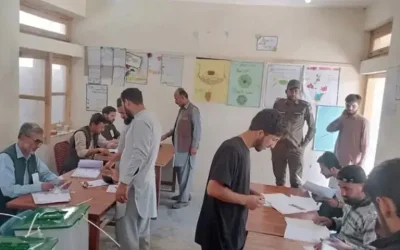
Many Returning Officers (ROs) rejected nomination papers mentioning PTI, classifying such candidates as “independents”. This misclassification had far-reaching implications, not only for electoral results but also for the subsequent allocation of reserved seats — which are proportionally distributed based on party representation in the assembly.
Paragraph 96: The Foundation of the Judgment
Much of the Court’s deliberation referenced Paragraph 96 of the original judgment, which outlines the factual basis upon which the 13-member majority had ruled. This paragraph details several procedural and legal missteps, particularly highlighting:
- Misapplication of Rule 94 by the ECP.
- Unlawful refusal by ROs to scrutinize nomination papers of PTI-affiliated candidates.
- Administrative actions that fostered confusion and prejudice against PTI candidates and voters.
The Court emphasized that this factual foundation was not challenged in any review petition, solidifying its legal weight.
Legal Debate: Is the Judgment Reviewable?
One of the core issues in the review proceedings is whether the original judgment — now representing the Supreme Court’s collective decision, not just of 8 judges — is subject to review. The petitioners argued that the factual findings in Paragraph 96 cannot be overturned in review jurisdiction. They stressed that the review must be limited to clear legal errors or oversight, not a re-litigation of established facts.
The respondents countered that “exceptional circumstances” exist, arguing the Court should revisit the case to address alleged injustices caused by factual or legal misinterpretations.
Representation vs. Technicalities
A powerful theme emerged during the arguments: whether electoral representation of the people was sacrificed for technical adherence to procedural rules. The Court noted that PTI candidates had been effectively barred from contesting under the party’s name due to ECP and RO decisions — even though many of them were functionally acting on PTI’s behalf.
Several legal counsels emphasized that the electorate, not just the candidates or party, were the real aggrieved party. Denial of party affiliation led to confusion for voters and a possible misrepresentation in the final assembly composition, particularly on reserved seats.
Reserved Seats: Who Gets Them?
The Supreme Court’s ruling permitted the reopening of the declaration window for PTI-affiliated independent candidates. Those who could show they had contested with PTI’s endorsement, despite not mentioning the party in their papers, were given a chance to be recognized as PTI candidates.
This allowed 41 candidates to file affidavits stating they were indeed PTI nominees. As a result, PTI was retroactively acknowledged for reserved seat allocation purposes — but only partially. The key point of contention now is whether all such candidates, including others similarly affected, should receive the same treatment.
Political Ramifications
This legal tug-of-war has deep political implications. Reserved seats significantly influence the balance of power in the assemblies, especially for women and minority representation. Denying PTI its share reshapes coalition dynamics and legislative authority.
Moreover, the case reflects broader concerns about the neutrality and performance of the ECP, which has come under criticism for its role in triggering the crisis.
Final Legal Considerations
Counsel representing PTI and other petitioners urged the bench to examine whether this issue represents a reviewable injustice, citing legal precedents where administrative or procedural confusion invalidated otherwise legitimate electoral processes.
They also argued that Rule 94’s misinterpretation had never before caused a party to be derecognized mid-election, calling it a dangerous precedent with potentially unconstitutional consequences.
In conclusion, the Supreme Court faces a daunting challenge: to uphold its previous judgment while considering new arguments that question its practical and political consequences. The outcome will not only determine PTI’s legislative strength but also set a crucial precedent for future elections.