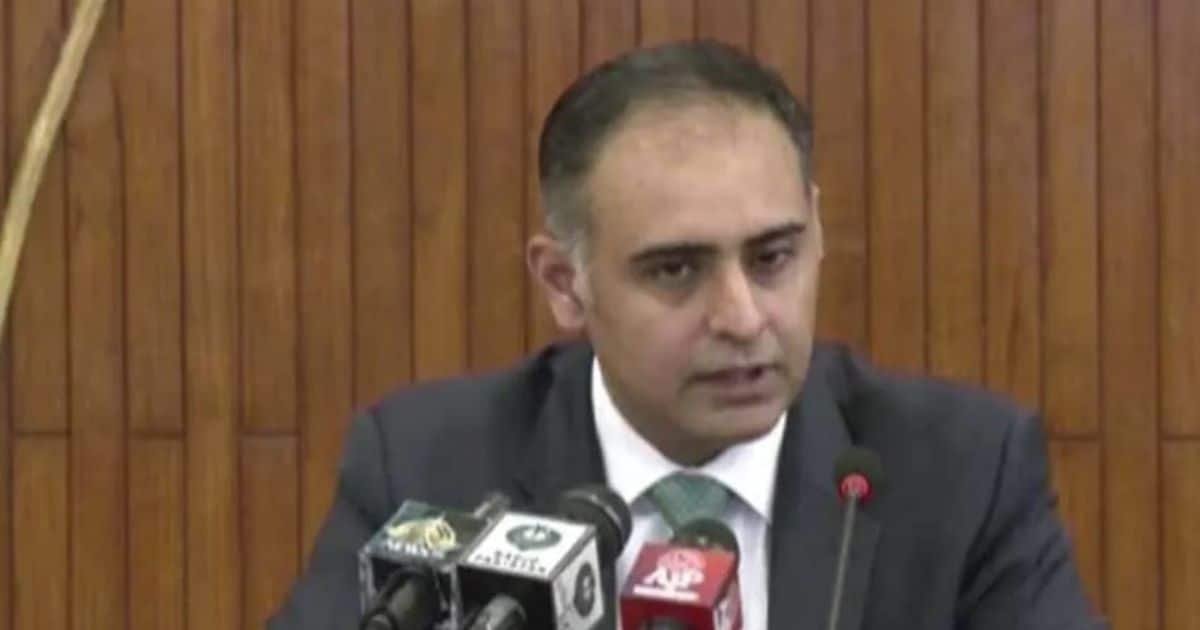



ISLAMABAD — Minister of State for Finance Bilal Azhar Kayani said on Monday that export-led growth was vital for ensuring long-term economic stability, highlighting what he described as significant improvements in Pakistan’s financial indicators over the past year and a half.
Speaking to the media in Islamabad, Kayani said the government’s fiscal policies had helped achieve the target of a primary budget surplus and stabilise key economic indicators without introducing a mini-budget. He noted that tax collection rose by 26 per cent during the last fiscal year, while inflation declined sharply from 33 per cent to 4.5 per cent.
“The Federal Board of Revenue’s tax-to-GDP ratio increased from 8.8 per cent to over 10 per cent,” he stated, crediting the reforms for improving fiscal discipline.
Kayani said Pakistan had posted its first current account surplus in 14 years, and the largest in 22 years — a development he said had helped stabilise foreign exchange reserves. “When the current account is in surplus, our reserves remain stable,” he remarked, adding that the policy rate had been cut by half, from 22 per cent to 11 per cent, due to falling inflation.
Pakistan’s Minister of State for Finance, Bilal Azhar Kayani, highlights significant economic improvements, including a current account surplus and reduced inflation, while emphasizing the need for export-led growth to stabilize the economy. https://t.co/4bEwORDsIQ
— Investify Pakistan (@investifypk) October 27, 2025
The minister also referred to progress in privatisation efforts, noting the recent sale of the First Women Bank Limited (FWBL) to Abu Dhabi’s International Holding Company as a milestone in Pakistan-UAE economic relations. He said the government was expecting similar progress in the privatisation of Pakistan International Airlines (PIA), which has incurred losses exceeding $2.5 billion over the past decade.
You May Also Like: Babar Azam Recalled for South Africa T20Is as Fakhar Zaman Opts Out, Says Coach Mike Hesson
Kayani said Prime Minister Shehbaz Sharif believed that private sector–driven and export-led growth was essential for sustainable economic recovery, while the government’s role should focus on policy support and facilitation.
He added that Pakistan’s economic outlook had improved since last year’s near-default crisis, with international credit agencies — including Fitch, Moody’s, and S&P Global — upgrading the country’s sovereign ratings following fiscal reforms and improved reserve management.
Check out our latest video: