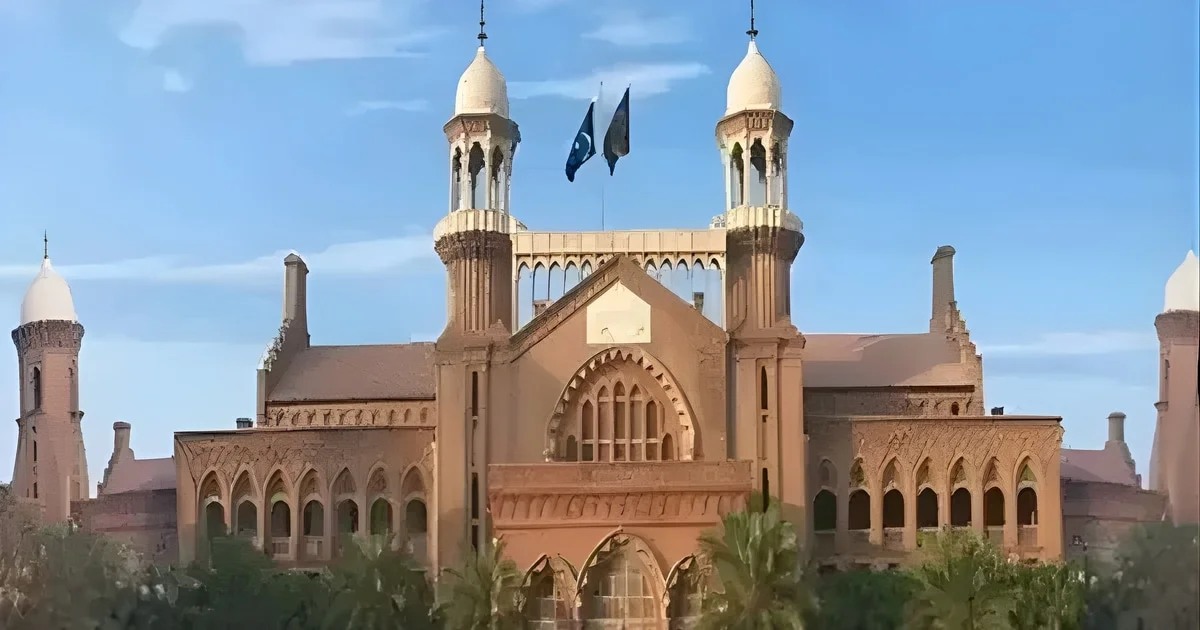





LAHORE: The Lahore High Court (LHC) was informed on Thursday that at least eight individuals had been arrested for allegedly running a malicious campaign on social media against Chief Justice Aalia Neelum and other judges.
The information was shared by National Cyber Crime Investigation Agency (NCCIA) Director General Syed Khurram Ali, who appeared before the court and submitted a detailed report on the matter. He told the court that the agency was making all-out efforts to identify and apprehend individuals involved in campaigns aimed at maligning the judiciary.
Justice Ali Zia Bajwa was hearing a petition filed by lawyer Chaudhry Pervez Elahi Bhaddar, who had challenged the social media campaign targeting female judges of the high court. The NCCIA chief said a list of individuals involved in the alleged unlawful activity had already been compiled and that necessary legal steps were underway to bring the perpetrators to justice. He assured the court that the matter was being pursued with seriousness and urgency.
During the hearing, a federal law officer claimed that the petitioner had not provided a USB containing evidence against the suspects. However, the petitioner’s counsel, Advocate Mian Dawood, rejected the assertion, saying complete record and evidence had already been submitted to the NCCIA. On the court’s direction, he was asked to submit a USB containing the evidence to the court as well.
The petitioner’s counsel also pointed out that the Pakistan Telecommunication Authority (PTA) had not blocked any channels or websites involved in sharing objectionable content. Responding to this, a PTA counsel said that 53 institutions were authorised to use the PTA portal to remove objectionable content themselves.
Justice Bajwa questioned whether the PTA could take action on its own, referring to the earlier blocking of X (formerly Twitter). The PTA counsel replied that X had been blocked on the directives of the interior ministry and added that many institutions use virtual private networks (VPNs) to access blocked platforms.
You May Also Like: Collective Behavior: Shahzia Sikander’s Journey Ends its Final Stop in California
The court directed the PTA to block social media accounts identified by the NCCIA for sharing objectionable content. The PTA counsel maintained that platforms such as Facebook and X were secure applications and that the authority could block entire applications or websites but not specific links.
Justice Bajwa observed that even if objectionable content was created or shared from abroad, action could still be taken against those involved under Pakistani law. He directed the PTA to trace the sources from where such content was uploaded and proceed in accordance with the law.
The judge instructed the lawyer to submit a USB containing evidence to the court as well.https://t.co/G4S05ZLftb
— Dawn.com (@dawn_com) January 16, 2026
In a written order, Justice Bajwa observed that while judicial decisions could be subjected to academic or public scrutiny in good faith, criticism that imputes bias, dishonesty or seeks to undermine public confidence in the judiciary was not protected speech and could attract legal consequences. He directed law enforcement agencies to take lawful, proportionate and restrained action to curb such campaigns without stifling legitimate freedom of expression.
According to the NCCIA report, eight suspects have so far been arrested from different cities of Punjab. These include arrests made by the Islamabad, Lahore and Multan circles of the agency. The report also stated that a YouTube channel, “Siyasi Dera”, had been booked for allegedly disseminating derogatory content against judges, while images of 30 social media account holders had been sent to Nadra for facial recognition.
Check out our latest video: