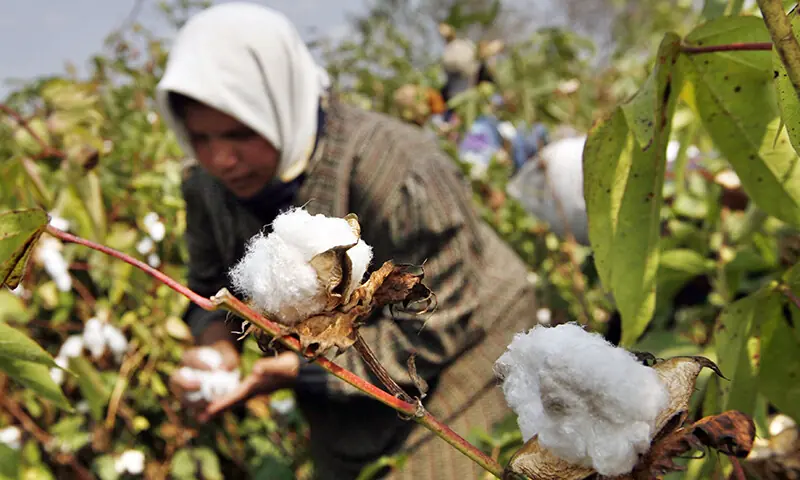



LAHORE — While Pakistan’s cotton arrivals saw a slight uptick in January 2026, the industry has entered a state of “high alert.” A combination of missed production targets and aggressive trade concessions granted to India by the US and EU has left Pakistani exporters facing an uphill battle for global market share.
Local Output vs. Targets
According to the Pakistan Cotton Ginners Association (PCGA), arrivals at ginning factories reached 5.545 million bales as of January 31, 2026.
- Marginal Growth: This is a slight increase of 0.62% (35,000 bales) compared to the same period last year.
- The Shortfall: Despite the minor growth, the total output is expected to settle around 5.6 million bales—barely half of the government’s ambitious 10.2 million bale target for the 2025-26 season.
- Regional Performance: * Sindh/Balochistan: Up 4% to 2.915m bales (led by Sanghar and Nawabshah).
- Punjab: Down 3% to 2.63m bales, struggling with a decline in the traditional cotton belt of South Punjab.
India’s “Twin Deal” Advantage
The Pakistani textile sector is sounding the alarm over two massive geopolitical shifts that occurred in late January/early February 2026:
1. The US-India Trade Deal (Feb 2, 2026)
In a historic move, US President Donald Trump announced a reduction of tariffs on Indian goods from 50% down to 18% following India’s agreement to stop buying Russian oil.
- The Disparity: While Indian goods now face an 18% tariff, Pakistani products are taxed at 19%, and regional rivals like Vietnam and Bangladesh face 20%.
- Impact: For the first time, India has a price edge over Pakistan in the critical American market.
2. The EU-India Free Trade Agreement (FTA)
Billed as the “mother of all deals,” the newly finalized EU-India FTA grants Indian textile exporters phased duty-free access to European markets.
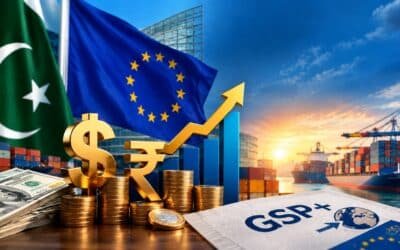
- Erosion of GSP+: Pakistan has traditionally relied on its GSP Plus (zero-duty) status to stay competitive. With India now moving toward zero-duty access, Pakistan’s 10–12% tariff advantage has effectively vanished.
- Compliance Burden: Pakistani exporters note that they must adhere to 27 international conventions (labor, environment, human rights) to keep GSP+, whereas the new India deal provides similar access with fewer structural “strings” attached.
An “Export Emergency”
Ihsanul Haq, Chairman of the Cotton Ginners Forum, and leadership from APTMA have urged the federal government to take immediate defensive measures:
- Release Refunds: Immediate release of billions of rupees in pending tax refunds to resolve the industry’s liquidity crisis.
- Cost of Production: Reducing power tariffs to 9 cents per unit to match regional competitors.
- Super Tax Adjustment: Adjusting pending refund claims against “Super Tax” liabilities to keep factories operational.
| Market | Pakistan Tariff (2026) | India Tariff (2026) | Trend |
| USA | 19% | 18% | India Advantage |
| European Union | 0% (GSP+) | Phasing to 0% (FTA) | Advantage Eroding |
| Production Cost | High (Energy/Tax) | Low (State Support) | Pakistan Under Stress |
The Ministry of Commerce is scheduled to hold an emergency meeting with textile stakeholders this Friday.
You May Also Like: Wetlands as “Frontline Defenders” of Pakistan’s Coast and Blue Economy
Check out our latest video: