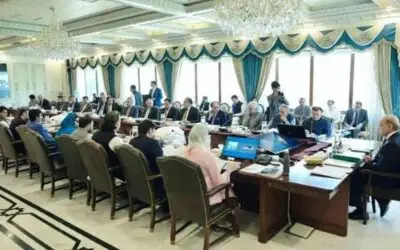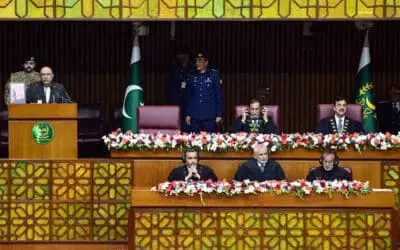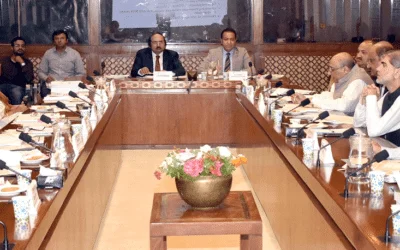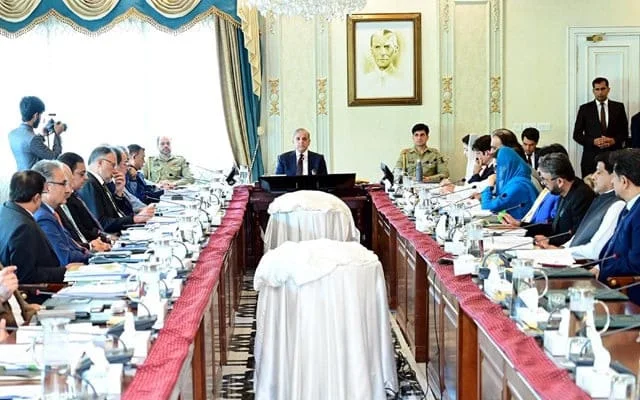





ISLAMABAD — The National Economic Council (NEC) finalized a major restructuring of the upcoming national development blueprint on Wednesday, slashing the overall federal and provincial development budget by a quarter down to Rs3.218 trillion. The sweeping reductions, which lower the development pool from the Rs4.264 trillion figure initially finalized by the Annual Plan Coordination Committee (APCC), effectively freeze provincial spending plans at their actual current-year utilization levels.
Key Highlights
- The consolidated national development budget was cut by 25 percent from its original proposal, dropping to Rs3.218 trillion.
- Combined provincial Annual Development Plans (ADPs) were scaled back by nearly one-third to Rs2.218 trillion.
- Punjab absorbed the largest fiscal reduction, with its development envelope cut by 49 percent.
- No new infrastructure initiatives will be launched in the upcoming fiscal cycle, exempting only the interior and defense ministries.
- Prime Minister Sharif emphasized that strengthening national defense and combating terrorism remain the state’s highest immediate priorities.
Federal and provincial governments trim development spending by 25% after agreement to support defence and other financing needs
Read: https://t.co/F0rTRzy5RH pic.twitter.com/tB8hQgMme2— Profit (@Profitpk) June 11, 2026
Deep Cuts for Provinces as Punjab Absorbs Major Deficit
The structural downscaling of the provincial envelopes, which total Rs2.218 trillion after an absolute cut of over Rs1 trillion, was negotiated by the primary coalition partners—the PML-N and the PPP—prior to the final scheduling of the federal budget. To offer political balance to regional leaders, the central government agreed to simultaneously reduce its federal Public Sector Development Programme (PSDP) by 11 percent down to Rs1 trillion.
Approved Provincial Development Allocations (FY2026-27)
• Punjab: Slashed by 49 percent to Rs749 billion from an early baseline of Rs1.455 trillion.
• Sindh: Restricted to Rs706 billion, absorbing a 13.5 percent downward revision.
• Khyber Pakhtunkhwa: Maintained flat at Rs455 billion, mirroring its current budget.
• Balochistan: Expanded to Rs308 billion, escaping cuts to gain an additional Rs29 billion.
Planning Minister Ahsan Iqbal detailed that provincial cabinets had explicitly noted it would be impossible to justify localized reductions if the federal funding pool remained entirely untouched. While Punjab Chief Minister Maryam Nawaz—who missed the session due to recent surgery—authorized her province absorbing the largest fiscal hit, the PPP successfully minimized the relative impact on Sindh’s upcoming developmental framework.
Prioritizing Strategic Needs and Regional Parity
The massive reappropriation process frees up approximately Rs800 billion to Rs900 billion, which will be purposefully repurposed for strategic national requirements, such as defense capabilities and water resource security. Under the rigid austerity framework, the planning minister explicitly confirmed that the state will initiate no new development projects, barring vital security allocations for the interior and defense ministries. For instance, critical mega-infrastructure like the Diamer-Bhasha dam was allocated Rs20 billion despite an estimated requirement of Rs170 billion.
Federal PSDP Functional Breakdowns (Total: Rs1 Trillion)
• Infrastructure Investment: Rs602.5 billion (including Rs356bn for transport and Rs116bn for energy).
• Social Sector Deployment: Rs181 billion (including Rs74bn for education and Rs22bn for health).
• Regional & Special Areas: Rs89 billion for AJK and GB, alongside Rs56 billion for KP’s merged districts.
Prime Minister Shehbaz Sharif, addressing the country in a televised statement, asserted that reinforcing defense infrastructure against resurgence in terrorism represents Pakistan’s greatest current struggle, demanding unified sacrifice across all federal units.
Reversing the National “Development Deficit”
Reflecting on long-term macroeconomic trends, Minister Iqbal argued that the NEC must pivot back to its original constitutional mandate of reviewing and formulating comprehensive national financial and commercial policies rather than acting as a mere rubber stamp for annual infrastructure lists. He noted that since the early 1990s, weak state investments in basic education, skill acquisition, and female workforce participation have allowed regional competitors like India, Bangladesh, and Vietnam to significantly outpace Pakistan in per capita income growth.
To reverse this historic development gap, the council decided to shift future focus heavily toward public-private partnerships, streamlining regulatory bureaucracy, and boosting export targets toward $100 billion. Despite the near-term infrastructure budget cuts, the ministry maintained its next-year GDP growth projection at 4 percent, backed by steady estimated targets of 3.6 percent in agriculture and 4.5 percent across the industrial sector, with consumer inflation projected to drop to 8.2 percent.