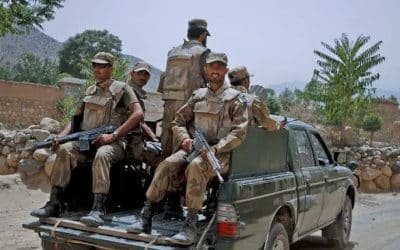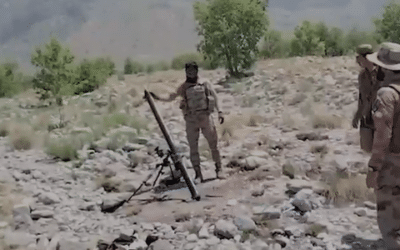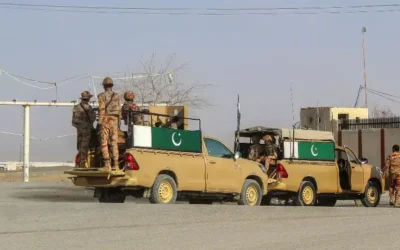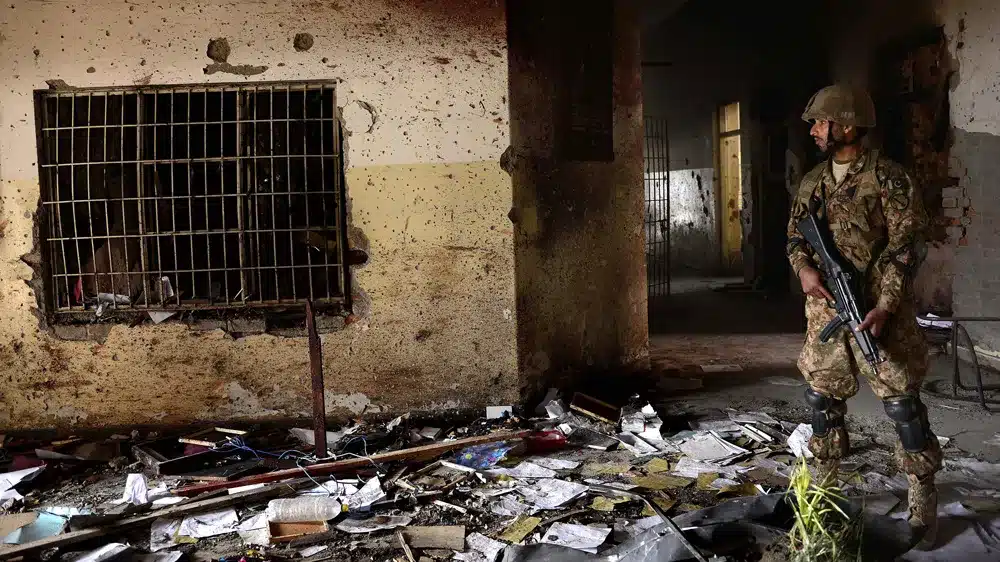





Pakistan has been embroiled in terrorism and violence since the 1990s. The nation has suffered terror attacks, and fear has affected everyday life. Counter-terrorism activities by the security forces were majorly successful, but with consequences. It caused retaliatory action by militants in urban areas as well as mass exodus in regions where terrorists had strongholds. Civilians alongside security personnel had to bear the brunt of the war against terror. This article goes over the human and societal costs and how terrorism took a toll on several sectors of life.
The APS School Tragedy
Perhaps no incident symbolizes the brutality of terrorism more painfully than the attack on the Army Public School in Peshawar on December 16, 2014. Seven armed terrorists belonging to Fitna-al-Khwarij (FAK) carried out a coordinated assault. One hundred fifty people were martyred, of whom 134 were students. This is considered one of the greatest in Pakistan’s history. This dark day, schoolbags became symbols of martyrdom and forced an agonized reckoning with the price Pakistan was paying for being on the frontlines in the fight against terrorism.
FAK, which took responsibility for the attack, claimed that it was retaliation for counter-terrorism moves against its members. Analysts think that this was in response to Operation Zarb-e-Azb, which was carried out in the FATA regions to eliminate terrorist safe havens. The tragedy was condemned worldwide, and Pakistan reinstated the death penalty and executed suspected FAK militants. Unfortunately, the APS attack was not an isolated case, and the terrorists intended to cripple the education system in Pakistan. Over the years, schools have been bombed, teachers assassinated, and girls’ education has been affected. According to reports, hundreds of schools have been damaged or destroyed by militants since 2009.
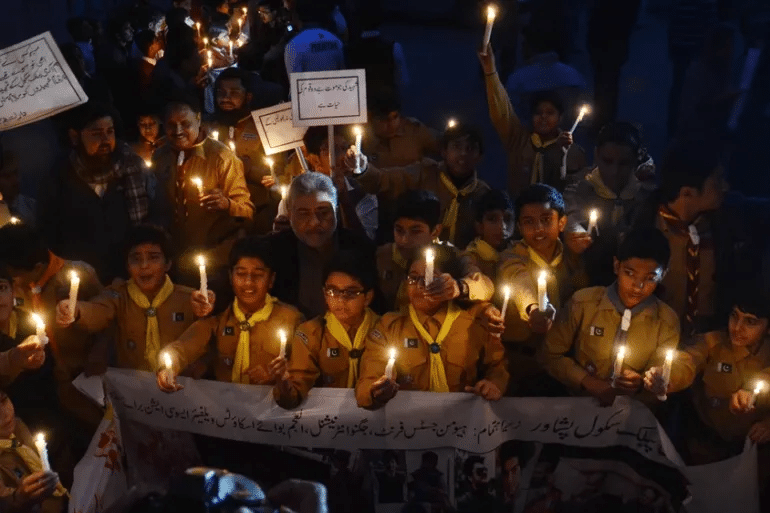
Source: Al Jazeera
Pakistan has strongly responded to this provocation. It implemented the National Action Plan (NAP) to counter terrorism through military and civilian means. Security in educational institutions was heightened, and students bravely returned to school to resume their studies. Pakistan’s, through Pakistan, to learn and continue to honor those lost and defy the ideological darkness that terrorism seeks to impose.
The War Against Polio and Misinformation
Public health in Pakistan is in crisis. Polio workers have especially struggled. Terrorists have repeatedly targeted polio workers who have risked their lives to save others from the deadly virus. Since 2012, many vaccinators have died in suicide attacks and bombings, especially in regions plagued by militant activity.
These terrorists have also spread false propaganda against the vaccine, claiming false side effects such as sterilization in women, which has greatly impeded social efforts. Due to this, Pakistan remains one of the two countries in the world that is not free from this endemic. There were 16 instances of violence against or obstruction of health care in Pakistan in 2022. This was up from seven in 2021, according to the Safeguarding Health in Conflict Coalition. Threats and violence against polio vaccination workers occurred in nearly 90% of these incidents, making it more difficult for healthcare providers to reach vaccination goals.
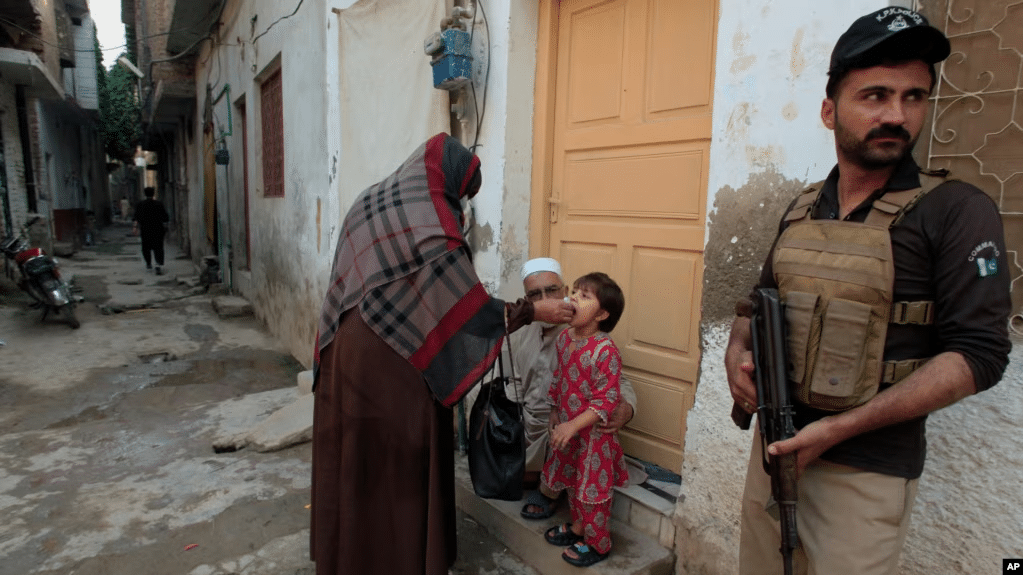
Source: VoA
However, polio vaccinators have demonstrated remarkable resilience and bravery. They have continued on their mission despite resistance. To combat misinformation, the government has intensified awareness campaigns, provided security for medical personnel, and collaborated with religious scholars to promote accurate information. These unsung heroes of public health serve as a reminder to the world that Pakistan is fighting for life itself, not just against terrorism.
Shrinking Civil Spaces
Terrorism has also led to the shrinking of civil spaces in Pakistan, both literally and symbolically. Other consequences include increased censorship, restricted freedom, and heavy surveillance to prevent attacks. NGOs operating in vulnerable areas, activists fighting for the rights of minorities, and journalists covering militancy have all seen their freedom to operate progressively curtailed. Inadvertently, because of limited freedom of expression, a once healthy society is suffering. Civil society groups have had to scale back their operations, and discussions on faith and governance are now marred by fear and uncertainty. A country struggles to progress under such restraints.
Nevertheless, Pakistani civil society endures despite this environment. Filmmakers question conventions, students host seminars, and online platforms have evolved into venues for resistance. The legal system, despite its burdens, continues to hear cases about human rights and freedom of speech. This showcases the spirit of Pakistanis who continue to speak up despite all hardships.
Terrorism has wrought considerable damage to Pakistan’s institutions, cultural heritage, and the public health sector. NevenNevenation’s nation remains. They have met these challenges with resolve and immediate action. Structural reforms have been enacted, security laws have been implemented, and civic activism has been reignited—PakisPakistan’srmination to establish a secure and safer future is evident.
To look at Pakistan only through the lens of terror is to deny its role in the fight against it. It is also the country where children return to school with hope after a tragedy, and health workers risk their lives to ensure public safety. Every individual in Pakistan does their part in working towards a brighter nation. The nation is not only against terrorism but also against educational and moral repression. In every classroom reopened, every shrine rebuilt, and every voice raised in defiance, Pakistan reclaims its future from the shadows.