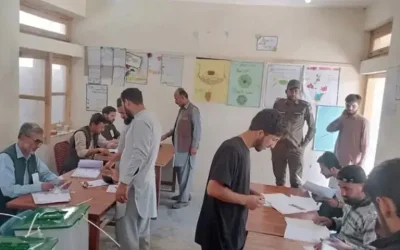





PML-N bagged five out of seven reserved seats up for grabs in Azad Jammu and Kashmir Legislative Assembly on Monday. The PPP won the other two. The results followed a vote by directly elected assembly members on how to fill seats reserved for women, religious scholars, overseas state subjects and technocrats.
Major Highlights
- PML-N wins 5 reserved seats, PPP 2 in AJK legislative assembly
- PML-N has so far won 25 of 38 directly elected seats, PPP 12
- Polling in seven constituencies in Poonch, Sudhnoti deferred on law and order grounds
- PPP alleges rigging, says no alliance with PML-N until grievances addressed
- Newly elected members to be sworn in on day results were declared
PML-N secures majority on special seats in AJK assembly
Read More: https://t.co/7PcsWhgzAr#ARYNews pic.twitter.com/3ojc6LueXG
— ARY NEWS (@ARYNEWSOFFICIAL) August 24, 2026
Division of the Reserved Seats
The Legislative Assembly has 53 seats in all under Article 22(1) of the AJK Constitution. Of these, forty-five are directly elected, and eight are reserved seats, chosen by the directly elected members themselves. The reserved seats are five for women, one for Ulema-i-Din or Mashaikh, one for Jammu and Kashmir state subjects living abroad, and one for technocrats and other professionals.
PML-N’s Chaudhry Abdul Rehman Arain was elected unopposed for the seat of state subjects abroad without any vote. PML-N’s Sehrish Qamar, Maryam Idrees and Maryam Zaman alias Maryam Kashmiri secured one seat each from the women’s seats with seven votes each. PPP’s Farzana Yaqoob took the fourth women’s seat with an equal number of votes.
The fifth women’s seat was a tie. PML-N’s Riffat Abid and PPP’s Zobia Khurshid Raja obtained five votes each. The result was decided by lottery, and Raja was declared winner.
PML-N’s Mohammad Mazhar Saeed secured 26 votes against Mahmood’s 12 in the Ulema and Mashaikh reserved seat, beating PPP’s Hafiz Tariq Mahmood by a big margin. PML-N’s Barrister Syed Iftikhar Gillani also won the seat reserved for technocrats and professionals by securing 26 votes against 14 votes of PPP’s Sahibzada Zulfiqar Ali. Soon after the results, the Election Commission issued a notification to all the successful candidates.
Not Every Seat Could Be Filled Yet
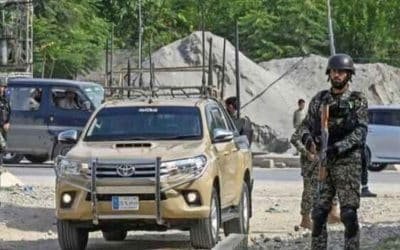
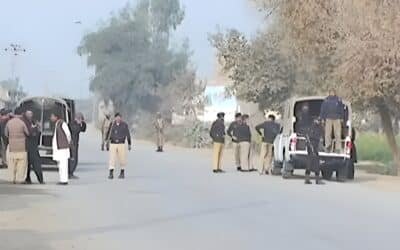
Seven constituencies were unable to vote on reserved seats on Monday. Five of them are from Poonch district and two from Sudhnoti district, all of which have been affected by the ongoing law and order situation in the region. This meant that only 38 of the 45 directly elected members, or 84.4 percent of that membership, participated in selecting candidates for the reserved seats.
Minutes after the results were announced, the first sitting of the new Legislative Assembly was convened for 2pm on Monday. Newly elected members are expected to take their oath before the outgoing Speaker, Chaudhry Latif Akbar, who himself failed to win his seat in the elections.
Full Picture: AJK Elections in Retrospect
The AJK elections were to be held on July 27 but were divided into different phases due to security concerns after unrest in the region. The first round was July 27, with the second and third rounds on Aug 2 and Aug 10.
The third phase would cover all the eleven constituencies of Poonch Division, including three in Bagh, one in Haveli, five in Poonch district, and two in Sudhnoti district. Later, the AJK Election Commission permitted polling only in Bagh and Haveli due to the law and order situation in other places.
In the 38 directly elected constituencies where voting has taken place so far, PML-N has 25 seats and PPP 12. The sole winning candidate for the Awami Dast-o-Bazu party has since joined PML-N, strengthening the ruling party’s numbers. With reserved seats, PML-N is in a commanding position in the assembly, even with seven constituencies yet to be contested.
PPP alleges rigging, delays full alliance with PML-N
The PPP has raised serious objections over the way the elections were conducted, alleging large-scale rigging, and has also stepped up its criticism of the PML-N in recent weeks. PPP Chairman Bilawal Bhutto-Zardari had last week said that a real alliance with the PML-N is not possible unless the party’s grievances over the AJK polls are addressed. He also made formal contact with PTI, offering to work with the party in Parliament, a move which indicates real stress within the ruling coalition.
Bilateral said the AJK election process has been made controversial for political reasons. He alleged that the political and administrative machinery of the federal government was active during the six-phase election process in AJK and questioned the process’s transparency. He said PPP had raised these issues before the Election Commission, Parliament, and other constitutional forums, but PML-N did not respond or enter into meaningful dialogue after the polls.
He also said commitments made with PML-N before the prime minister’s election had not been fulfilled. “So far, PPP had cooperated in the national interest, but a real alliance would be PML-N addressing the party’s AJK election concerns and living up to its earlier political commitments,” he said. The government still needs the votes of PPP for several important laws, amendments to the constitution and difficult legislation, he said, adding that lawmaking should not be pushed through on the basis of a simple majority or pressure tactics.
That tension has already been played out publicly in the National Assembly. The PPP managed to compel the government to virtually postpone a heavy legislative agenda for the day, of 21 bills, on August 18. On Aug 20, two days later, when the lower house passed two bills on the military and nuclear command structure, the PPP objected to how the legislation was being carried out. The party later voted in favor of both bills, but Bilawal lashed out at the government for not taking its ruling allies on board before taking the plunge.