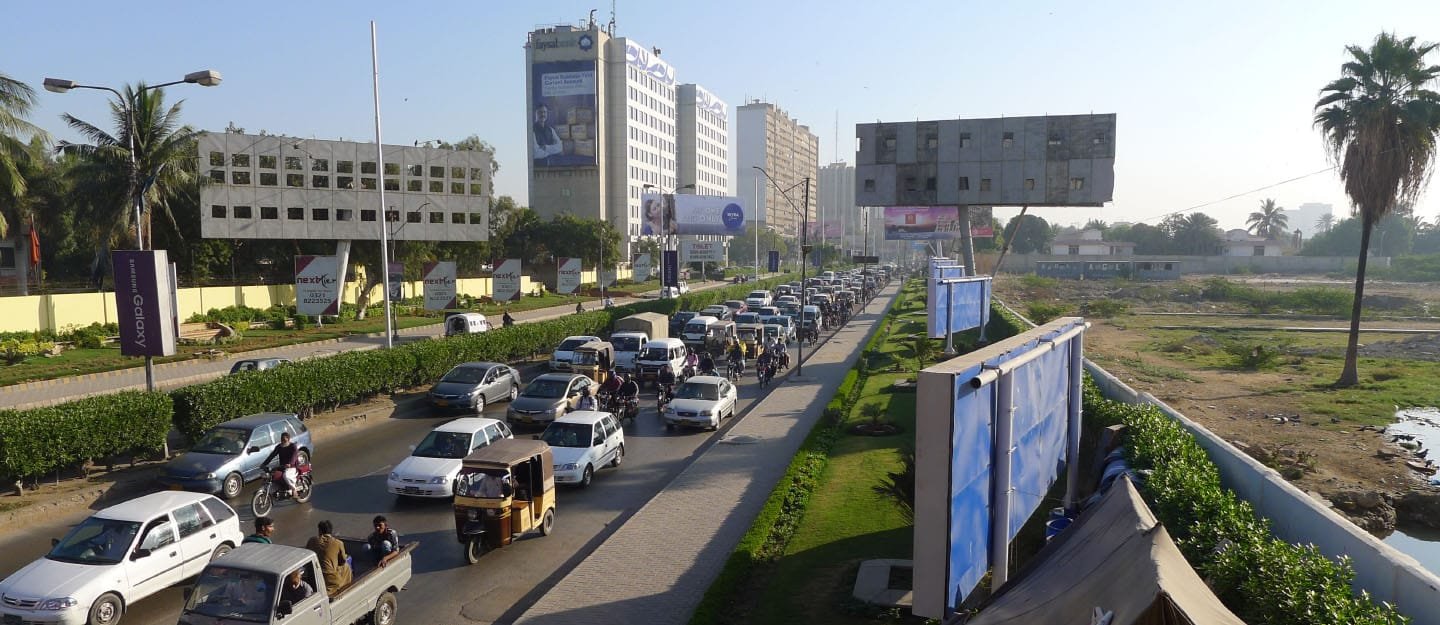



KARACHI — Pakistan’s largest metropolis is tackling its long-standing urban challenges through a coordinated push for infrastructure renewal and modern governance models. From improved transport connectivity to upgraded drainage systems, Karachi is witnessing a strategic transformation designed to align its development with global megacity standards.
As the economic engine of the country, contributing over 15% to Pakistan’s GDP, Karachi has long struggled with inconsistent municipal management, outdated infrastructure, and rapid unplanned urbanization. Today, however, a combination of public sector initiatives, private partnerships, and international development support is gradually turning the tide and transforming Karachi into a global standard.
The game changers for Karachi’s mass transit landscape are the launch of the Green Line Bus Rapid Transit System (BRTS) and the expansion of the People’s Bus Service. BRT ridership has increased by 40% since mid-2023, reported by the Sindh Mass Transit Authority. Plans are now underway for the Blue Line, which is expected to connect residential areas in the east to central business hubs.
Aftab Ghauri, who travels every day from Surjani Town, said, “I used to spend two hours reaching Saddar. Now it takes less than half that time.”
The city authorities are currently improving intersections, sidewalks, and bus terminals with assistance from the World Bank and the Asian Development Bank, which provide technical expertise and financial support to ensure public safety, especially for women and senior citizens.
In recent years, monsoon flooding has historically paralyzed the city, but this year the city’s conditions are noticeably better. Over 70% of drains and nullahs have been desilted and cleaned to ensure proper drainage of rainwater, reported The Karachi Water and Sewerage Corporation (KWSC).
Ongoing efforts under the Karachi Water and Sewerage Services Improvement Project (KWSSIP), supported by the World Bank, have installed smart sensors in key pumping stations. These sensors, equipped with advanced technology, monitor water flow and pressure, reducing waterline losses by 18% and increasing overall efficiency.
“This is just the beginning. We aim to make Karachi flood-resilient by 2027, and we’re on track to achieve that.” Murtaza Wahab, Mayor of Karachi, said in his recent press briefing, exuding a sense of empowerment and determination that is inspiring for the city’s residents and stakeholders.
The advancements in the municipal services sector are impressive. The new e-KMC portal now allows residents to pay property taxes, file complaints, and access land records online. This digital shift not only cuts bureaucracy and boosts transparency but also fosters a sense of progress and modernization in the city’s governance.
In a pilot project with the United Nations Development Programme (UNDP), Karachi East has deployed data dashboards for real-time monitoring of waste collection and traffic patterns. These data-driven tools are expected to expand citywide by next year.
The Sindh Solid Waste Management Board (SSWMB) has teamed up with Chinese and Turkish companies to improve garbage collection and waste-to-energy projects in several districts, including Korangi and Malir. As of June, the city handles over 12,000 tons of waste daily, with a 25 percent boost in disposal efficiency.
Community-led recycling programs in Gulshan-e-Iqbal have involved over 5,000 households, promoting waste separation and environmental consciousness at the community level.
Under the Naya Pakistan Housing Program, 6,000 affordable housing units are under construction across Karachi. These projects focus on low-income families and are supported through public-private partnerships.
The city is also expanding green spaces. In 2024 alone, 18 urban parks were rehabilitated, and tree planting drives resulted in over 200,000 new saplings being planted citywide. The Green Karachi campaign has engaged students, volunteers, and civil society in neighborhood beautification efforts.
With a median age under 30, Karachi’s youth are vital to its future. Several tech incubation centers, including NIC Karachi and CodeGirls, now offer coding bootcamps, startup support, and mentorship. Since 2022, over 1,200 youth-led businesses have been founded with support from federal and provincial programs.
Furthermore, vocational training through the Kamyab Jawan Program has enabled over 30,000 young people in Karachi to acquire job-ready skills in solar technology, e-commerce, and logistics.
Urban experts observe that Karachi’s most significant progress has resulted from adopting a more inclusive planning approach. The reforms in the Sindh Local Government Act have transferred powers to the town-level administrations, allowing for a quicker response to local needs.
Civil society, academia, and professional bodies such as the Pakistan Institute of Architects are regularly consulted in city planning forums.
“Karachi’s shift toward inclusive governance is encouraging. It’s not perfect, but we’re finally moving in the right direction.” Said Dr. Meher Alam, an expert Urban Planner.
The few challenges of sustainable growth are still present in Karachi, but the recent progress has marked a new era of urban development in the city. With ongoing investment, transparent governance, and empowered local leadership, Karachi is positioned not only to address its infrastructure needs but also to emerge as a resilient, inclusive, and future-ready city on the global stage.