




If the union of Junaid Safdar and Shanzeh Ali Rohail was intended to be a celebration of love and lineage, it quickly morphed into a national obsession with the “frozen” clock of the Pakistani elite. As the festivities unfolded in Lahore this January 2026, the digital discourse shifted from the couple to the uncanny, porcelain-smooth faces of the political vanguard. The wedding became a mirror, reflecting not just the beauty of the attendees, but a burgeoning societal anxiety over the “surgical standard” of power.
The Mother of the Groom: A Masterclass in Visual Dominance
At the center of this storm was Maryam Nawaz. For decades, her wardrobe has been a weapon of political branding, but at her son’s wedding, it was her literal face that launched a thousand threads. Clad in a rotating wardrobe of ethereal pastels and deep regal velvets, from an exquisite Iqbal Hussain ensemble to a vibrant Nomi Ansari, she appeared less like a mother-of-the-groom and more like a cinematic lead.
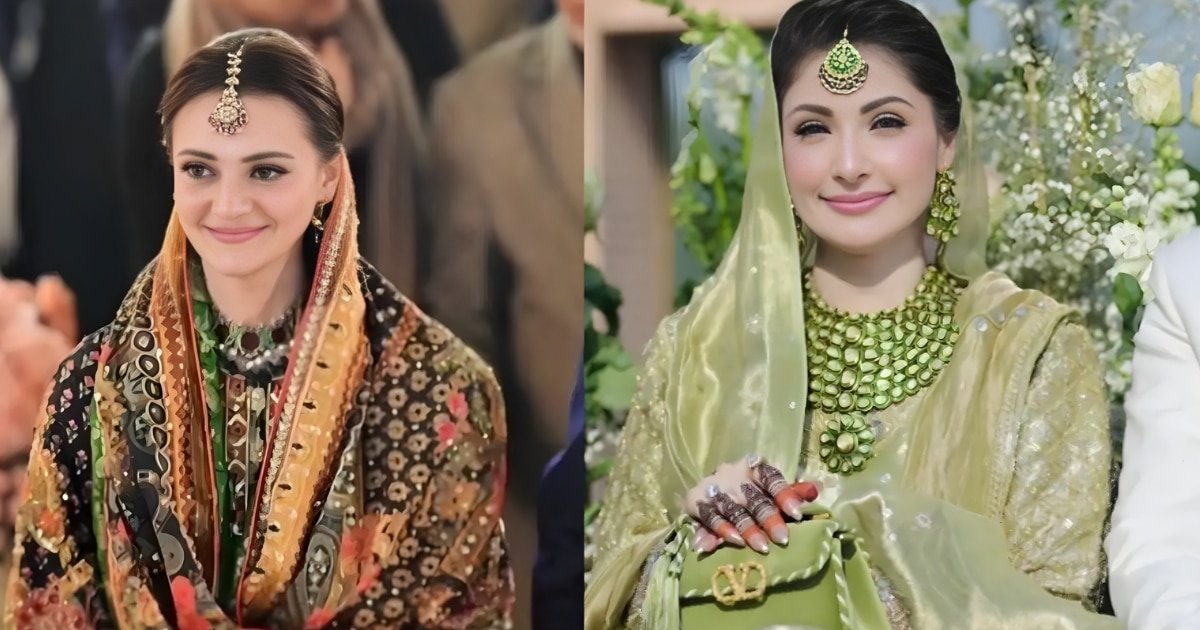
However, the admiration was laced with a peculiar kind of dread. Netizens were quick to point out the “age-defying” physics of her appearance. In a country where the average grandmother is expected to look the part, Maryam Nawaz’s lack of a single visible pore or fine line sparked a massive debate on the accessibility of high-end cosmetic procedures.
Critics argued that her “glow-up” wasn’t just about skincare; it was about the aesthetics of power, a visual representation of wealth that can literally pause the biological clock while the rest of the nation grapples with the weathering effects of stress and inflation.
View this post on Instagram
The “Chai-Coffee” Transformation: Marriyum Aurangzeb
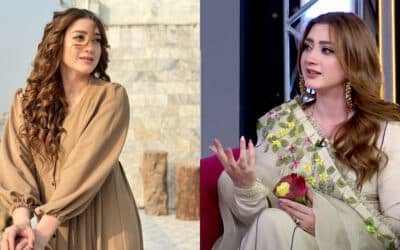
While Maryam Nawaz was the focal point, senior minister Marriyum Aurangzeb became the catalyst for the wedding’s most viral controversy regarding “extreme” transformations. Images of her from the Nikkah and Mehndi showed a sharper, significantly leaner profile that bore little resemblance to her appearances from just a year prior.
The public reaction was swift and cynical. Speculation regarding buccal fat removal, high-definition jawline fillers, and Ozempic-style weight loss became the staple of every WhatsApp group in the country. The humor turned biting when her mother publicly defended the transformation, attributing it to a “strict diet of tea and coffee.”
This “tea-and-coffee” defense became the meme of the month, highlighting the disconnect between the elite and the public. To a population that understands the scientific and financial cost of such transformations, the attempt to mask surgical refinement as “natural discipline” felt like an insult to their intelligence. It raised a deeper question: why is the Pakistani elite so terrified of aging that they would rather credit a beverage than acknowledge the reality of modern medicine?
Maryam Aurangzeb’s transformation just boosted the whole aesthetic industry overnight, this change is wild. pic.twitter.com/UOkIYYOqbV
— Adeela. (@AdeelaCSV) January 17, 2026
The Ethical Price of the “Star” Politician
The critique of these surgeries isn’t just about vanity; it’s about the “supermodel-ification” of the state. When women in high-ranking political offices begin to adhere to the same extreme beauty standards as Hollywood starlets, it changes the relationship between the leader and the led.
In 2026, the visual bar for entering the “inner circle” seems to have been raised to include surgical perfection. For the young women of Pakistan watching these festivities, the message is clear: to lead, you must not only be competent but also visually “optimized.” This creates an unattainable standard that reinforces class divides. These surgeries are the ultimate luxury good, unmarked, yet unmistakable. They signal that the elite occupy a different physical reality, one where the hardships of the country do not leave a mark on the skin.
The “Overshadowing” Narrative
Then there is the psychological fallout. Throughout the week, a recurring headline was: “Did Maryam Nawaz Overshadow the Bride?” By appearing in outfits that were often more ornate and visually arresting than the bride’s own, Maryam Nawaz challenged the traditional hierarchy of a wedding.
You don’t need to like Maryam Nawaz. Critique her politics. But if mocking a completely non-political bride’s looks on her wedding day makes you feel powerful, you’re not fighting the system- you are the problem. It’s digital rot, and it’s ugly.
— Maheen Ghani (@maheenghani_) January 17, 2026
While some feminists argued that she should be allowed to celebrate her own beauty, others saw it as a symptom of a “main character syndrome” that permeates the ruling class. The constant need to be the most “optically perfect” person in the room, even at her own son’s wedding, suggests a deep-seated insecurity that only surgical precision can soothe. The bride, Shanzeh Ali, was often relegated to the background of her own narrative, a literal “side character” to the surgically sculpted spectacle of the Sharif matriarchy.
Maryam Nawaz and her never ending obsession to dress up/act as a bride 🙄 pic.twitter.com/8LNoM5e6iE
— SK (@_stkhan) January 17, 2026
The Lilac-and-White Mirage
Ultimately, the critique of these “extreme surgeries” is a critique of the mirage. As the Jati Umra farmhouse was bathed in lilac lights and white roses, the attendees appeared as though they were crafted from marble. But this perfection is fragile. It requires constant maintenance, massive capital, and a refusal to acknowledge the human condition of aging.
The Safdar-Ali wedding of 2026 will be remembered as the moment the Pakistani elite stopped trying to look like the people they represent and started trying to look like the icons of an imagined, ageless utopia. When the face of the government becomes a curated, filtered, and filled version of reality, the public begins to wonder: if they are hiding their wrinkles, what else are they hiding?
What did Maryam Aurangzeb eat bhai? Asking for a friend. pic.twitter.com/bpTSu2qedo
— M. (@syedamaheenkam) January 17, 2026
By the time the final Valima guests departed, the takeaway was clear. The wedding wasn’t just a union of two families; it was a demonstration of a new, high-definition status symbol. In the high-stakes theater of Pakistani politics, the most powerful weapon isn’t just the vote, it’s the surgeon’s scalpel.
You May Like To Read: Couture Over Country? The Safdar-Ali Wedding Debate