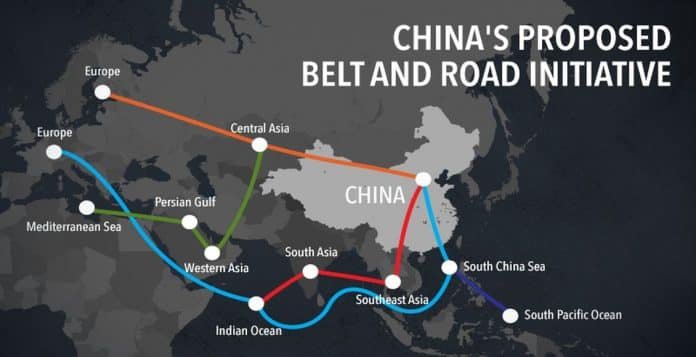
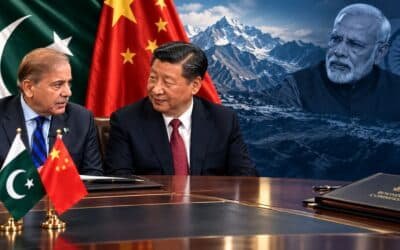


The Chinese Belt and Road Initiative (BRI) has transformed into one of the largest infrastructure and economic diplomacy projects in modern history since its launch in 2013. At its conception, the BRI was a means of connecting Asia, Europe, and Africa through trade corridors and logistics hubs, but now it involves more than 200 cooperation agreements with over 150 countries. Although the $62 billion China-Pakistan Economic Corridor (CPEC) is its flagship, by 2025, the initiative has dramatically expanded in scope, especially into Africa and Europe, altering global development dynamics and posing a challenge to Western-led initiatives.
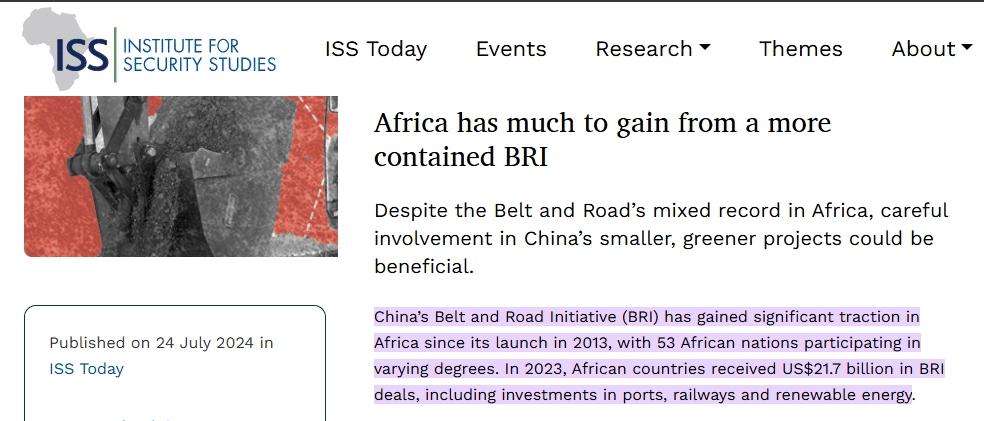
China’s outreach has been broad in Africa. 53 African countries have joined the BRI collaboration structures. Since 2000, Chinese policy banks’ state-owned lending institutions have loaned over $170 billion to African countries, financing major infrastructure projects such as the Standard Gauge Railway in Kenya and the Addis Ababa-Djibouti railway. Africa alone got $21.7 billion in new BRI projects in 2023, with investments in rail, ports, and renewable energy schemes.
Source: ISS
Chinese involvement in African infrastructure is described as rapid, with relatively fewer political constraints and direct participation in turnkey projects. On the one hand, this has contributed to enhancing the construction of the critical infrastructure, but on the other hand, it has created controversy. Its projects, such as Kenya’s Standard Gauge Railway, have caused concern regarding economic viability and the ability to sustain the debt. Responding, Beijing has also begun to reorient its focus more toward sustainable, community-driven projects, as exemplified by the adoption of the term “small and beautiful projects,” prioritizing renewables, healthcare, and digital connectivity.
In response to the growing Chinese influence in Africa, Western powers have sought to counterbalance the power. In 2022, the U.S., alongside its G7 partners, renamed its infrastructure push to Partnership for Global Infrastructure and Investment (PGII), with a commitment to mobilize up to $600 billion by 2027. In the meantime, the European Union has initiated a Global Gateway plan worth 300 billion euros in 2021. They both seek to provide alternatives to the state-led model of China, favoring transparency, environmental sustainability, and democratic values.
Source: Brownstein
Several projects exemplify this new competition. A strategic railway project connecting Lobito port in Angola to mineral-rich regions in the DRC and Zambia (which is also a Chinese focus) is now supported by the U.S. International Development Finance Corporation. The initiative within the EU has also contributed to this Project, alongside its backing of the Africa-EU Green Energy Initiative, which aims to provide 50 GW of renewable energy and achieve electrification for 100 million people by 2030. Global Gateway has also focused more on digital infrastructure, such as the Blue Raman submarine cable, which links Europe, Africa, and Asia.
The growth of the BRI in Europe has been politically more sophisticated. Western Europe has been more cautious, whereas several Central and Eastern European countries have embraced BRI partnerships during the 2010s. Balkan countries, including Serbia, Montenegro, and Hungary, have welcomed Chinese infrastructure investments in highways, ports, and industrial areas. Italy, which was the sole G7 country to participate in the BRI, officially withdrew in 2023 for strategic reasons. France and Germany have since increased the scrutiny of Chinese investments, in line with the wider Brussels de-risking agenda.
Still, the BRI continues to have an impact on the periphery of Europe. The Piraeus Port in Greece, constructed by the Chinese, as well as rail projects in the Balkans, provide the entry points to the EU market. Simultaneously, Western projects such as the India Middle East Europe Economic Corridor (IMEC), and strengthened EU monetary connectivity with China (like yuan swap agreements and cross-border payment systems) indicate that economic relations are in place despite political prudence.
Overall, the BRI’s post-CPEC development has enhanced China’s strategic position in Africa and Europe. By 2025, it will be directly competing with Western models of development, offering its own advantages. Where China excels in quick delivery and resource-based partnerships, the West responds with rule-based and eco-friendly operations. In the case of many countries, the problematic situation is not being on one side or the other but balancing between the two in the best possible way, which characterizes the global infrastructure race in contemporary geopolitics.