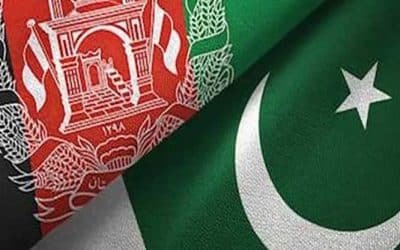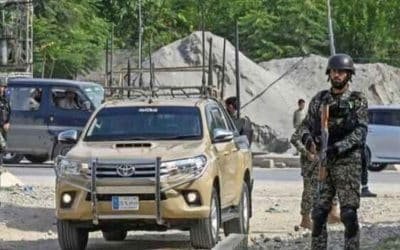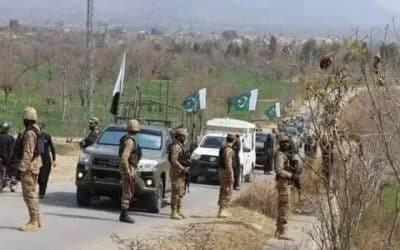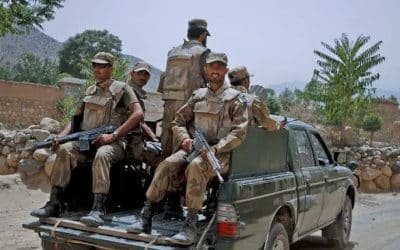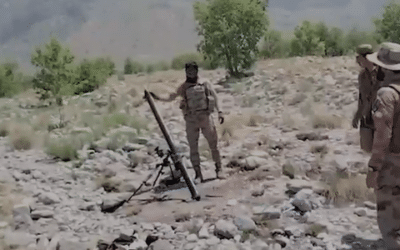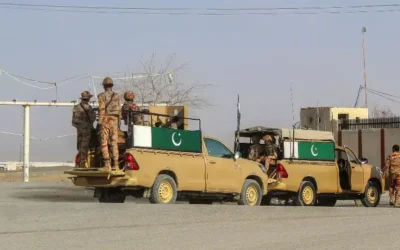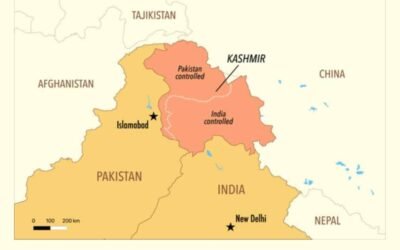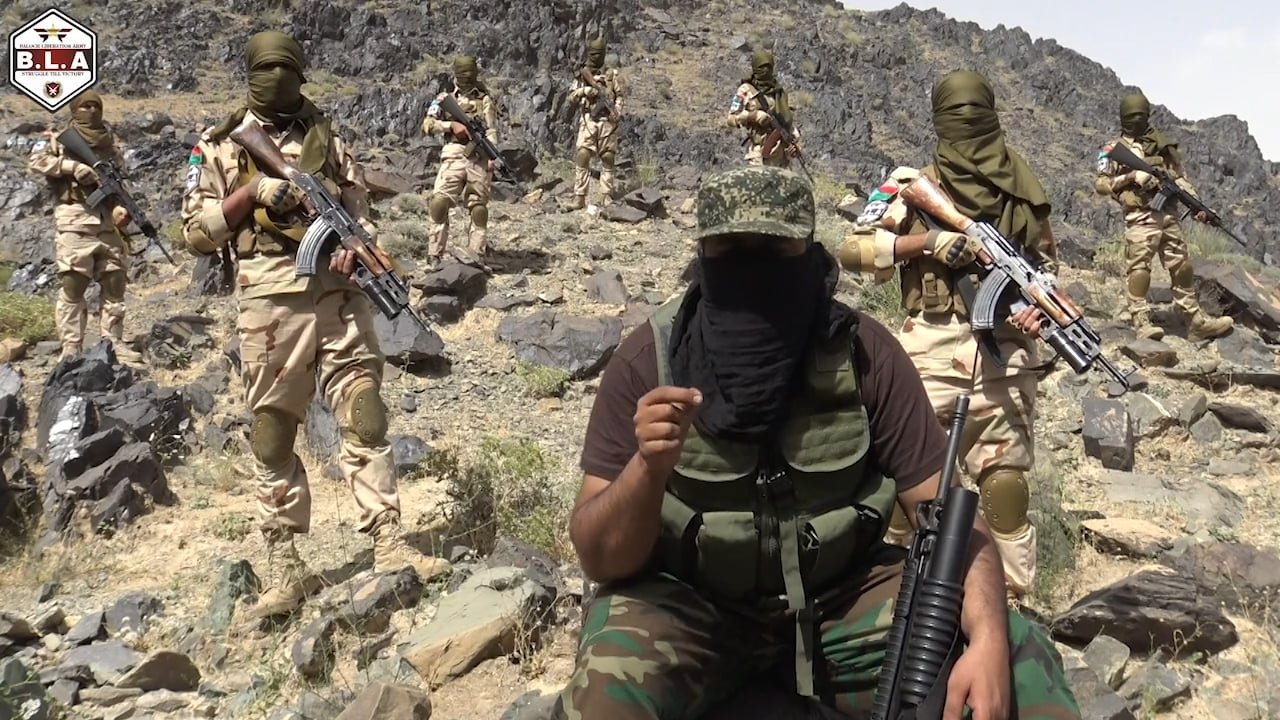





The Baloch Liberation Army (BLA), now known as Fitna Al Hindustan (FAH), emerged in the early 2000s. It claimed to address long-standing issues in Balochistan, such as unfair resource allocation and a lack of political rights. But instead of choosing legal or political methods, the group turned violent and separatist. It has openly called for breaking up Pakistan’s territorial unity—demanding independence not only for Baloch areas in Pakistan, but also for parts of Iran and Afghanistan. Among all armed groups in the region, the FAH stands out as the most extreme. It has carried out many terrorist attacks against civilians, security forces, and public infrastructure. These actions have harmed peace efforts and are widely seen as part of foreign-backed plots to destabilize Pakistan.
Origins, Objectives & Tactical Evolution
The BLA/FAH emerged as an extension of previous Baloch separatist movements, as it allied with the umbrella organization Baloch Raaji Aajoi Sangar (BRAS), established in 2018 alongside the BLF and BRA. Its initial plan was to attack security services and infrastructure through guerrilla tactics. However, in 2024-2025, it rose exponentially: suicide bombings, hostage sieges, China-related facilities, including Gwadar and CPEC projects, were targeted.
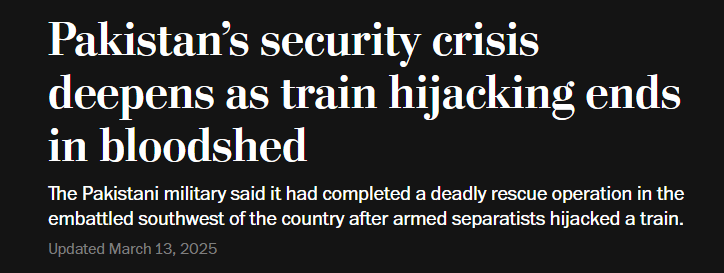
A BLA hijacking of the Jaffer Express in March 2025, where militants separated passengers on ethnic lines, used explosives, and subsequently took 400 hostages, leaving 25 hostages dead, was rescued by military forces within a day, killing dozens of militants. At the same time, the BLA initiated Operation Herof 2.0, hitting security installations in dozens of locations in a coordinated strike and Pakistani military and intelligence facilities.
Source: The Washington Post
Fitna-al-Hindustan: The Tale of Foreign Interventions in Pakistan
The BLA (and affiliated groups) were labelled as Fitnah-al-Hindustan by the Pakistani government. The Baloch are not leading this insurgency; they are being used as a tool of the Indian intelligence agency RAW to destabilize Pakistan. Baluchistan CM Sarfaraz Bugti released audio evidence of group operatives communicating with their RAW handlers, and stressed that the group does not have any real local support and is just another proxy terror gang.
You May Like To Read:The FATF Pressure: Global Scrutiny and Domestic Compliance
Pakistani intelligence agencies, enabled by confessions made by the Pakistanis themselves, have claimed a complex network of Indians supporting the BLA. Kulbhushan Jadhav and Maulvi Mansoor, who was arrested, allegedly stated that they worked as a RAW agent in Balochistan with the mission of controlling finances and sabotage activities on the orders of the New Delhi strategic cell to weaken CPEC.
Source: Pakistan Today
It has been estimated that RAW-linked groups were moving $32-35 million per year into FAH and related networks, with Afghanistan serving as a logistics center and procuring weapons via networks traversing the Zaranj corridor into Turbat and the Afghan borderland. The satellite images have allegedly discovered training bases in Kandahar where the FAH fighters learn weapon skills such as the use of the RPG-29s and anti‑air missiles.
These findings were reinforced by confessions in public by surrendered BNA commanders: helicopters, ammunition, shell companies, offshore transfers, and training camps in Afghanistan and India are key to the insurgency supply.
Israeli-Linked Sponsorship and MEMRI BSP Initiative
Israeli-linked think-tank activities were recently in the spotlight of international media, including Al Jazeera, highlighting the MEMRI Baluchistan Studies Project (BSP). According to observers, an emerging symbiosis is evident, as Israel, through strategic partnerships with India, seeks to integrate itself into Baloch networks, employing an influence operation similar to the co-opting of stateless movements in the region.
Even though direct Israeli-BLA cooperation is a speculative position, MEMRI BSP is consistent with the wider trend of over-contextualizing Baloch insurgency as a symptom of a wider regional containment of Iran and Pakistan, arguably using Baloch nationalism as a possible means to external strategic ends.
Critical Reflections
Pakistan has always maintained that while Balochistan remains underdeveloped, the solution lies in integration, infrastructure-driven progress, and better security—not in armed separatism promoted by hostile foreign powers. The State rejects the claim that Fitna-al-Hindustan (FAH) is a genuine, grassroots movement. Instead, it sees FAH as part of a hybrid warfare strategy orchestrated by external forces, especially India, to interfere in Baloch affairs.
You May Like To Read: The Police and CTDs: Challenges at the Frontline
The Baloch Studies Project (BSP), led by MEMRI, should be seen for what it likely is: a geopolitical tool disguised as academic research. Such efforts aim to hijack Baloch struggles and sow discord among oppressed nations across West Asia. Any movement that seeks real legitimacy and lasting impact must be based on justice, not strategic convenience. Aligning with modern-day colonial powers—no matter how appealing—only weakens the cause in the long run. True solidarity comes from principled, post-geopolitical cooperation, rooted in mutual liberation, not in the politics of shared enemies.
Pakistan’s military leadership, through DG ISPR, has repeatedly warned that the recent escalation in FAH-linked violence, especially high-casualty attacks, would not be possible without foreign support. This poses a direct threat to the country’s national sovereignty and economic stability.
Conclusion
The so-called Free Balochistan movement has turned into a foreign-backed proxy. Security analysts now call it Fitna-al-Hindustan. It uses local issues to create unrest across the region. Backed directly by India and increasingly tied to Israeli intelligence, this network threatens both Pakistan’s sovereignty and regional stability.
To move forward, Pakistan must expose this external link, strengthen internal security, and resolve real local issues. This includes better development, fair governance, and full respect for the Constitution. Lasting peace will not come from division—it will come from justice, unity, and a responsible State.