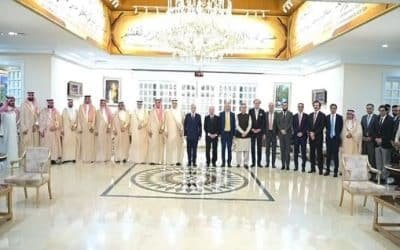
Pakistan and Iran maintain a close bilateral relationship rooted in history, culture, and shared religion. Islamabad has consistently strengthened its ties with Tehran across political, economic, security, cultural, and regional domains, despite Iran having to navigate Western sanctions and instability in the Middle East. Both countries maintain a visible brotherly relationship. As an example, the Foreign Office of Pakistan on May 4, 2025, welcomed a visit by the Iranian FM Abbas Araghchi to Islamabad, describing it as a sign of the “having deep-rooted and a strong relationship between Pakistan and the brother country of Iran”.

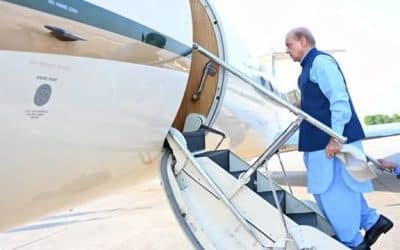
Days later, Prime Minister Shehbaz Sharif reciprocated by visiting Tehran on May 25-26, 2025. These exchanges were at the highest levels, both sides of the table showing a commitment to regional matters, not forgetting Palestine and Kashmir, the new Israeli war against Iran, and Pakistan publicly acknowledged the assistance given to Islamabad in its war against India.
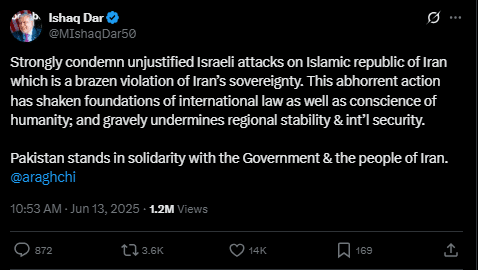
Pakistan leaders have described Israeli attacks on Iran as illegal and destabilising, and the Foreign Minister Ishaq Dar backed an appeal to resolve the conflict diplomatically and to prevent a full-scale confrontation.
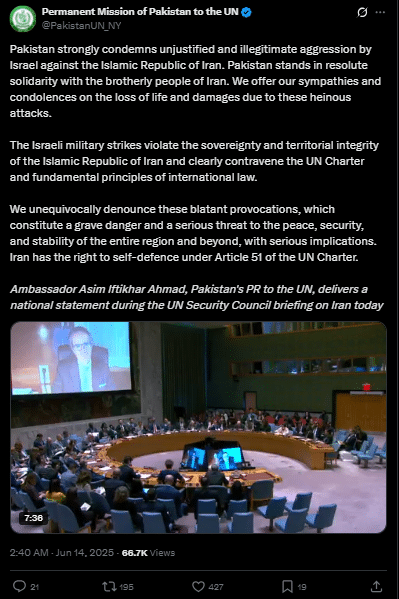
Pakistan’s Permanent Representative to the United Nations, Asim Iftikhar Ahmad, condemned Israel’s actions and emphasised that Iran is entitled to self-defence under Article 51 of the UN Charter.
Economic cooperation has become a cornerstone of Pakistan-Iran relations in 2025. During Prime Minister Shehbaz Sharif’s visit to Tehran, Pakistan pledged to expand bilateral trade from $3 billion to $10 billion, highlighting the shared 900-km border and plans for a Free Trade Agreement. Both nations aim to transform the border into a “border of prosperity” through joint markets, free zones, and connectivity projects.
Iran remains a key energy partner, supplying electricity to Balochistan under an extended 100 MW deal. Momentum also revived for the long-stalled Iran-Pakistan (IP) gas pipeline, with both sides seeking a resolution despite U.S. sanctions. Islamabad approved the construction of the 80km long pipeline’s first phase in 2024 and continues to push for broader regional connectivity via the Chabahar and Gwadar ports. These developments align with Pakistan’s goals to enhance energy security and uplift underdeveloped regions, such as Baluchistan and Sindh.
In 2025, Pakistan and Iran made considerable improvements in their border management initiatives along the 900-kilometre joint frontier located in Balochistan, a region marred by militancy and smuggling. Both armies have promised closer collaboration and are “decisively determined” to fight terrorism, following the May 2025 visit by Army Chief Gen. Asim Munir to Tehran.
Iran, Pakistan determined to uproot terrorism: Top generalhttps://t.co/GXBAJIxKE7 pic.twitter.com/ocV1cEbhLl
— IRNA News Agency (@IrnaEnglish) May 27, 2025
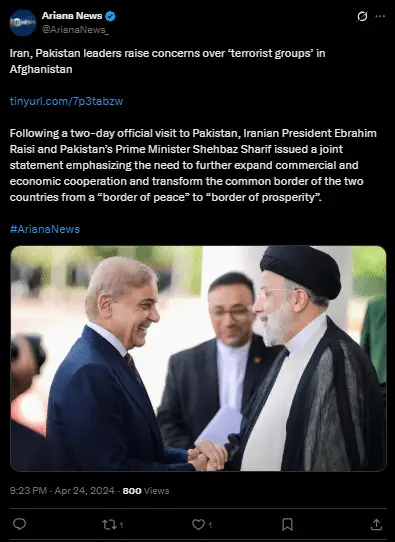
Iranian President Ebrahim Raisi’s three-day visit to Islamabad in April 2024 marked a key step in restoring bilateral ties, which had been strained following cross-border strikes by both countries in January targeting militant groups. During the visit, President Raisi held meetings with President Asif Ali Zardari, Prime Minister Shehbaz Sharif, and Army Chief Gen. Asim Munir. In a joint statement, both sides reaffirmed their commitment to strengthening cooperation on counterterrorism and security, as well as building a united front against terrorism. The joint initiatives entail intelligence sharing, joint counter-narcotics operations, and improvements in border infrastructure, including the installation of fencing. The challenges still exist, due to the Iran-Israel conflict, which could allow separatist and jihadist militants to exploit the open frontier, but Pakistan has focused more on securing the frontier to establish a stable region without fueling regional rivalry, leaving open crossings such as Taftan, which allow religious pilgrims and trade.
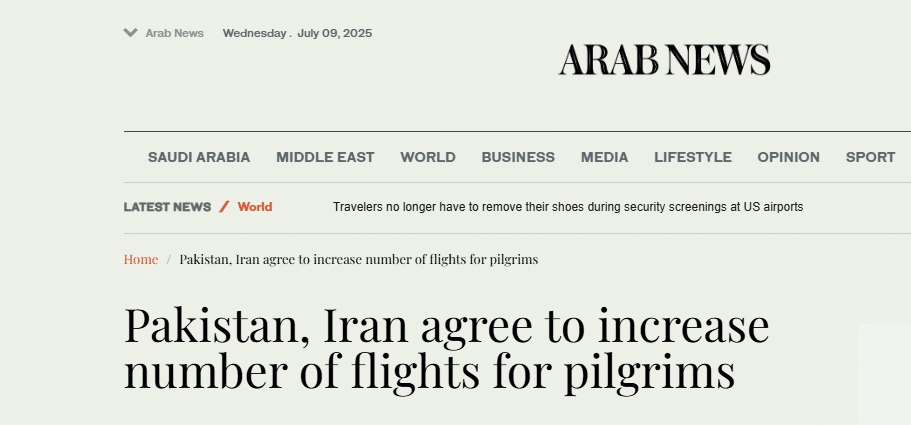
Cultural and religious ties play a vital role in strengthening Pakistan-Iran relations. Iran remains a key pilgrimage site for Pakistani Shia Community, and in May 2025, both countries agreed to expand facilities by increasing flights and keeping border crossings open during religious events like Muharram and Arbaeen. Iran even offered free accommodation for 5,000 Pakistani pilgrims in Mashhad.
Cultural cooperation is also strengthening, with joint plans to promote Persian studies, media collaborations, and tourism initiatives. Seyyed Abbas Salehi, the Iranian Minister of Culture and Islamic Guidance, emphasised the importance of enhancing bilateral cultural engagement through collaborative artistic projects, active involvement of artists in regional festivals, and the establishment of shared exhibition venues. The exchanges are mutually supportive, with Pakistan raising its cultural prestige among the Shia community and the Islamic world as a whole, while Iran continues to exert influence across South Asia.
In conclusion, the Pakistani-Iranian relations in 2025 are characterised by pragmatic strategic cooperation and mutual reassurance, despite external pressures. Through pipelines, power links, and trade, Islamabad has worked to transform its common border into an economic opportunity, while jointly fighting terrorism. Senior-level visits and joint statements show that Pakistan regards Iran as a brother. These ties are part of Pakistan’s regional strategy to access new markets and routes, improve security on the southwest border, and strengthen its position among Muslim countries.