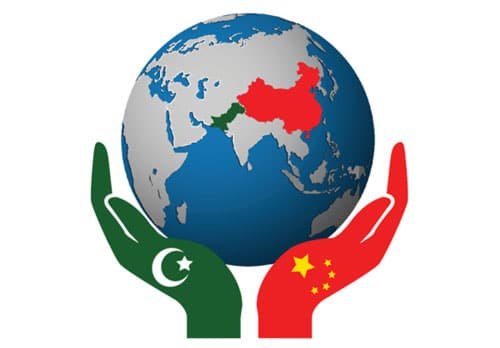




Since the 1980s, Pakistan has undergone a shift in its defense procurement strategy. It now sees China as a key partner for modernizing its armed forces. What began in the 1960s as small arms imports grew into strong military cooperation. By the 2010s, Pakistan made up nearly 41% of China’s total arms exports. This shows the strength of their strategic defense relationship. The partnership has evolved. It started with simple purchases, then moved to co-production and technology transfer.
Land Forces: From Imports to Local Manufacturing
Pakistan’s army began acquiring Chinese equipment decades ago, notably tanks and artillery systems. In the late 1980s and early 1990s, it procured the Type-85-IIAP main battle tank (MBT), a Chinese design locally modified with a home-built 125mm gun and autoloader. These tanks were produced in Pakistan and later upgraded, marking a step toward defence self-reliance.
In the 1990s, China and Pakistan co-developed the Al-Khalid MBT, known in China as the MBT-2000. Around 400 were produced in the 2000s and 2010s. This tank now serves as the backbone of Pakistan’s armored corps. In recent years, Pakistan has introduced the VT-4 MBT, which is assembled from kits and enhanced with local technologies. A customized version, the Haider tank, reflects Pakistan’s increasing involvement in the design and production process.
Pakistan’s artillery has also been significantly influenced by China. The Type-83 multiple-launch rocket system (MLRS), acquired in the 1980s, was produced domestically as the Azar. In the 2010s, Pakistan licensed the A-100 300mm MLRS and began local production. By the late 2010s, it ordered 200 SH-15 155mm self-propelled howitzers, with an agreement to manufacture them locally. The Baktar-Shikan anti-tank missile, based on China’s Red Arrow system, and the Anza man-portable air defence system, adapted from Chinese technology. Together, these platforms have modernized Pakistan’s land forces without dependence on Western systems.
Air Force: From Dependence to Co-Development
Pakistan’s air force has similarly evolved through Chinese collaboration. Early Chinese aircraft, such as the F-6 (a MiG-19 variant) and the A-5C ground attack jet, entered service in the 1960s and 1980s, respectively. These early models were later equipped with Western avionics tailored to PAF requirements.
In 2001, Pakistan procured over 140 F-7P and 80 F-7PG fighters from China. These were upgraded versions of the Chengdu J-7, featuring enhanced avionics, which were based in part on feedback from Pakistani pilots. These acquisitions marked a gradual modernization of an aging fleet using improved Chinese designs.
The most significant development was the JF-17 Thunder, a jointly developed multi-role fighter. Initiated in 1991 and formally launched in 1995, the program involved Pakistan’s Aeronautical Complex (PAC) and China’s Chengdu Aircraft Corporation. The JF-17 has undergone continuous improvements; its latest Block III variant features a Chinese AESA radar, enhanced electronic warfare capabilities, and advanced weaponry. The project is central to Pakistan’s airpower strategy and showcases deep bilateral defence cooperation.
In 2022, Pakistan expanded its air fleet by ordering the J-10CE, a 4.5-generation multirole fighter. With greater range and payload than the JF-17, the J-10CE provides the PAF with enhanced combat flexibility. It features mature radar systems and reflects the continuing trust between the two countries in high-tech military collaboration.

Source: Key Aero
Naval Forces: Maritime Partnership Expands
The Pakistan Navy has also transformed with Chinese support. Initially reliant on Western designs, Pakistan has begun acquiring Chinese-built naval vessels in recent decades and has gradually localized its production. In 2012, Pakistan commissioned the first of four Azmat-class fast attack missile boats; the other three were built domestically at Karachi Shipyard with Chinese assistance.
Pakistan also procured four F-22P (Zulfiquar-class) frigates, modeled on China’s Type-053H3 platform. One of these ships was constructed in Pakistan, reflecting a strong component of technology transfer. More recently, Pakistan acquired four Type-054A/P (Tughril-class) frigates. These advanced vessels, delivered between 2021 and 2023, feature modern sensors and missile systems, including the LY-80N surface-to-air missile.
In submarine warfare, Pakistan ordered eight Hangor-class (Type-039A) diesel-electric submarines. Four are being built in China and the rest in Pakistan. The first was delivered in 2024. These submarines are designed to enhance Pakistan’s deterrence and maritime security posture in the Indian Ocean.
Source: Naval News
Strategic Impact and Future Prospects
Pakistan’s military relationship with China now spans all three service branches and has matured into a multifaceted partnership. It includes co-development, local assembly, and long-term technological cooperation. Unlike Western countries, China has consistently shown a willingness to share defense technology, which has been instrumental in Pakistan’s military advancement.
The collaboration has enabled Pakistan to circumvent sanctions and other export restrictions imposed by the West. Today, Chinese-origin systems are central to Pakistan’s arsenal, ranging from Al-Khalid tanks and JF-17 fighters to Type 054 frigates and Hangor submarines. This alignment not only strengthens Pakistan’s defense capabilities but also boosts the local defense industry’s growth.
In the 2010s, Pakistan became the top buyer of Chinese arms. Looking forward, the partnership is likely to deepen. Future upgrades to the JF-17, local variants of the VT-4 tank, and new naval platforms suggest continued strategic alignment.
In conclusion, Pakistan’s journey from importing Chinese arms to co-developing advanced systems reflects a significant evolution in defence policy. This transformation has enhanced self-reliance, modernized the armed forces, and reinforced the Sino-Pak strategic bond, ensuring long-term security cooperation in a volatile region.