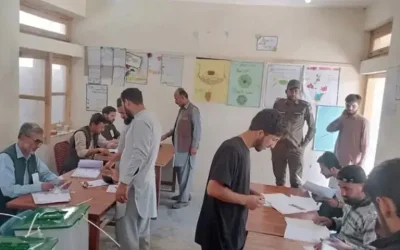
The Bangladesh Nationalist Party (BNP), led by Tarique Rahman, has secured a resounding two-thirds majority in the country’s 13th General Election, held on Thursday, February 12, 2026. By Friday morning, unofficial tallies confirmed that the BNP had returned to power after a 20-year hiatus, marking the first successful transition of power since the 2024 Gen Z-led uprising.
Election Results: BNP Secures Majority
With counting nearly complete in 299 constituencies, the BNP has crossed the simple majority threshold (151 seats) and is trending toward a “super-majority.”
| Party / Coalition | Projected Seats | Current Confirmed Lead |
| Bangladesh Nationalist Party (BNP) | 212 | 181 |
| Jamaat-e-Islami (JIB) | 70 | 61 |
| National Citizen Party (NCP) | — | 6 |
| Others / Independents | — | 7 |
President Asif Ali Zardari extends best wishes to the people of Bangladesh as over 127 million voters head to the polls today to elect representatives to 300 seats, expressing hope for a peaceful process that strengthens democracy and stability. @ChiefAdviserGoB
— The President of Pakistan (@PresOfPakistan) February 12, 2026
-
Tarique Rahman’s Return: Poised to become the next Prime Minister, Rahman (son of late President Ziaur Rahman and former PM Khaleda Zia) returned from 17 years of exile in London last December.
-
Opposition Concession: Jamaat-e-Islami chief Shafiqur Rahman conceded defeat on Friday morning, pledging to pursue “positive politics” rather than obstructionist opposition.
Constitutional Referendum: The “July Charter”
Simultaneous with the general election, voters participated in a referendum on the July Charter—a package of deep constitutional reforms drafted by the interim government under Nobel laureate Muhammad Yunus.
Referendum Result (Early Count): Passed with over 60% “Yes” votes.
Key Approved Reforms:
-
Term Limits: No individual can serve as Prime Minister for more than 10 years (two terms).
-
Bicameral Legislature: Introduction of a 100-member Upper House of Parliament.
-
Judicial Independence: Constitutional guarantees for the full freedom of the judiciary.
-
Caretaker System: Formal reinstatement of a neutral caretaker government for all future elections.
The Bangladesh Nationalist Party (BNP), led by Tarique Rahman, secured a commanding majority in Bangladesh’s elections. Jamaat-e-Islami also landed notable seats. World leaders congratulate Bangladesh on successful and peaceful elections#BangladeshElections2026 pic.twitter.com/Cgp9MnJuVv
— HUM News English (@humnews_english) February 13, 2026
Turnout and Global Reaction
-
High Engagement: Voter turnout reached approximately 60.69%, a significant jump from the 42% recorded in the boycotted 2024 elections.
-
International Congratulations:
-
Pakistan: President Asif Ali Zardari and PM Shehbaz Sharif were among the first to congratulate Tarique Rahman, emphasizing a desire for “mutually respectful engagement” and cooperation in trade and defense.
-
India: PM Narendra Modi extended an “olive branch” to the new government, expressing a commitment to work with Rahman for a “stable and inclusive” region.
-
USA: The U.S. Embassy hailed the election as “successful and historic,” noting the peaceful conduct of the 127 million registered voters.
-
Status of the Awami League
Former Prime Minister Sheikh Hasina remains in exile in India. From her residence, she released a statement via WhatsApp calling the election a “planned farce” and demanding its cancellation. However, international observers and domestic media have largely characterized the vote as the most competitive and free election in Bangladesh in nearly two decades.
Check out our latest video: