

Pakistan is a country of remarkable cultural wealth. From the poetic legacy of Bulleh Shah and Faiz Ahmed Faiz to the intricate embroidery of Sindhi rilli quilts and the rich rhythms of classical music, its heritage is deep and layered. Yet when it comes to crafting a coherent global cultural identity, something Turkey has accomplished through television dramas and South Korea through the Hallyu wave, Pakistan remains a distant contender. The reasons are complex: internal divisions, policy failures, economic limitations, and overreliance on external cultural imports. But the potential is still there, if it can be mobilized wisely.
The Cultural Identity of Pakistan
Fragmented Foundations
Pakistan’s internal diversity, including Punjabi, Sindhi, Pashtun, Baloch, Saraiki, Urdu-speaking communities, and others, brings vibrancy but also causes tension. Each group has its languages, traditions, and stories. The lack of a unifying cultural policy means these identities often exist in isolation or compete rather than form a shared national mosaic. Efforts to impose a single identity, often based on religious nationalism, have led to exclusion rather than unity.
Lesser Known Fact:
Pakistan is not only home to some of the most ancient traditions of headwear but also offers one of the most diverse variety in headwear fashion due its huge amount of ethnicities.
Thread on the ethnic headwears from #Pakistan 1/n (🧵) pic.twitter.com/x1ZxRW5SfA
— Huzaifa (@MHuzaifaNizam) February 19, 2022
Census data from 2017 revealed that over 39% of Pakistanis speak Punjabi, 18% Pashto, and 14% Sindhi as their mother tongue. Urdu, the national language, is native to only 8% of the population. These figures reflect a multilingual reality that state institutions have often failed to acknowledge in their media and educational efforts. As a result, large swaths of the population feel culturally underrepresented, weakening any collective cultural export strategy.
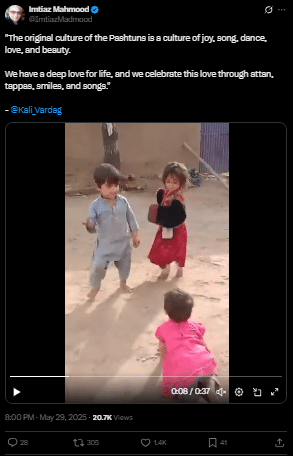
Source: X/@Imtiazmahmood
Culture Consumed, Not Created
The explosion of Turkish dramas on Pakistani television, especially Diriliş: Ertuğrul, highlights both a growing demand for high-quality Muslim-centric storytelling and a gap in local production. Pakistani dramas, once regionally dominant in the 1980s and 1990s, have lost their global edge. According to PEMRA, Turkish dramas accounted for over 60% of foreign content on Pakistani TV in 2020.
Similarly, foreign fast-food chains like KFC and McDonald’s have tailored menus for Pakistani tastes, introducing spicy burgers and masala fries. But this trend of glocalization—global products adapted to local preferences—while commercially successful, often overshadows indigenous cuisine and traditions. Traditional street foods like nihari, paya, and chana chaat are rarely elevated on global platforms, nor are local brands able to compete with international marketing budgets.
Turkey and South Korea
Turkey has utilized state-supported cultural diplomacy and private media to promote a version of Ottoman-influenced modernity that appeals to conservative yet aspirational Muslim audiences. In 2022, Turkish TV series aired in more than 150 countries, bringing in over $500 million in export revenue, according to the Ministry of Culture and Tourism of Turkey.
South Korea took a different approach. Through strategic government investment in its creative industries, including film, pop music, and gaming, it developed the Korean Wave (Hallyu). In 2021, South Korea’s cultural exports brought in $12.4 billion, driven by K-pop, K-dramas, and the Oscar-winning film Parasite. Unlike Pakistan, both countries adopted intentional, long-term cultural export strategies supported by consistent branding, funding, and international partnerships.
The Policy Vacuum
Pakistan lacks a national cultural policy framework. Institutions like the Pakistan National Council of the Arts (PNCA) and Lok Virsa exist but remain underfunded and undervalued. Public sector support for cinema, music, and fine arts is piecemeal and reactive. UNESCO estimates that Pakistan spends less than 0.3% of its GDP on culture, compared to 0.8% in South Korea and 1.1% in Turkey.
In contrast, Pakistani artists and filmmakers face censorship, lack of security, and limited access to international platforms. Even promising local productions are hampered by bureaucratic red tape or politically motivated interference.
A Glimmer of Possibility
Despite these challenges, there are signs of life. Pakistani fashion designers, such as HSY and Elan, are gaining regional recognition. Musicians such as Ali Sethi and Arooj Aftab are performing on global stages, with Aftab becoming the first Pakistani to win a Grammy in 2022. Film festivals have started showcasing Pakistani short films, and digital platforms like YouTube and Instagram have democratized content creation.
Pakistani diaspora networks, especially in the UK, the US, and the Gulf, can be powerful ambassadors if strategically engaged. Community-driven festivals, culinary events, and language promotion initiatives can enhance Pakistan’s soft power footprint abroad.
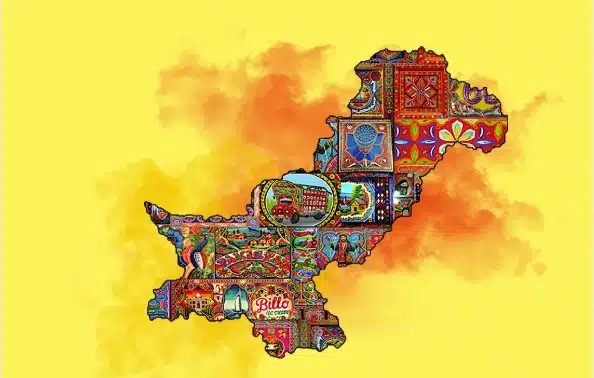
Moreover, traditional crafts like truck art, ajrak printing, and Peshawari sandals have niche global markets waiting to be tapped. These require not just branding, but also sustained export support, protection against counterfeit products, and training for artisans.
Cultural Identity and the State
The state’s embrace of Turkish cultural products has raised eyebrows. For many, this indicates a shift from Saudi-centric religious imagery of the 1980s toward a more modern and relatable Islamic identity. The influence of Turkey is both symbolic and strategic, fitting with the state’s current ideological stance. However, it also risks overshadowing local identities in favor of an imported model.
There’s also concern about how majoritarian religious narratives might deepen existing tensions with Pakistan’s religious and ethnic minorities. Cultural identity, when shaped from the top down, can easily become a tool of exclusion instead of a means of unity.
Pakistan possesses all the essential elements to establish a robust global cultural identity: a rich history, a diverse population, talent, and a strategic location. What it lacks are clear institutions, inclusive cultural policies, and sustained investment in its creative sectors. The goal isn’t to imitate Turkey or South Korea but to learn from their examples. Pakistan must carve out its own path based on its stories, voices, and aesthetics. This means embracing diversity, funding the arts, protecting heritage, and empowering creators. Only then can Pakistan shift from being a cultural consumer to a serious player in the global cultural arena.