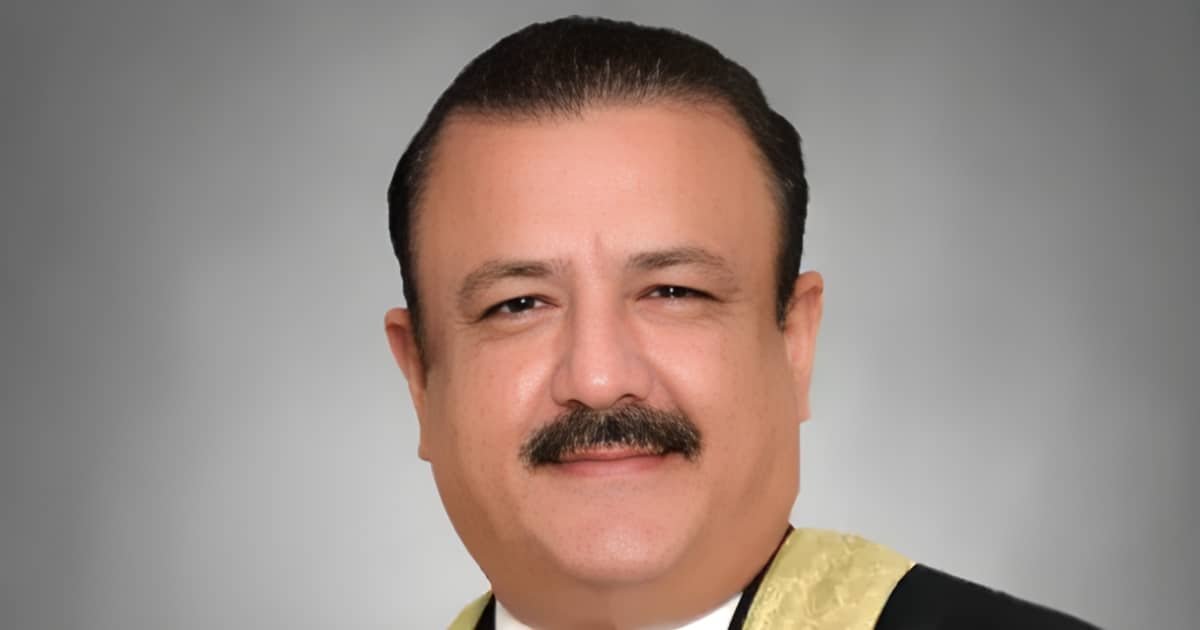


ISLAMABAD: The Higher Education Commission (HEC) has backed Karachi University’s (KU) inquiry that found Justice Tariq Mehmood Jahangiri’s LLB degree was obtained through “unfair means,” submitting a detailed report to the Islamabad High Court (IHC) that points to multiple discrepancies in the judge’s academic record.
The report was filed in compliance with a directive from an IHC bench comprising Chief Justice Sardar Mohammad Sarfraz Dogar and Justice Mohammad Azam Khan, which had sought the judge’s complete academic record while hearing a petition challenging his eligibility to hold judicial office. The court also suggested that original documents might need to be summoned directly from KU, whose earlier cancellation of the degree was suspended by the Sindh High Court (SHC).
Chief Justice Dogar remarked that the allegations were serious and must be examined strictly according to the record. Since the HEC is the national regulatory body for higher education, the bench said it would first assess the commission’s findings before determining whether to formally involve KU.
In its submission, the HEC clarified that it had never verified Justice Jahangiri’s degree, as he had not approached the commission for authentication at any stage. However, the commission enclosed KU’s inquiry report, which highlighted significant inconsistencies.
According to the KU findings, an individual identified as ‘Tariq Mehmood’ obtained an LLB degree in 1991 under enrolment number 5968. Yet records showed that this number had originally been assigned in 1987 to another student, Imtiaz Ahmed. Additionally, the transcript for LLB Part-I was issued in the name of ‘Tariq Jahangiri’. The inquiry further noted that the judge had also enrolled under a second enrolment number, 7124, for LLB Part-I — a violation of KU rules allowing only one enrolment number per candidate.
You May Also Like: Wheel-Jam Strike Partially Disrupts Public Transport in Islamabad, Rawalpindi
The inquiry committee did not term the degree “bogus,” but declared it invalid due to multiple identities and conflicting documentation. KU alleged that the candidate appeared in examinations using false identities and “personified” other students with the collusion of university staff. As a result, KU cancelled the result at the time and imposed a three-year ban, allowing re-examination only in 1992.
The university declared the candidate guilty of using unfair means, cancelled the result, and imposed a three-year ban.https://t.co/XDJ42xj7kK
— Dawn.com (@dawn_com) December 9, 2025
The case has taken a complex legal path since Sept 16, when the same IHC division bench initially heard the petition and restrained Justice Jahangiri from performing judicial duties through an interim order issued without prior notice. The move sparked debate over judicial authority and due process. The Supreme Court later intervened on Sept 29, setting aside the restraining order.
A five-member SC bench, headed by Justice Aminuddin Khan, ruled that a high court cannot bar a judge from judicial functions during a quo warranto petition, clarifying that the decision addressed only the legality of the interim measure, not the underlying allegations. The SC subsequently instructed the IHC to address preliminary objections and proceed in accordance with law, allowing the inquiry into the degree controversy to continue.