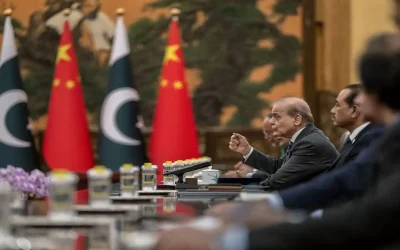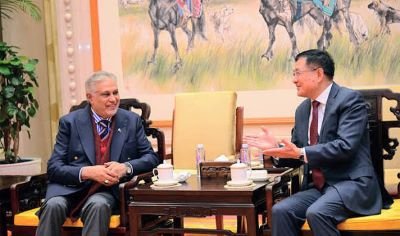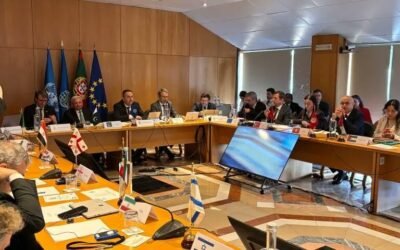
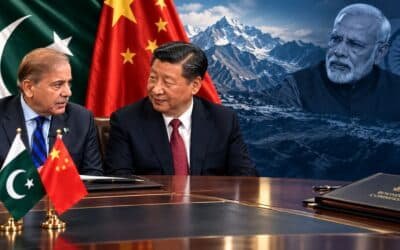


ISLAMABAD / BEIJING — In a landmark diplomatic intervention, Pakistan and China have jointly proposed a structured five-point initiative aimed at ending the month-long “US-Israeli war on Iran.” The proposal, finalized during Deputy PM Ishaq Dar’s emergency visit to Beijing on March 31, 2026, seeks to prevent a global energy crisis and a wider regional conflagration.
China and Pakistan propose a 5-point peace plan for the Middle East #Iraq_News #China #Pakistan pic.twitter.com/Enf6WT9d3R
— Alahad TV-EN (@ahad_en) April 1, 2026
Analysis of the 5-Point Roadmap for the Middle East
This initiative represents a shift from reactive diplomacy to a structured peace template. Below is the breakdown of the points as they apply to the US-Iran-Israel conflict:
1. Immediate Cessation of Hostilities & Humanitarian Access
The plan calls for an “immediate and permanent” end to all military operations. Crucially, it demands that humanitarian assistance be allowed to reach all war-affected areas without delay. This point aims to halt the cycle of missile and drone exchanges that have characterized the first month of the conflict.
2. Resumption of Direct Peace Talks
Dialogue is presented as the “only viable option.” The initiative specifically supports the start of structured negotiations between Washington and Tehran.
-
The Sovereignty Clause: It explicitly demands that the sovereignty, territorial integrity, and national independence of Iran and other Gulf states be safeguarded.
-
The No-Force Pledge: Parties are urged to commit to a peaceful resolution and refrain from the “use or threat of use of force” while talks are ongoing.
China and Pakistan outline five-point plan to end Mideast war – Middle East and Africa – The Jakarta Post #jakpost https://t.co/5EIlkcuQiL pic.twitter.com/sIXZRYKSK6
— The Jakarta Post (@jakpost) April 1, 2026
3. Protection of Civilians and Critical Infrastructure
In a move to prevent a total regional collapse, the plan identifies specific “non-military targets” that must remain untouched:
-
Energy Infrastructure: Oil and gas facilities.
-
Civilian Essentials: Desalination plants and power grids.
-
Nuclear Safety: Peaceful nuclear infrastructure, such as nuclear power plants, must be strictly protected from kinetic strikes.
4. Securing the Strait of Hormuz & Maritime Routes
Recognizing the threat to global trade, the fourth point focuses on the Strait of Hormuz. It calls for:
-
The protection of stranded ships and crew members.
-
The restoration of normal commercial navigation.
-
Guarantees for the safe passage of energy shipments to prevent further global inflationary shocks.
5. Primacy of the UN Charter & True Multilateralism
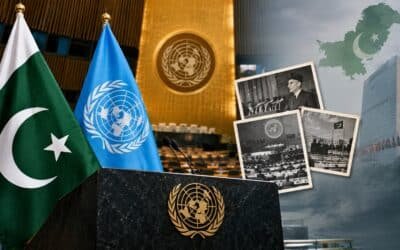
The final point rejects unilateral military action in favor of the United Nations Charter. It calls for a “comprehensive peace framework” led by the UN to ensure that any settlement is rooted in international law rather than temporary military gains.
The “Islamabad Bridge”: Pakistan’s Mediator Role
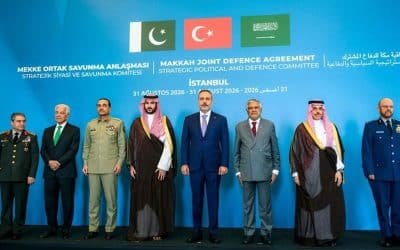
The initiative is bolstered by the Quadrilateral Consultations held in Islamabad (March 28–29), which brought together the Foreign Ministers of Pakistan, Saudi Arabia, Turkiye, and Egypt.
“Pakistan is attempting to act as a bridge between long-standing adversaries at a time when credible intermediaries are in short supply.” — Regional Diplomatic Analysis
Pakistan has officially offered to host direct talks between the U.S. and Iran, leveraging its unique position as a “Muslim middle power” with access to both Beijing and Western capitals.
Why This Matters Now
-
Energy Security: The war has already disrupted oil flows, leading to rising petrol and diesel prices in Pakistan and globally.
-
Economic Stakes: China, as a major energy consumer, is using its “economic heft” to push for a quick resolution to protect its commercial interests and CPEC’s stability.
-
Strategic Shift: This marks the first time key Muslim powers (Pakistan, Saudi, Turkiye, Egypt) have moved away from being “spectators” to becoming proactive architects of a regional peace settlement.
You May Like To Read: FO Confirms Urumqi Talks: Kabul Must Show ‘Visible and Verifiable’ Action Against Terror
Check out our latest video: