

The tragedy of Karbala, though over 1,300 years old, remains a burning torch of defiance against oppression. Imam Hussain’s unwavering stand against Yazid’s corrupt regime has transcended time and geography. His sacrifice wasn’t merely a moment in Islamic history—it was a timeless lesson on standing up for truth, no matter how small the numbers or how powerful the enemy. Today, that same spirit echoes loudly in the occupied lands of India Illegally Occupied Jammu & Kashmir (IIOJK) and Gaza, where people face modern-day Yazids in the form of India and Israel.
Karbala: Not Just History, but a Model for the Oppressed
In 680 CE, the grandson of the Prophet Muhammad (ﷺ), Imam Hussain, refused to bow before Yazid—a tyrant who tried to hijack Islam for political control and worldly power. Despite being outnumbered, water-starved, and surrounded in the barren land of Karbala, Hussain stood firm. He did not fight for personal gain, territory, or revenge. He fought for truth, dignity, and the integrity of Islam. His stand turned a physical defeat into a moral victory that continues to inspire generations.
The Yazidi Face of Modern Oppression: India and Israel
Today, the oppressive regimes of Narendra Modi’s India and Netanyahu’s Israel mirror the traits of Yazid’s rule—arrogance, brutality, and the pursuit of absolute control at the cost of human lives. The streets of Srinagar and the ruins of Gaza are soaked in the blood of innocents, just like the sands of Karbala were. Military lockdowns, media blackouts, destruction of homes, illegal detentions, and targeting of women and children are the tools of today’s Yazidi forces.
India has turned IIOJK into a militarized prison, with over 900,000 troops, draconian laws like AFSPA and PSA, and an information blockade designed to suppress the voice of the Kashmiri people. The same India that falsely champions secularism and democracy is engaged in demographic engineering, trying to erase Muslim identity in the region.
Similarly, Israel continues its genocide in Palestine, using American-backed weapons to flatten homes, hospitals, and schools. Gaza, much like Karbala, is besieged—denied food, water, medicine, and dignity.
Kashmiri Resistance: The Hussaini Spirit in Action
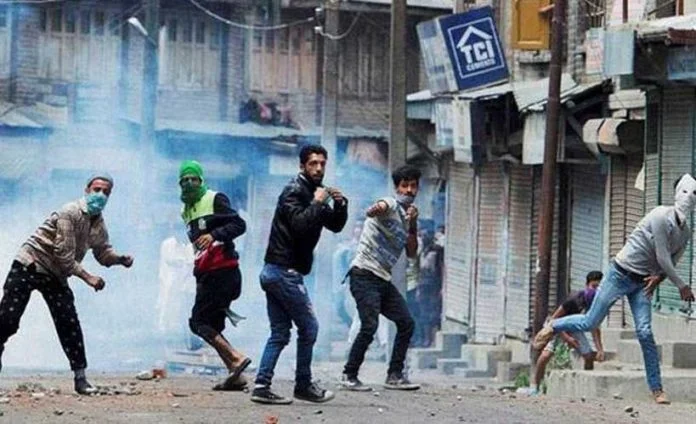
The resistance of the Kashmiri people is not terrorism; it is a sacred struggle for freedom, just like Imam Hussain’s. The youth of Kashmir, armed not with missiles but with stones, courage, and faith, have become symbols of sabr (patience) and istaqamat (steadfastness). Their martyrdoms echo the words of Hussain: “I did not rise for rebellion, but to reform the Ummah of my grandfather.”
Pakistan stands firmly with its Kashmiri brethren, morally, diplomatically, and politically. It is not just a political dispute—it is a battle for justice and human rights. Just as the followers of Hussain kept his mission alive after Karbala, so too do the people of Kashmir and Palestine carry forward the torch of resistance.
Gaza: A New Karbala Under the Rubble
Gaza today is Karbala under modern missiles. The people of Palestine are writing their own chapter of Hussaini resistance. Just like Yazid tried to kill the truth by silencing Hussain, Israel attempts to wipe out the Palestinian identity—but fails every time. The international silence on the bloodshed in Gaza is reminiscent of how the world looked away in 680 CE.
Conclusion: Karbala is a Lens, Not Just a Memory
Imam Hussain’s struggle was not limited to his era. It is a call to every generation to stand against tyranny, no matter the cost. In IIOJK and Gaza, that call is being answered every day. The same spirit that walked barefoot to the battlefield of Karbala now walks the narrow alleys of Srinagar and the rubble of Gaza. It is our duty, as a nation founded on Islamic values, to support that resistance—not just with words, but with action, advocacy, and unwavering solidarity.
In the face of tyranny, Karbala is not over. It is ongoing. And Hussain, once again, is on the battlefield—this time in Palestine and Kashmir.