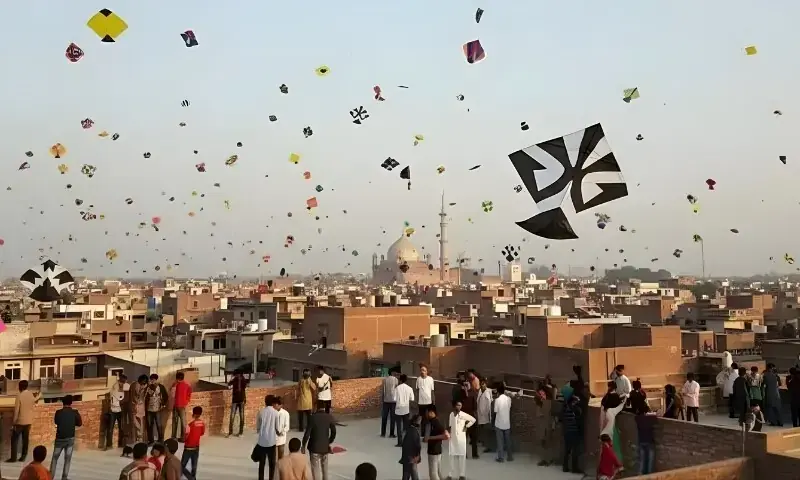




Lahore is getting its kites back. Punjab Chief Minister Maryam Nawaz Sharif announced on Tuesday that the city’s 2027 Basant festival will run from March 12 to 14, following what she called a successful comeback last year after nearly two decades away.
🇵🇰 BIG ANNOUNCEMENT FOR PAKISTAN & THE WORLD! 🇵🇰
After successful Basant 2026, I am proud and happy to announce Basant Lahore 2027! 🪁❤️
📅 12, 13 & 14 March 2027
Lahore will once again come alive with color, culture, festivity, music, energy and legendary hospitality. 🎉🪁… pic.twitter.com/Tx7WGGeEKs
— Maryam Nawaz Sharif (@MaryamNSharif) August 18, 2026
The Punjab government lifted its 18-year ban on Basant back in December 2025. That ban had been in place since 2007, after a string of deaths and serious injuries linked to the festival, mostly from sharp kite strings cutting into motorcyclists and their passengers, along with celebratory gunfire that too often came back down somewhere it shouldn’t.
This time around, the government isn’t taking chances.
The Punjab Kite Flying Ordinance, 2025 gives sub-inspectors powers to arrest and search premises without a warrant if they have credible information. It’s a serious level of enforcement for what is supposed to be a spring festival, but organizers clearly want to avoid a repeat of what shut the whole thing down in the first place.
CM Maryam had thrown her invitation wide. She appealed directly to “the youth of Punjab and Pakistan” to come together, to make memories, and to bring their energy to the city. And she didn’t just limit herself to the local audience. Overseas Pakistanis and international visitors were given their own invitation: “Mark your calendars,” she said, “and come home to the warmth and color of Lahore.”
This isn’t the first word on next year’s festival. On the occasion in May, the Punjab government had issued a comprehensive set of safety rules for kite-flying. In fact, Information Minister Azma Bokhari had earlier pointed to February 2027 as the probable date, so the March dates now confirm a slight change from that previous timeline.
The rules themselves seem to be a direct response to everything that went wrong in the years prior. No running, jumping, or hanging over the edge of a roof. Organizers are responsible for managing crowd size and ensuring no roofs are exceeded safely. Loud music, DJ setups and anything that qualifies as noise pollution are also banned. Bad manners are no more. The Pakistan Penal Code Sections 290, 292-A and 509 deal with behavior that causes harassment, obscenity or general disturbance to neighbors as an actual criminal offense.
There’s a practical safety layer built in, too. Kite-flying should be conducted in places where first-aid kits are available, and, if something goes wrong, building owners and event organizers share responsibility.
Basant is itself much older than any of these regulations. The name comes from Basant Panchami, the fifth day of the lunar month of Magh, and a traditional celebration of the coming of spring, a good harvest and good luck in general. The tradition of kite flying began in the 19th century, when Maharaja Ranjit Singh started holding an annual Basant fair and made kite flying a regular feature. From there, the festival and kite flying became inseparable. Lahore became its cultural home, and that status remains, even as Basant has spread to other parts of Punjab, including across the border in Indian Punjab, and then to other parts of the country.
Lahore’s skyline will be dotted once more with kites of all colors and sizes by March, with crowds of people on rooftops watching them soar, as the city tries to bring back something it lost almost twenty years ago, but this time with a much longer list of rules attached, if the plans hold.