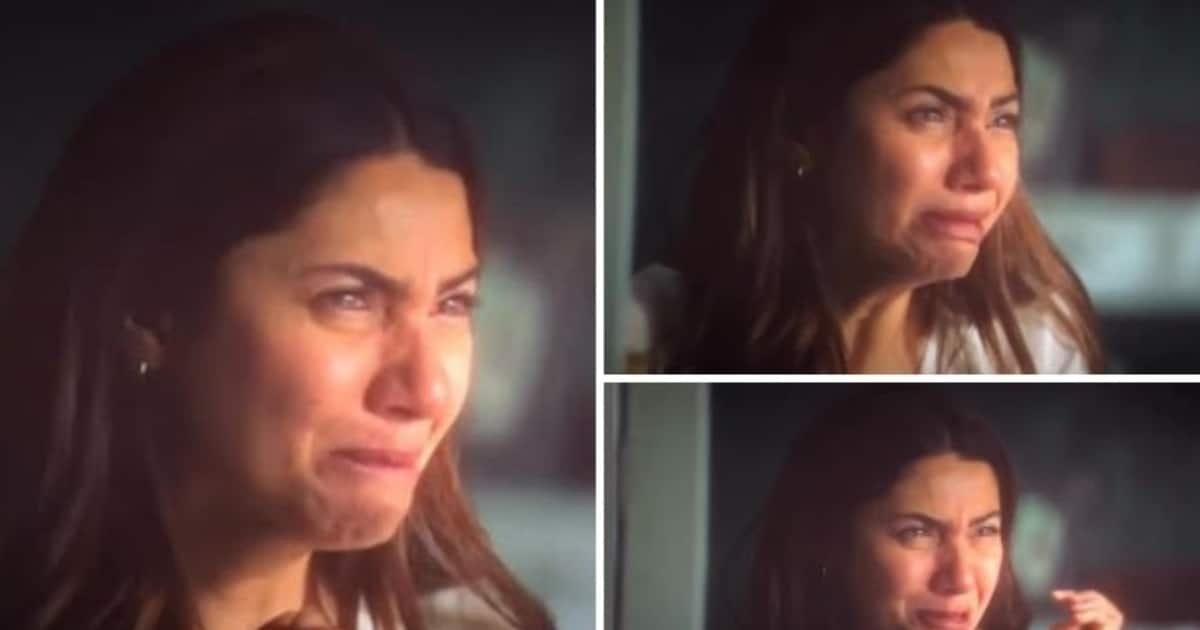




The release of the film Neelofar has created a fascinating dichotomy in the entertainment landscape: while the film as a whole faces harsh critical flak, a specific emotional scene featuring star Mahira Khan has gone intensely viral. This moment, however, has not been met with universal praise. It has ignited a passionate online debate, squarely focusing on the star’s acting technique, particularly her “crying” style, making her performance the unexpected central controversy of the film.
The Emotional Contradiction
The viral scene, which captures a moment of intense emotional vulnerability, has resonated deeply with a segment of her fan base, reaffirming her immense star power. Yet, this high-visibility has opened the door to sustained and analytical criticism online. Netizens and reviewers have specifically targeted her repeated use of a single, specific facial expression or “one-note” approach to grief, arguing that her on-screen crying in Neelofar and previous projects lacks the necessary subtlety and variance required for complex emotional depth.
This criticism suggests that while Mahira Khan is undeniably a compelling screen presence, her acting choices, particularly in moments of high drama, are viewed as “overly theatrical” or stylized for the camera, rather than genuinely authentic. In the age of streaming and hyper-realistic global cinema, audiences demand performances that feel raw and immediate. The debate boils down to a fundamental question: Is the performance genuinely moving, or is it a familiar celebrity trope? This social media scrutiny has turned what should have been a simple emotional peak into a serious discussion about the evolution of her craft.
View this post on Instagram
The Substance vs. Star Power Trap
The online debate over her acting style is intrinsically linked to the critical failure of the film itself. Reviewers have largely panned Neelofar as being “visually pretty but narratively hollow,” with early reports citing repetitive and weak storytelling. The immense star power of the lead pair, Mahira and Fawad Khan, was expected to carry the film, but this reliance seems to have exposed the film’s underlying narrative flaws.
This situation highlights a crucial challenge for Pakistan’s film industry: the over-reliance on celebrity nostalgia and manufactured chemistry often fails when the script is weak. The criticism against Mahira Khan’s acting reinforces the broader critique that the narrative treated her character’s visual impairment as a “poetic accessory” rather than exploring its complexities. Audiences are demanding that their favorite stars not just look beautiful on screen, but that they inhabit characters with psychological truth.
Neelofar is shit mahira khan thinks being blind means she needs to act like she has developmental delays at one point she’s vibrating on the floor???
Fawad khan was good but again the film had no substance and Neelofar was another mani pixie dream girl “fixing” a man— M✨ (@dramallama212) November 30, 2025
The fact that one specific performance trait, the way she cries, has become a national talking point confirms that the digital audience is no longer passive. They are sophisticated critics who use platforms like X and Instagram to scrutinize and demand authenticity. For Mahira Khan, this moment is a critical test, pushing her to reconcile her massive commercial success with the evolving artistic demands of the contemporary Pakistani viewer.
You May Like To Read: Pakistan Launches Its First Center of Excellence in Gaming and Animation (CEGA)
Check out our latest video: