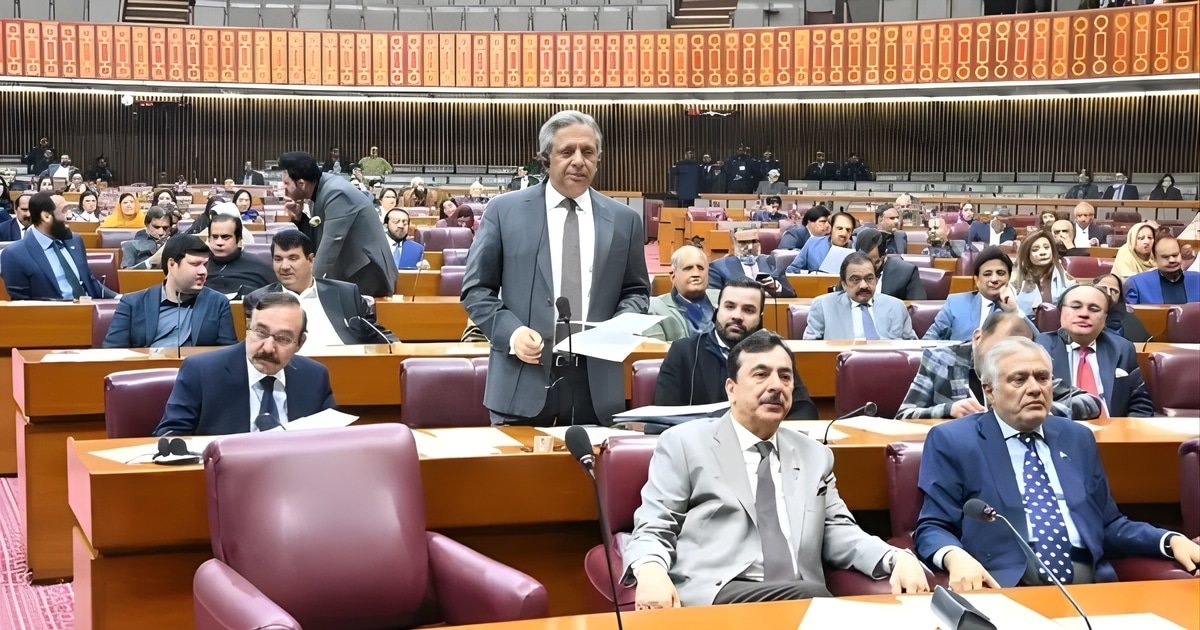





ISLAMABAD — A joint session of parliament on Tuesday approved a bill to establish a statutory National Commission for Minorities’ Rights, despite strong resistance from opposition benches and concerns over its potential impact on existing anti-Ahmadiyya laws. The bill passed with 160 votes in favour and 79 against, following heated debate and multiple amendments.
Opposition members from PTI, JUI-F, and others objected primarily to a now-removed clause that granted the new legislation overriding effect over all previous laws, fearing it could undermine the 1984 anti-Ahmadiyya ordinance. Law Minister Azam Nazeer Tarar, while presenting the bill, assured lawmakers that the legislation would not dilute constitutional or legal provisions concerning Ahmadis. “Neither the law nor the Constitution, nor our conscience, allows us to make a proposal that contradicts the Holy Quran and Sunnah,” he said.
During the Joint Sitting of the Majlis-e-Shoora (Parliament), the House discussed and passed [The National Commission for Minorities Rights Bill, 2025] moved by Federal Minister for Law & justice, Senator Azam Nazeer Tarar.#JointSession @AzamNazeerTarar pic.twitter.com/2kzZ43gHtg
— National Assembly 🇵🇰 (@NAofPakistan) December 2, 2025
Tarar emphasised that minorities are defined as “non-Muslims” under the Constitution, and therefore Ahmadis — who do not accept this designation — do not fall under the commission’s ambit. He added that the Supreme Court had held in earlier rulings that Article 20 protections were unavailable to groups rejecting their constitutional status.
To address objections, the government removed the clause granting overriding effect and withdrew the earlier proposal to give the commission suo motu powers. “This commission will not exercise punitive authority,” Tarar said. “It will recommend solutions on forced conversions, job quotas, sanitation workers’ rights, and other issues affecting our Christian, Hindu, Parsi, Sikh and other non-Muslim citizens.”
You May Also Like: All Milk Samples in Karachi Declared Unfit for Consumption, SHC Told
Opposition lawmakers questioned why President Asif Ali Zardari had initially refused to give assent to the bill, prompting its referral to the joint sitting. PTI Chairman Gohar Ali Khan noted presidential objections related to the procedures for removing commission members and the powers to create posts and manage accounts independently. JUI-F’s Kamran Murtaza reiterated his demand for removing Sections 35 and 12 — relating to overriding effect and suo motu authority — both of which were subsequently dropped.
Fazlur Rehman warned against “reopening the Pandora’s box of Ahmadis,” while PTI’s Noorul Haq Qadri suggested referring the bill to the Council of Islamic Ideology. PPP’s Abdul Qadir Patel also opposed the legislation. Despite the uproar, Speaker Ayaz Sadiq urged members to restrict their remarks to the bill, reminding them that the session’s purpose was to legislate for minorities’ rights.
Composition of the Commission
Under the approved bill, the proposed 18-member commission would include representatives from all major non-Muslim communities: three Hindus (including two from scheduled castes), three Christians, one Sikh, one Parsi, one Bahai, and minority members from each province and Islamabad. Two Muslim members with human rights backgrounds will also serve. Appointment of the chairperson will be initiated by the National Assembly Secretariat within 60 days, with a four-member parliamentary committee tasked with final selection.
The joint sitting also passed several other bills, including amendments concerning National Assembly Secretariat employees and legislation related to biological weapons conventions and new universities.