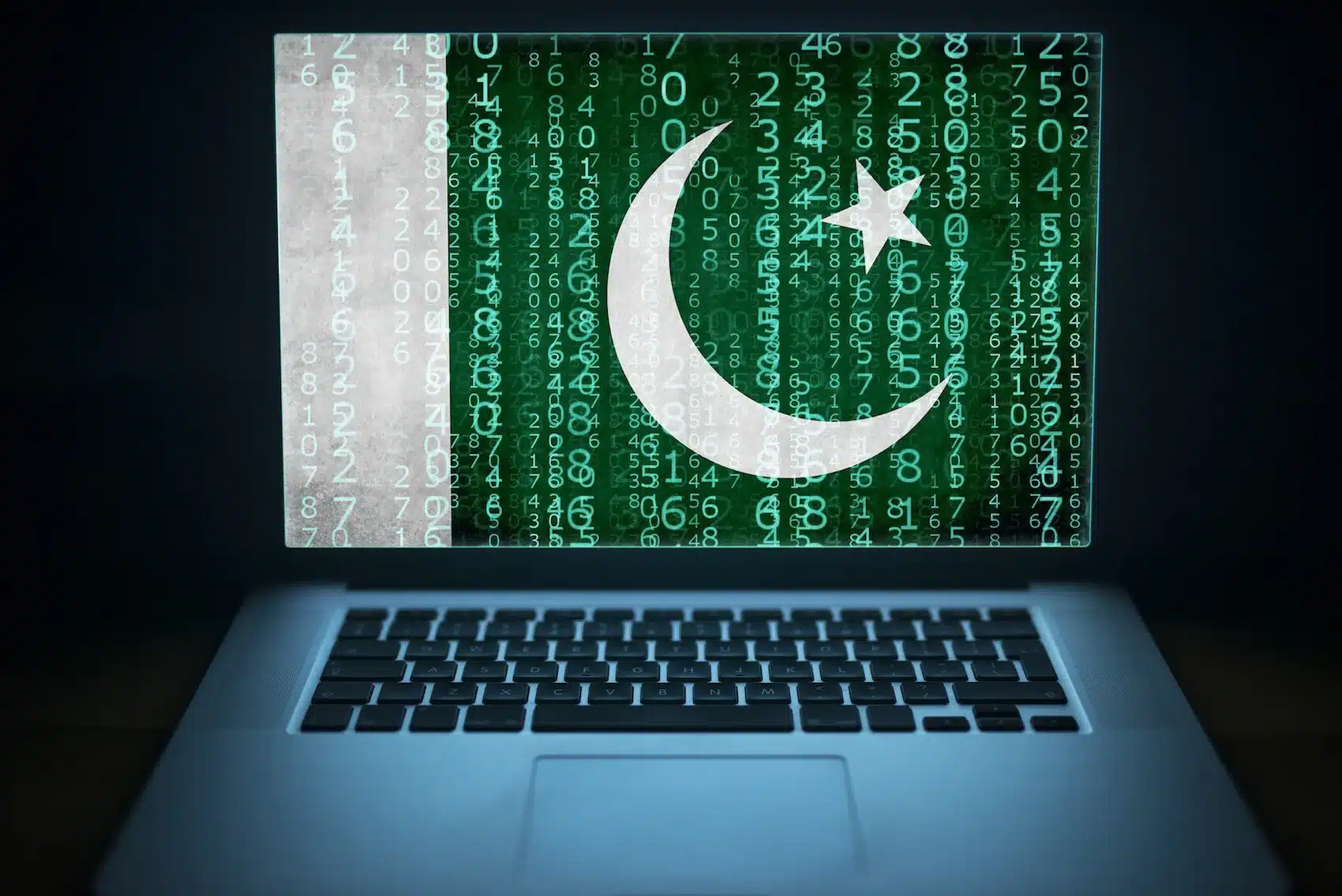




Pakistan is ramping up its efforts in the digital space to fight extremist propaganda by using a combination of policy, technology, and community involvement to eliminate ideological threats. The government’s narrative warfare approach aims to disrupt militant messages online while promoting a unified, constitutional Islamic identity.
The absence of a coherent counter-narrative has allowed extremist groups—chiefly the Fitna Al Khwarij (FAK) via its Umar Media wing—to dominate the ideological space online. Umar Media now produces multimedia content in Urdu, Pashto, Persian, and English, including videos, podcasts, magazines, and daily radio broadcasts targeting both rural and urban audiences. Militants also exploit encrypted platforms like Telegram and WhatsApp, as well as the dark web, to reach vulnerable populations.
Recognising the seriousness of this threat, the government has implemented a comprehensive counter-strategy that involves legal reforms, technical training, influencer engagement, and grassroots-level counter-narratives.
One key step was the establishment of the National Cyber Crime Investigation Agency (NCCIA) on May 3, 2024, which is tasked with enforcing the Prevention of Electronic Crimes Act (PECA). The agency targets online hate speech, propaganda, and misinformation while working with tech platforms to identify extremist content. Additionally, NACTA’s National Narrative Against Terrorism and Extremism, based on the 2018 Paigham-i-Pakistan fatwa, confirms that armed resistance and ideological militancy are haram.
To enhance capacity, the UNODC-led training in Karachi, from February 25 to 27, 2025, trained 26 officials—including three women—from the FIA and provincial CTDs in advanced open-source intelligence skills, encrypted chat analysis, and dark-web monitoring. A follow-up workshop in Islamabad from April 21 to 23 brought together media professionals, civil society leaders, and scholars to co-develop communication strategies against extremism.
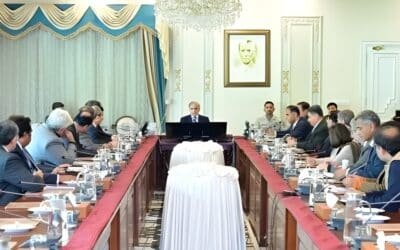
In a high-level meeting chaired by Prime Minister Shehbaz Sharif on March 28, the government approved new initiatives to create counter-extremist dramas and films, incorporate ideological resilience into school curricula, and run digital campaigns to combat disinformation and deepfakes.
Civic engagement has also increased. NACTA’s Tat’heer Drive, Surfsafe portal, and CHAUKAS app now allow citizens to report extremist activity anonymously. These tools are supported by awareness campaigns in universities and online platforms to boost media literacy and critical thinking skills, especially among young people.
Community-led narratives are another essential pillar. NGOs and youth groups trained under initiatives like “Extremely Together” are creating localised, inclusive content that offers role models and tells stories of resilience instead of relying solely on censorship. Research further supports this direction—personalised educational interventions have been shown to significantly boost the ability of low-digital-literacy users in Pakistan to spot and reject misinformation.
Yet, the battle against extremist propaganda is far from over. Fitna al Khwarij’s media arm has rapidly evolved, adopting better production methods, migrating to encrypted channels, and publishing high-quality magazines in Urdu and Pashto. The evolving nature of digital extremism creates a perpetual game of cat and mouse with regulators.
While removing content and de-platforming extremist accounts is necessary, it is not enough. Experts warn that if takedowns are not combined with proactive, values-based messaging, the main narratives may still survive in digital subcultures. That’s why many analysts argue that “clickable” counter-content must be created with the same quality and emotional impact as extremist materials.
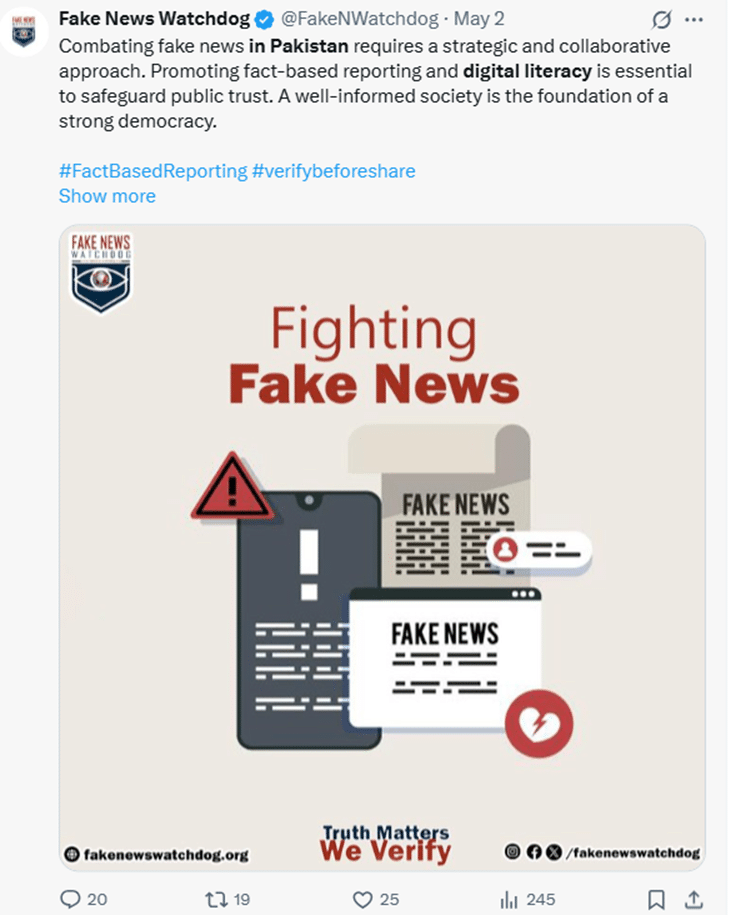
A recent tweet from Fake News Watchdog (@FakeNWatchdog) highlights the urgent need for digital literacy in Pakistan’s fight against misinformation. The post emphasizes the importance of promoting fact-based reporting as a strategic and collaborative approach to combating the spread of fake news. “A well-informed society is the foundation of a strong democracy,” the message states, aligning with broader national efforts to protect public trust in the digital space. The accompanying graphic—showing alert icons and media devices—visually emphasizes the need to verify information before sharing and to prioritize truth online.
Similarly, UNODC Pakistan shared updates on its workshop in Islamabad, which trained over 30 media professionals in counter-narrative development. Meanwhile, NACTA highlights the success of Tat’heer Drive in reaching over 2 million online users with counter-extremism content in local languages.
Pakistan’s narrative warfare model now combines legal enforcement through NCCIA, religious alignment through NACTA, technical training via UNODC, and community-based counter-messaging. The convergence of state policy and civil engagement is an encouraging step toward a sustainable digital strategy.
Yet, the momentum must continue. Without long-term investment in multilingual content creation, improved AI moderation of regional languages, and stronger partnerships with tech firms, extremist propaganda may continue to exploit algorithmic blind spots and vulnerable minds.
Success will depend on a coordinated approach among government bodies, tech companies, educators, and communities. If this alignment holds, Pakistan can reframe its digital environment from a battlefield of toxic ideologies into a forum for peace, inclusion, and informed discourse.