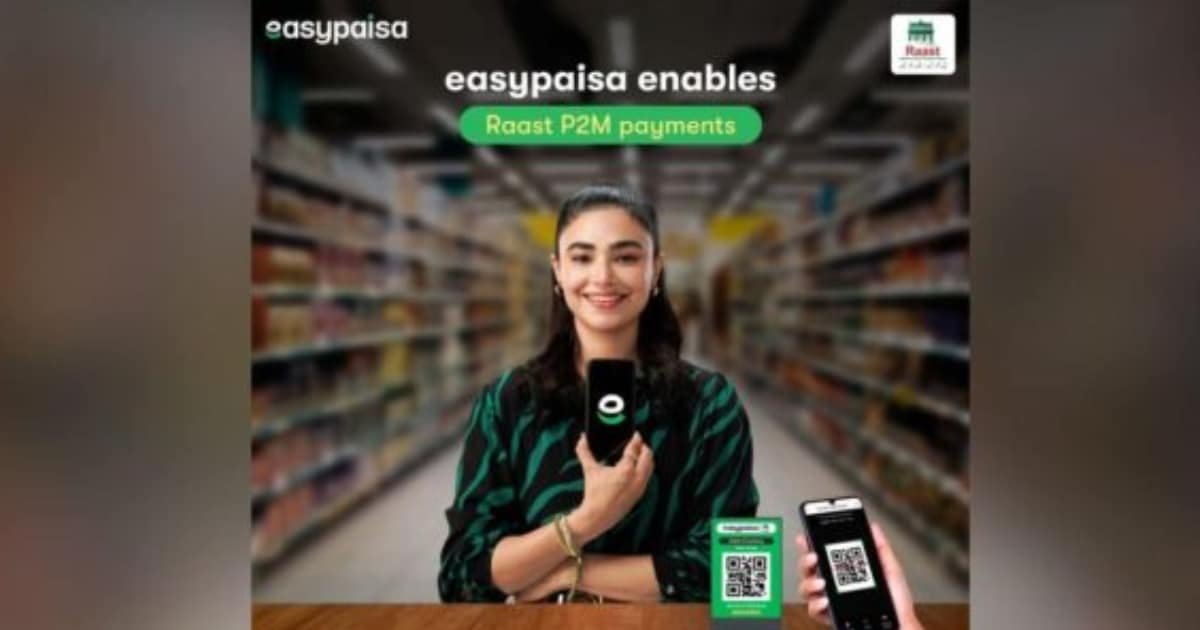



While Pakistan’s digital payment landscape is expanding rapidly, the adoption of Person-to-Merchant (P2M) QR payments remains a challenge in the country’s major retail and wholesale hubs. Despite a supportive regulatory framework and significant government subsidies, a “trust deficit” and structural hurdles continue to slow the shift away from cash.
The Current State of P2M (FY 2025-26)
The State Bank of Pakistan (SBP) recently reported a surge in Raast-based transactions, yet P2M (buying from shops) lags far behind P2P (sending money to friends).
| Metric | Q1 FY2025-26 Performance | Comparison/Context |
| Raast P2M Volume | 4.3 Million Transactions | Doubled compared to the previous quarter. |
| Raast P2M Value | Rs 17.0 Billion | Significant, but small vs. P2P’s Rs 11.3 Trillion. |
| Registered Merchants | 770,000+ | Gov target: 2 Million by June 2026. |
| Total Retail Units | 2.7 Million | Per 2025 Digital Economic Census. |
The Rs 3.5 Billion “Carrot”
To break the deadlock, the government approved a Rs 3.5 billion subsidy (active from Sept 2025 to June 2026). This fund is designed to cover the Merchant Discount Rate (MDR), essentially making digital transactions free or very low-cost for small shopkeepers.
- The Incentive: The government pays the lower of 0.5% or Rs 100 per transaction to the banks.
- The Goal: To remove the “cost barrier” that often leads merchants to ask customers for an extra 1-2% when paying digitally.
Why are Traders Hesitant?
Despite the subsidies, representatives like Atiq Mir (Chairman, All Karachi Tajir Ittehad) highlight that major markets in Karachi, Lahore, and Faisalabad remain cash-heavy due to:
- Fear of Documentation: Many traders worry that digital trails will lead to increased tax scrutiny or “income profiling” by the FBR.
- Onboarding Friction: While fintechs like ABHI and 1Link are simplifying setups, many bank branches remain “dismissive” or “unaware” when small shopkeepers inquire about QR integration.
- Settlement Speed: Merchants prefer cash because it is “instant.” While Raast offers near-instant settlement, any delay in reflected bank balances causes anxiety during high-traffic hours.
- Hardware Costs: Although QR codes are just stickers, larger merchants still prefer expensive POS (Point of Sale) machines for receipts, which come with higher monthly fees.
The Economic Scale (2025 Census Data)
The scale of the “un-digitized” market is massive, representing a huge opportunity for financial inclusion:
- 2.7 Million Retail units.
- 188,000 Wholesale trade units.
- 825,000 Service shops (barbers, tailors, etc.).
PayFast, a leading State Bank-licensed PSO/PSP and MSP for Raast P2M payments in Pakistan, has unveiled an exciting partnership with Google Pay, making it the first fintech in the country to launch this innovative payment solution.
Read More Here: https://t.co/kIqTZGGMKW pic.twitter.com/OZHSkkufH4
— Startup Pakistan (@PakStartup) March 13, 2025
Industry Move: Mashreq Bank & ABHI
New entrants are trying to bridge the gap:
- Mashreq Bank Pakistan: Recently launched digital cross-border services, aiming to integrate salary flows directly into digital ecosystems.
- ABHI & 1Link Partnership: Focused on “branchless” onboarding, allowing a simple fruit vendor or dhaba owner to accept payments without ever visiting a physical bank branch.
You May Like To Read: How to get Rs 10,000 from the Nigehban Ramadan Package 2026
What’s Next?
The SBP expects P2M growth to accelerate as the subsidy begins to reflect in lower merchant fees. However, experts suggest that until “tax incentives” are linked directly to digital sales, the average “Tajir” (trader) will likely keep the cash drawer open.
Check out our latest video: