



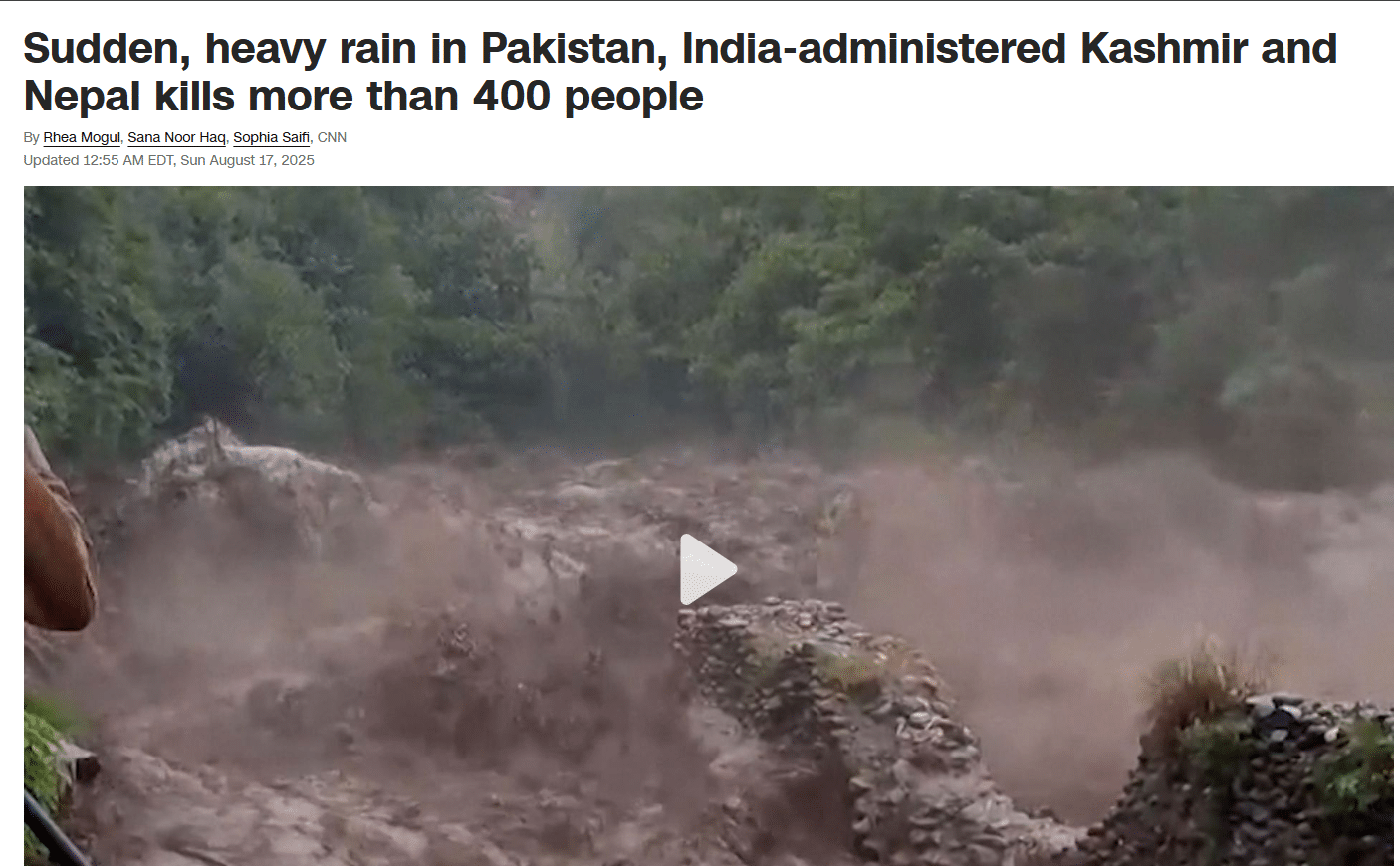
In mid‑August 2025, sudden flash floods swept across Pakistan, Indian Illegally Occupied Jammu and Kashmir, and Nepal, triggered by unusually intense monsoon rains. The force of the water tore through remote villages, destroyed homes, blocked roads, and swept away families in seconds. CNN and other international outlets quickly reported the startling numbers: over 400 people dead across the region. These headlines captured the immediate scale of the disaster, but much of the reporting stopped there.
CNN’s coverage, while factually accurate, primarily focused on the death tolls and scenes of devastation. What was missing was the fuller picture, the story of resilience, response, and human solidarity during the worst of times. In Pakistan’s Khyber Pakhtunkhwa province, for example, villagers formed human chains to pull neighbors from rising waters. In Gilgit-Baltistan, volunteers braved unstable terrain to repair damaged canals and clear roads. In Kashmir, locals helped injured travelers trapped during the cloudburst, while local mosques and community centers opened their doors as makeshift shelters.
None of these courageous acts made it into CNN’s reporting. The emotional weight of loss was present, but the stories of survival, assistance, and immediate local leadership were largely overlooked. When media coverage fixates only on tragedy, it risks portraying affected communities as helpless victims, rather than active agents navigating disaster. By missing these vital perspectives, the reporting not only loses depth but also fails to honor the courage, strength, and humanity shown by people facing the storm together.
You May Like To Read: Al Jazeera News Wrap Up: 10th to 16th August, 2025
CNN Reports “More Than 400 Dead”: Numbers Only Tell Half the Story
CNN’s headlines delivered the crisis in stark terms:
“Hundreds killed in Pakistan, India‑administered Kashmir, and Nepal following heavy rains”
“Sudden, heavy rain in Pakistan, India‑administered Kashmir and Nepal kills more than 400 people”
These headlines tell us how deadly the disaster was. But they stop there. They don’t share the brave work of the local rescuers, nor the planning that saved lives. They don’t show the relief being given, the shelters set up, or how people responded in the chaos.
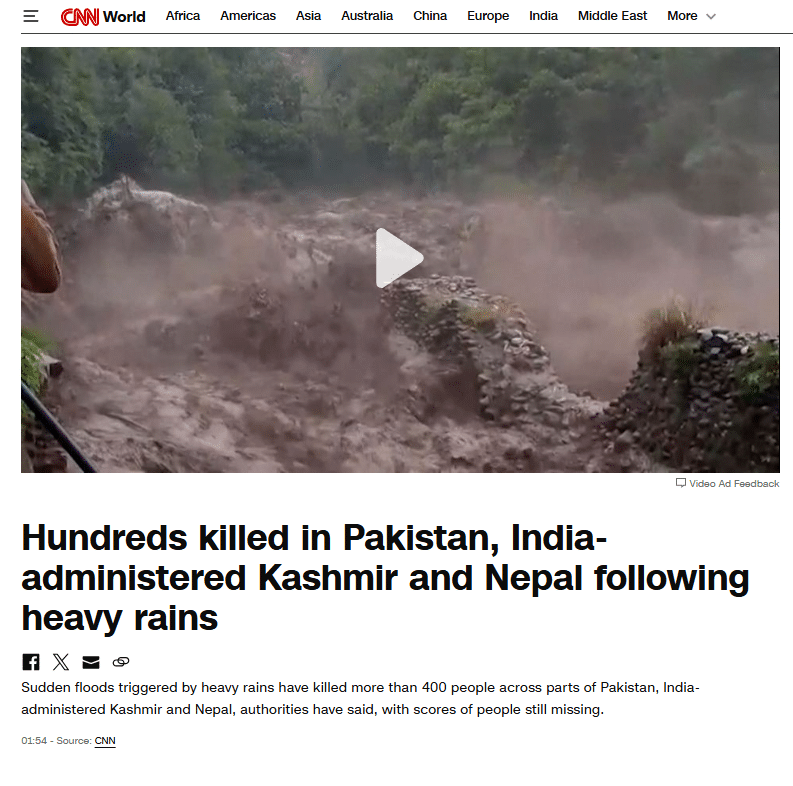
Source: CNN
You May Like To Read: BBC Coverage of Pakistan: A Critical Analysis
Survivors Speak but Not Always Heard
CNN’s words capture the pain:
“When the rain intensified, it wasn’t long before I felt as if an earthquake had struck… it felt like doomsday.” — a student in northwestern Pakistan (CNN)
That line is powerful. It shows how terrifying the floods were. But CNN didn’t follow that with what rescue teams or neighbors did next. Readers miss the stories of people helping each other, pulling survivors from rubble, sharing food, or comforting frightened children.
Source: CNN
Missing the Full Picture: What CNN Left Out?
While CNN delivered a dramatic summary of the floods’ impact, it omitted crucial details that offered a more complete understanding of the situation. CNN failed to cover the stories of sacrifice, local action, and government response—raising concerns about narrative intent.
For instance, 307 people were confirmed dead in northwest Pakistan, with 184 casualties in Buner district alone, after a severe cloudburst triggered deadly floods. Saeedullah, a grieving father, lost his wife and five children when their house collapsed. Neighbors helped him dig through the rubble to recover their bodies, a heartbreaking moment of tragedy and community solidarity. CNN ignored this entirely.
Even more striking, a rescue helicopter crashed, killing five crew members, individuals who were part of emergency efforts to save flood victims. Prime Minister Shehbaz Sharif held an emergency meeting, and medical camps and food supplies were mobilized across the affected areas. None of this appeared in CNN’s reporting.
Worst of all, seven volunteers in Gilgit-Baltistan died while repairing flood-damaged canals, a heroic act recognized by others, but completely absent from CNN’s story.
By omitting every instance of community action, sacrifice, and institutional response, CNN’s coverage lacked depth and balance, contributing to a one-sided portrayal of helplessness rather than resilience.
You May Like To Read: BBC Coverage of Pakistan: A Critical Analysis
Climate Change Is Part of the Picture, But Where Are the Local Actions?
Reports talked about climate change making these storms stronger. For instance, AP noted that rainfall between June 24 and July 23 was 10–15% heavier due to global warming.
But CNN didn’t highlight what Pakistan is doing to cope. There are early warning systems, better drainage planning, and public safety measures underway across flood-prone areas. That positive, proactive side was missing from most global reporting.
Why Balanced Reporting Matters?
When news stories only show tragedy, readers miss how people respond with courage. They don’t hear about grocery lines sharing bread, or how teachers opened their homes as shelters, or how soldiers waded into water to pull victims alive.
That missing story matters.
What a Balanced Story Would Show?
Here’s what a fuller report could include:
- Rescue details: How soldiers, medical teams, and volunteers worked through the night to save lives.
- Government response: Emergency meetings, relief funds, and flood defenses were launched after.
- Climate context: Mention of increased risk—but also the steps being taken to adapt.
- Regional solidarity: Nepal’s army helping in landslides, local church shelters opening in Kashmir.
These storms are real, all the death and damage are real. CNN did well to report the numbers quickly. But global news also has the power to show action, not just suffering.
KP, Gilgit Baltistan, and Kashmir are not just places of tragedy. They are places where people reach out, rally, rebuild, and heal. That story needs to be told, too.