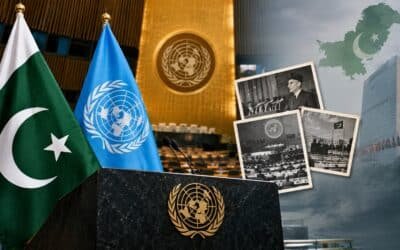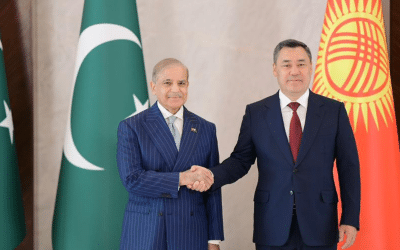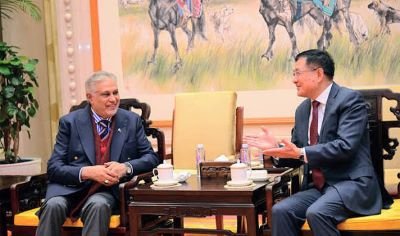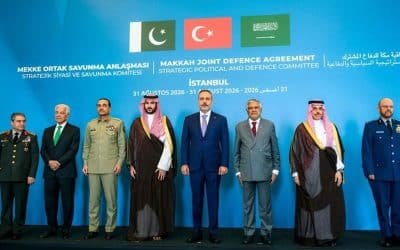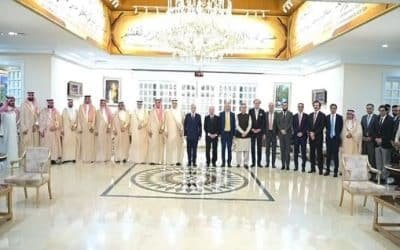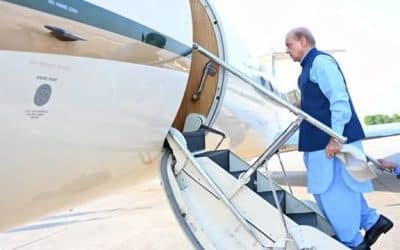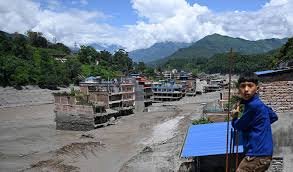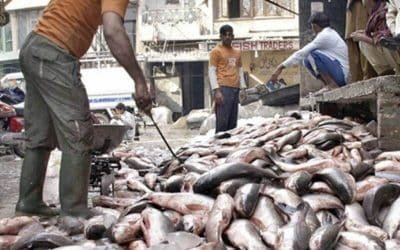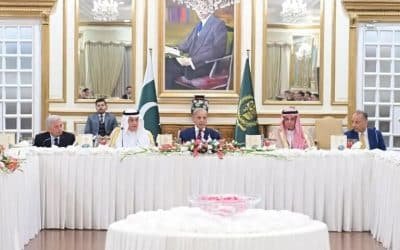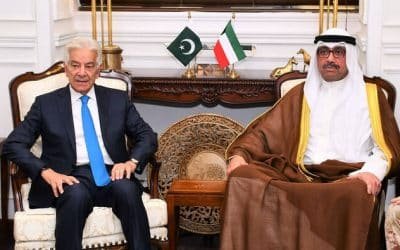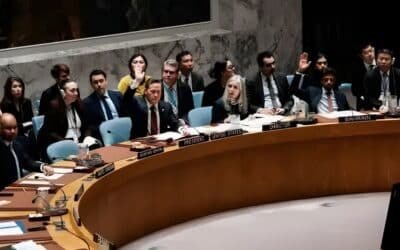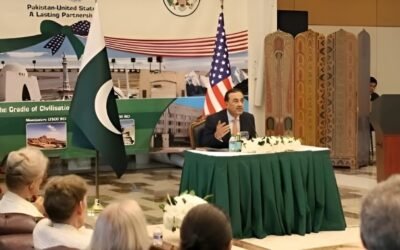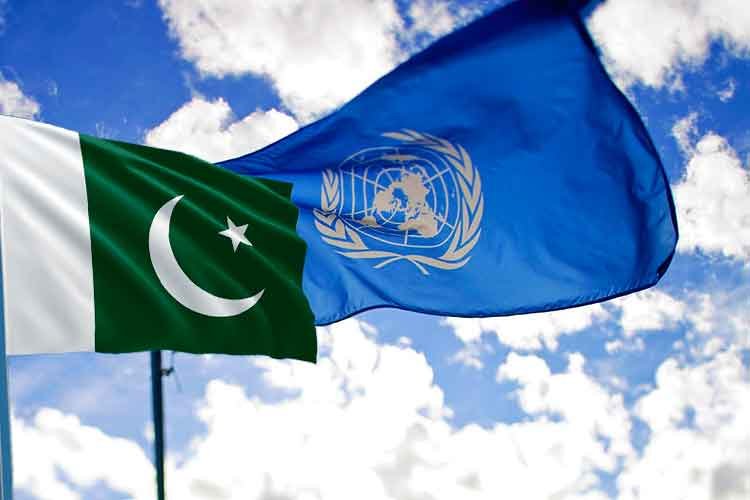
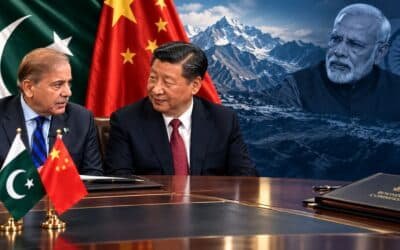


Pakistan’s relationship with global institutions is shaped by both dependency and agency. On the one hand, the country relies heavily on foreign aid, multilateral loans, and diplomatic alliances. On the other hand, it is an active participant in global politics, peacekeeping, and regional diplomacy. However, the engagement is not always balanced. Global institutions often advocate for reforms and development models that overlook Pakistan’s political instability and social inequality. The result is a complex landscape where external influences and internal capacity often fail to align.
🇵🇰 Pakistan’s Annual Exports (in Billion USD)
•FY 2016 – $27.4 B
•FY 2017 – $27.9 B
•FY 2018 – $30.6 B
•FY 2019 – $30.2 B
•FY 2020 – $27.9 B
•FY 2021 – $31.5 B
•FY 2022 – $38.9 B
•FY 2023 – $35.4 B
•FY 2024 – $38.6 B
•FY 2025 – $40.4 B— The Pakistan Index (@thepakindex) July 9, 2025
How Global Institutions Shape Pakistan’s Domestic Space
Pakistan’s economic path is very sensitive to global events. Fluctuations in oil prices, interest rate increases by the US Federal Reserve, and regional conflicts directly affect inflation, growth, and currency stability in the country. This external vulnerability makes Pakistan susceptible to the fluctuations of international markets and institutions.
Institutions such as the International Monetary Fund (IMF) and the Financial Action Task Force (FATF) play a significant role in Pakistan’s internal governance. The IMF ties its bailout packages to strict economic reforms, such as subsidy cuts, privatization, and tax increases. Meanwhile, the FATF has pressured Pakistan to overhaul its laws against money laundering and terror financing.
🗞️ Need to catch up on the news? Here’s our top 10 from today:
🔸 US federal court blocks Trump’s “Liberation Day” tariffs from taking effect.
🔹 Pakistan’s government is reportedly planning to establish a strategic Bitcoin reserve.
🔸 U.S. Department of Labor rescinded 2022… pic.twitter.com/aOolAcQRqJ
— CryptoGlobalInsights (@channel4crypto) May 29, 2025
Impact of Major Global Institutions on Pakistan (2018–2024)
| Institution | Key Influence | Outcome in Pakistan |
|---|---|---|
| IMF | $6 billion bailout in 2019 | Austerity policies, fuel and energy price hikes |
| FATF | Grey-listed (2018–2022) | Legislative reforms, tighter banking regulations |
| World Bank | Project financing in infrastructure | Mixed results; many projects stalled or delayed |
| WTO | Market access, trade liberalisation | The trade deficit increased, and weak export competitiveness |
| UN Agencies (UNDP, WHO) | Health and development aid | Essential support during COVID-19, flood relief |
Pakistan’s exposure to such pressures often leads to policies that lack public support. Economic liberalization, privatization of state-owned enterprises, and budget cuts may please donor institutions, but they harm working-class citizens. Utility prices rise, public transport vanishes, and food insecurity increases.
Pakistan’s Role in the Global Arena
Pakistan is not only influenced by the global system; it also helps shape it. Its status as a middle power affords it influence, particularly in South Asia and the broader Islamic world.
It maintains active diplomatic relations through various platforms, including the United Nations, the Organisation of Islamic Cooperation (OIC), the Shanghai Cooperation Organisation (SCO), and the Economic Cooperation Organisation (ECO). Pakistan is also a vocal player in climate negotiations, refugee issues, and nuclear non-proliferation talks.
Secretary-General and Prime Minister of Pakistan Reiterate OIC’s Critical Role in Promoting and Protecting the Interests and Priorities of Muslim Countries: https://t.co/19lwRbghiK pic.twitter.com/EzmNP0F6yt
— OIC (@OIC_OCI) January 11, 2025
Key Areas of Pakistan’s Global Engagement
| Domain | Contribution |
|---|---|
| UN Peacekeeping | Over 200,000 troops have contributed since 1960 |
| Climate Diplomacy | Chair of G77 + China in COP27 |
| Afghanistan Conflict | Mediator between the Taliban and Western states |
| Trade Corridors | Key partner in the China-Pakistan Economic Corridor |
| Refugees | Host to 1.3 million registered Afghan refugees |
Yet, this global role is often hindered by weak domestic governance. Corruption, legal loopholes, and administrative bottlenecks hinder Pakistan’s ability to meet its international commitments or fully leverage diplomatic opportunities.
Globalisation and Unequal Development
Beyond institutions, globalization has influenced Pakistan’s economy, culture, and city life. International capital, media, and technology have entered Pakistan, changing how people work, dress, think, and connect.
But these transformations are not equally distributed. Urban elites benefit from foreign investment and digital platforms. Meanwhile, millions remain stuck in informal jobs, unplanned housing, and poor access to education and healthcare. The result is a sharp internal divide.
Selected Development Indicators for Pakistan
| Indicator | 2000 | 2010 | 2023 (est.) |
|---|---|---|---|
| Poverty headcount ratio (%) | 34.6 | 29.5 | 39.4 |
| GDP per capita (current USD) | 543 | 1,049 | 1,568 |
| Urban population (%) | 33.4 | 36.5 | 40.7 |
| Internet penetration (%) | 0.1 | 10.9 | 54.3 |
| Public debt-to-GDP ratio (%) | 55 | 60.2 | 78.7 |
Migration from villages to cities—often seen as a sign of developing Asia—also indicates rural neglect. Large-scale migration overloads urban infrastructure. Slums expand. Sanitation systems fail. Informal employment becomes common. The hope of upward mobility through globalization has left many of Pakistan’s people behind.
Literary Reflections: Globalization in Mohsin Hamid’s Novel
Mohsin Hamid’s How to Get Filthy Rich in Rising Asia provides a sharp critique of this uneven development. The story follows a nameless protagonist who escapes rural poverty by moving to the city and navigating corruption to achieve wealth. The novel resonates with the experiences of many in Pakistan who face the difficult choice between migration and compromise for survival.
It also emphasizes the double-edged nature of globalization: one that provides opportunity for the few and displaces the many. Characters in the novel use mobile phones, Skype, and surveillance technology, yet remain vulnerable to exploitation, insecurity, and political manipulation. Hamid’s story illustrates how the neoliberal promise of success often requires bending the system, rather than simply working hard.
Pakistan’s path forward involves striking a balance between engagement with global institutions and safeguarding national interests, while implementing international reforms and strengthening local institutions.
It must renegotiate the terms of its global engagement. This involves building a capable civil service, enforcing legal accountability, and investing in inclusive economic growth. Policies should serve people, not just satisfy creditors. Globalization is not inevitable; it is a process that can be shaped, but only if Pakistan strengthens its ability to act on its own terms.
Instead of relying solely on foreign prescriptions, Pakistan must clearly articulate its development vision. Whether in trade, health, urban planning, or foreign relations, the country needs not only reforms but also ownership of those reforms. That is how Pakistan can become not just a subject of global institutions but a shaper of them.