



ISLAMABAD — November 15, 2025
Global agriculture has suffered an estimated $3.26 trillion in losses from disasters over the last 33 years — averaging nearly $99 billion annually — according to a new report by the Food and Agriculture Organisation (FAO) released on Friday. The losses amount to about four per cent of global agricultural GDP, underscoring the increasing vulnerability of food systems to climate extremes.
The report, Impact of Disasters on Agriculture and Food Security 2025, provides a stark assessment of how floods, droughts, storms, pests and other hazards have battered global food production. It also highlights how rapid advances in digital technologies are reshaping the world’s ability to anticipate and mitigate these shocks.
“The global agricultural sector stands at a critical juncture,” the FAO said, noting that disasters are rising in frequency and intensity even as new technologies such as artificial intelligence, remote sensing, mobile platforms, drones and digital insurance tools expand the scope for risk management and anticipatory action.
Between 1991 and 2023, disasters wiped out 4.6 billion tonnes of cereals, 2.8bn tonnes of fruits and vegetables, and 900m tonnes of meat and dairy. These losses translate to a daily per capita reduction of 320 kilocalories, roughly 13–16pc of average global energy needs, with corresponding deficits in iron, vitamins and essential minerals that threaten vulnerable populations.
FAO reports disasters inflicted $3.26tr blow on global agriculture. Asia suffered 47pc of total losses over 33 years.https://t.co/Csb07B3YPJ
— Dawn Business (@dawn_business) November 15, 2025
Asia Worst Hit
The report identifies Asia as the hardest-hit region, accounting for 47pc of global agricultural losses, or $1.53 trillion. FAO attributed this to the region’s vast agricultural output combined with its high exposure to climate hazards, especially floods and droughts.
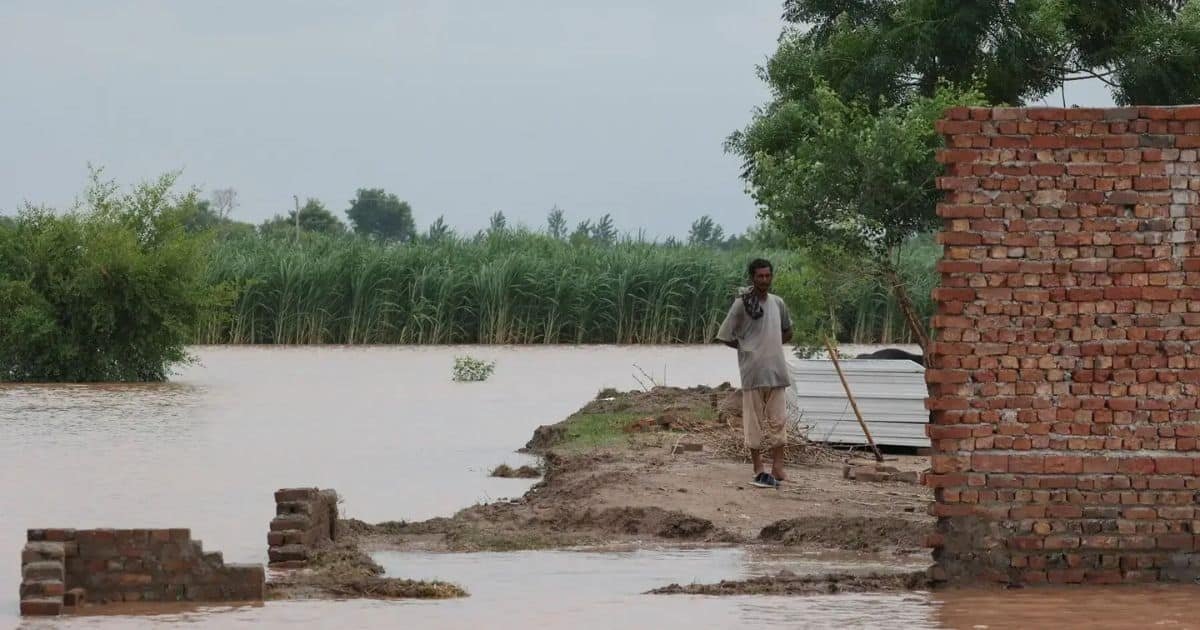
In Pakistan, this year’s monsoon floods affected over 9 million people and destroyed 849,000 hectares of crops, striking just a year after the devastating 2022 floods. The back-to-back disasters have reshaped agricultural landscapes, causing severe soil erosion, salinisation and large-scale damage to rural infrastructure — challenges that FAO warns will hinder long-term recovery without massive investment.
You May Also Like: Afghan Regime’s Sudden Trade Suspension Shocks KP’s Business, Industry
Digital Tools as a ‘Game-Changer’
FAO Director General QU Dongyu said digital transformation is revolutionising disaster risk reduction in agriculture. He noted that 9.1 million farmers are now accessing parametric crop insurance through digital platforms, while early warning systems have helped evacuate 90pc of at-risk communities ahead of disasters.
The report stresses that disaster impacts extend far beyond immediate crop losses, affecting financial systems, markets, ecosystems and food security for years. It calls for assessment tools that capture both direct and indirect losses, including biodiversity damage and long-term ecosystem disruption, noting that many impacts — particularly in fisheries — remain severely undermeasured.
Marine heatwaves alone caused $6.6bn in fisheries losses between 1985 and 2022, affecting 15pc of global fisheries and resulting in production losses of 5.6m tonnes.
FAO urged governments to integrate digital innovation with climate-resilient agricultural planning, warning that without such measures, the economic and food security impacts of disasters will continue to escalate worldwide.
Check out our latest video: