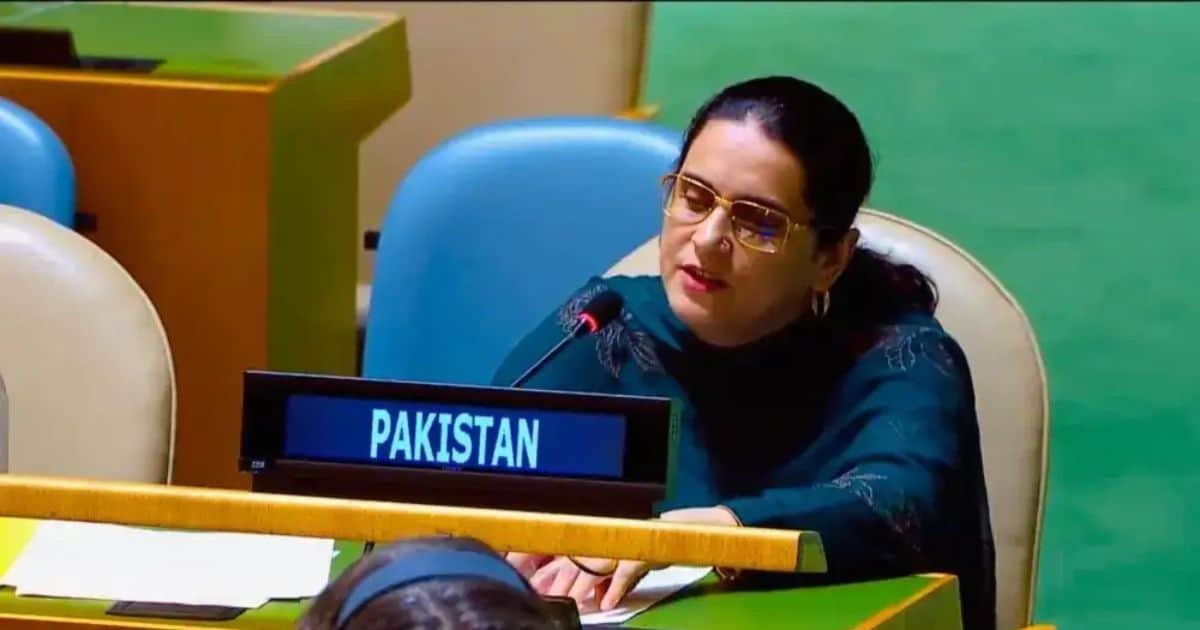


NEW YORK: Pakistan strongly countered Indian accusations of terrorism at the UN General Assembly on Friday, with its envoy accusing New Delhi of sponsoring terrorism in the region and committing rights abuses in occupied Kashmir.
Key Highlights
- Pakistan’s Saima Saleem said India practices “state-sponsored terrorism” at home and abroad.
- She rejected Indian claims linking Pakistan to the Pahalgam attack, urging an impartial probe.
- Envoy accused India of backing proxies like TTP, BLA, and Majeed Brigade to target Pakistan.
- Said Kashmir is one of the world’s most militarised zones, with systematic abuses since 2019.
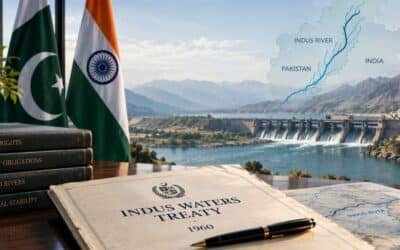
- Accused India of weaponising water by undermining the Indus Waters Treaty.
- Highlighted Islamophobia, sectarian violence, and intolerance under RSS-BJP rule.
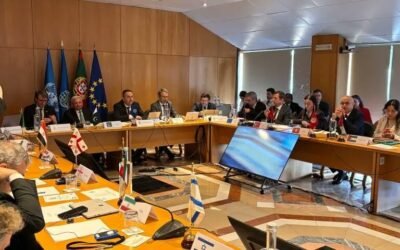
Saleem, a counsellor at Pakistan’s UN Mission, exercised the right of reply after India’s delegate Petal Gahlot accused Pakistan of “sponsoring terrorism” and shielding militant outfits. She dismissed the charge as “hypocrisy,” citing Indian covert networks and financing of violence in Pakistan.
“If India had nothing to hide, it should have agreed to credible and independent investigations into the Pahalgam incident,” she said, adding that Pakistan has itself suffered heavily from terrorism.
Saleem said Pakistan’s military response in May had repelled Indian “unprovoked aggression,” exposing “the myth of military might.” She also pointed to New Delhi’s suspension of the Indus Waters Treaty as evidence of violating international law and threatening regional peace.
The envoy alleged that minorities in India — Muslims, Christians, Sikhs, and Dalits — face systematic persecution, citing Gujarat, Delhi, and Manipur violence as examples. She added that Islamophobia has become institutionalised under the RSS-BJP government.
On Kashmir, she said India has turned the region into “one of the world’s most militarised zones,” enforcing draconian laws, disappearances, and demographic changes since 2019.
“Pakistan will continue to expose India’s hypocrisy,” she said. “The people of Jammu and Kashmir deserve justice, dignity, and the right to self-determination — and they shall have freedom one day.”
You May Like To Read: